

Farmgate: Onion Boycott in Panama.
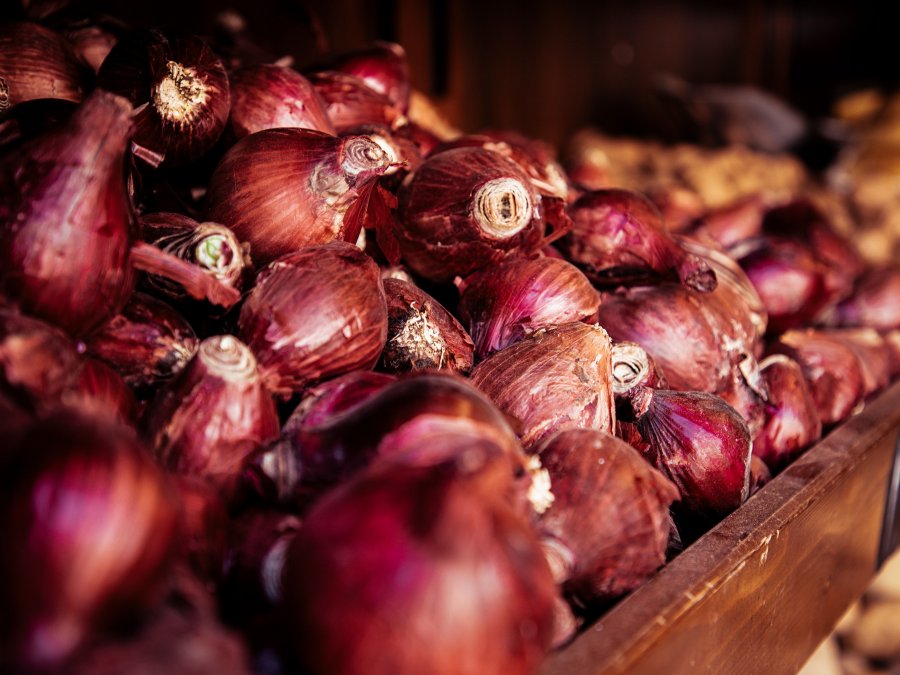
A digital campaign urging Panamanian consumers not to pay more than $0.60 per pound for onions is facing a barrier in the real numbers of the agri-food chain. While citizens report being charged up to $2.00 per pound for a product they consider low quality, official and trade association records show that the vegetable leaves the fields and the wholesale market at prices above the ceiling demanded by the protest.
A poster circulating on social media and messaging apps reads “Boycott Onions in Panama.” The message calls for a boycott of onions if they cost more than 60 cents per pound and describes onions sold for $2.00 as “poor quality waste.”
Public discontent coincides with complaints from small business owners and restaurant owners. Journalist and restaurant owner Franklyn Robinson reported on his X account that a sack of onions at Merca Panamá rose from $35.00 to $60.00, an increase of 71.4%. Robinson noted that neighborhood restaurants are absorbing these price increases in vegetables like cabbage, lettuce, and parsley to keep their menu prices down, although he cautioned that profit margins will shrink before December.
When comparing the price demanded by the boycott with figures from the producing sector, the cap of $0.60 per pound is unfeasible to cover costs at the source. The Highland Producers Community Association (ACPTA) set reference farmgate prices on November 25, 2026, of $1.15 per pound for small onions, $1.30 for medium onions, and $1.40 for red onions. These rates represent an increase compared to the range of $0.90 to $1.00 per pound recorded on November 12.
For its part, the Agribusiness Price Information System (Sipan) of the Agricultural Marketing Institute (IMA) reported on November 27, 2026, an average wholesale price of $39.33 for a 50-pound sack of domestically grown onions from Cerro Punta and Boquete. This figure equates to a wholesale price range of between $0.76 and $0.80 per pound, also exceeding the target set by the boycott organizers.
Data analysis reveals a gap between official reports and actual street transactions. Although the IMA’s morning report places the price of a 50-pound sack at a maximum of $40.00 at Merca Panamá, buyers like Robinson document invoices for $60.00 per sack at the same distribution center, raising the actual cost to $1.20 per pound before reaching the retailer.
This distortion is passed on to the end consumer. In monitoring by the Consumer Protection and Competition Authority (Acodeco) during the first half of October 2026, a kilogram of yellow onions (2.2 pounds) sold for between $1.74 and $2.95 in supermarkets—from $0.79 to $1.34 per pound—while in mini-markets and neighborhood stores it reached up to $3.31 per kilogram ($1.50 per pound). Today, the jump in the distribution chain pushes the retail price to the $2.00 per pound reported on the streets.
Given this scenario of soaring prices and complaints from consumers and restaurant owners, the question remains as to what oversight mechanisms the authorities will apply to curb speculation in intermediaries without impacting the profitability of national producers.