Remains of an Ancient Ocean Full of Giant Predators Reveals a Surprising Twist in Evolution.
Provided by McGill University.
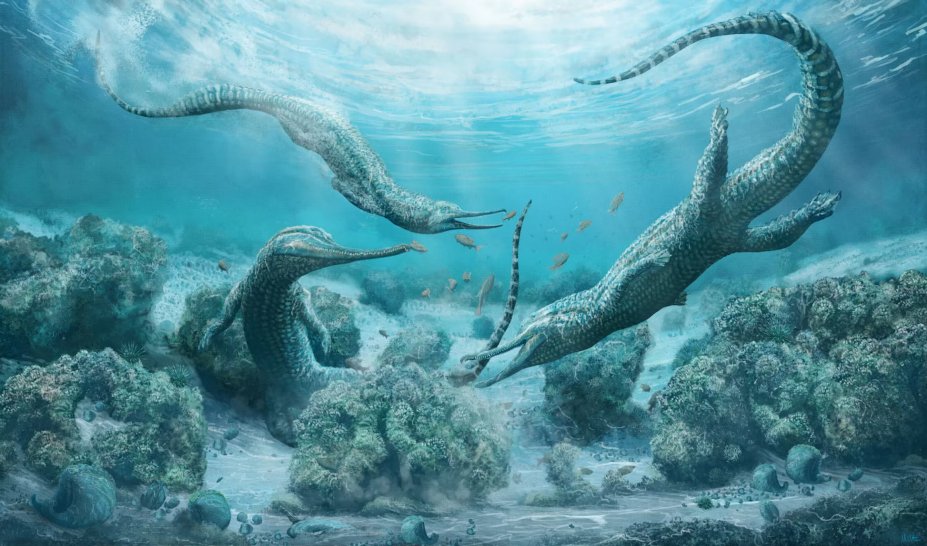
An extraordinary collection of fossils in central Colombia is revealing a surprising chapter in Earth’s evolutionary history. Researchers have uncovered evidence of a time when ancient animal groups that were approaching extinction lived alongside newer groups that would eventually flourish. The discovery suggests that major evolutionary transitions can occur without the widespread destruction associated with mass extinctions.
Scientists from McGill University and the Centro de Investigaciones Paleontológicas (CIP) identified this unusual pattern while studying fossils from Colombia’s Paja Formation. The ancient marine ecosystem preserves an exceptional mixture of surviving Jurassic lineages and emerging Cretaceous groups, offering a rare glimpse into a period of profound biological change.
Drawing on these findings, McGill biology professor Hans Larsson and PhD graduate Dirley Cortés have proposed a new concept called a “Biotic Inflection.” The term describes an evolutionary turning point when older groups nearing extinction coexist with newer lineages that are beginning to expand and diversify.
The researchers believe an unusual combination of environmental conditions helped make this remarkable coexistence possible. Warm greenhouse temperatures, elevated sea levels, and coastal waters rich in nutrients may have supported an unusually diverse range of marine life.
Another important factor was the emergence of new ocean connections between the eastern Pacific and the early Atlantic through the region that is now Colombia. Together, these conditions likely created opportunities for different groups of animals to thrive within the same ecosystem. Many of these environmental influences continue to shape biodiversity around the world today.
Read more here.