

Panama Imports Pine Trees from Canada and the United States for the Christmas Season.
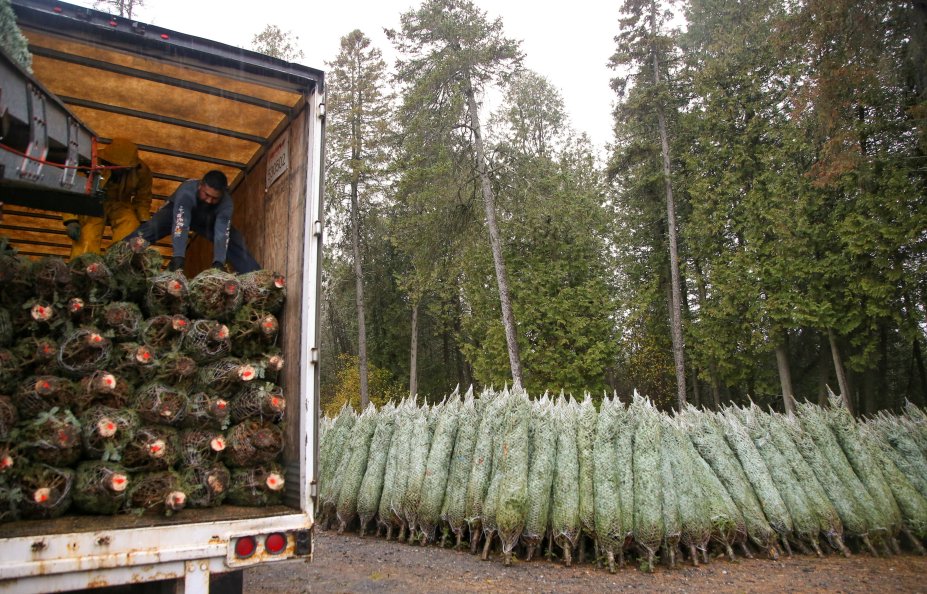
Panama does not cultivate pine or fir trees suitable for Christmas use on a commercial scale, so
the entire supply of natural trees that reaches homes depends on shipments imported from Canada and the United States.
For the 2026 season, the Ministry of Agricultural Development (MIDA) projects the arrival of 45 Canadian containers, four more than the 41 received in 2025, to which another 25 from Oregon will be added.
The first four Canadian containers are already under phytosanitary inspection on Panamanian soil. The surveillance began in early October, while the bulk of Oregon’s shipments will be concentrated in mid-to-late November.
The Executive Directorate of Agricultural Quarantine of the MIDA maintains a double control system for each shipment. The first screening takes place in the countries of origin, before the trees are loaded for shipment to Panama.The second control is applied in national ports, with documentary and physical verifications on each container.
The goal is for the pine trees to arrive free of pests and diseases, and to have the corresponding phytosanitary certifications before their commercial distribution. Panama imports Christmas trees because its agroecological conditions do not allow the commercial cultivation of the species that dominate the North American ornamental market, such as Abies fraseri or Abies balsamea.
These varieties require temperate climates with winter cold regimes that the country lacks, forcing it to supply domestic demand through trade corridors with Canada and the United States.
The country has forests and forest plantations for tropical use, but the productive infrastructure specifically geared towards Christmas trees is nonexistent or marginal. This structural absence explains why the containers
mainly arrive at the port of Manzanillo, in the province of Colón, with Canada as the main origin in the most recent seasons. This dependence on external markets exposes the Panamanian market to a specific vulnerability.
Any disruption to the Canadian or American supply, whether due to weather factors, local pests, regulatory changes, or variations in logistics costs, can directly affect consumers’ access to natural trees in December.
Records from the previous season allow us to gauge the scale of the current operation. In 2025 statements, MIDA had reported the arrival of the first 32 containers, 25 from Canada and seven from Oregon, with an estimated 17,000 natural pine trees and a total projection of 60 containers.