
Panama’s Electrical System is secure with $12.365 Billion Investment.
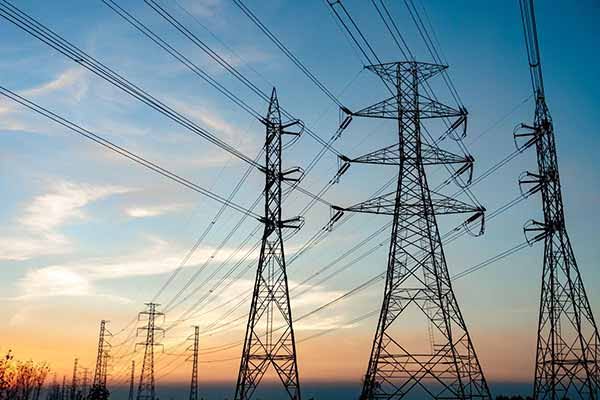
A cumulative investment of $12.365 billion over the past 26 years has structurally transformed Panama’s energy park, providing it with the firm capacity necessary to avoid rationing in the face of severe droughts and guarantee supply to future technology and infrastructure hubs, according to Miguel Bolinaga, president of AES Panama.
From the vulnerability of 2014 to thermal and renewable shielding
In 2000, the Panamanian electrical system operated with a mere 1,200 megawatts (MW) of installed capacity, relying almost exclusively on water and heavy fossil fuels such as diesel and bunker fuel. This vulnerability was exposed in 2014, when a severe drought forced nationwide energy rationing.
Twelve years later, the landscape is radically different. As of the end of August 2026, the country has an installed capacity of 5,120 MW and a cumulative net generation of 9,089 GWh. This growth has been financed by private and mixed capital: 67% of the total invested ($8,087 million) was concentrated in generation, 23% ($2,996 million) in distribution, and 10% ($1,273 million) in transmission.
“There are more than 110 power plants in Panama’s electricity market, and there is healthy competition. That’s why we won’t have any problems with El Niño,” Bolinaga stated. “In Costa Rica, Guatemala, Ecuador, and Colombia, there are crises every time the rains decrease; here, we won’t have rationing because we have sufficient supply.”
The key: 3,053 MW of firm power
The executive clarified that the system’s security does not rely solely on the number of solar or wind power plants, but rather on guaranteed firm capacity. Of the more than 5,100 MW installed, Panama has 3,053 MW of firm capacity, primarily provided by natural gas-fired power plants such as Generadora Gatún and Colón, which support the grid when hydroelectric power flows decrease or during nighttime periods.
“Today, in a normal period towards the end of October or the beginning of November, we should have all the plants in the west releasing water and generating 70% of our hydroelectric capacity. That’s not the case,” the spokesperson explained. “There is an El Niño event, and it is having a significant impact on the water supply, but there won’t be any supply problems because we have sufficient backup generation.”
Tax returns and partnership with the State
The mixed model has demonstrated operational and financial solvency. AES Panamá currently operates 1,216 MW in 14 plants under a corporate structure where the Panamanian State owns 49.1% of AES Panamá, a stake in Changuinola, and an indirect 24.7% stake in Generadora Gatún.
According to the figures presented, the company has returned more than $1.4 billion to the State in dividends and capital restitution over 27 years, in addition to $90 million allocated to social programs, particularly in Colón and Bocas del Toro.
Projection to 2032: Data Centers and early tenders
This operational flexibility positions Panama as a natural candidate to host industries with high electricity consumption, at a time when national demand is heading towards closing the year at close to 14,000 GWh.
“We will have sufficient capacity to support the data centers we expect to arrive, the train if it is built, the Fourth Bridge, natural growth, the Barú Port, the ACP port and the interconnection,” Bolinaga explained.
However, the executive cautioned that planning cannot be halted. Given that the development and construction of a combined-cycle power plant takes several years, he urged energy authorities to structure the long-term tenders required for the 2032 horizon well in advance, preventing demand from outpacing available supply.