Balbina Herrera Rejects Changes that would Concentrate the PRD’s Legal Representation in the Party’s Presidency.
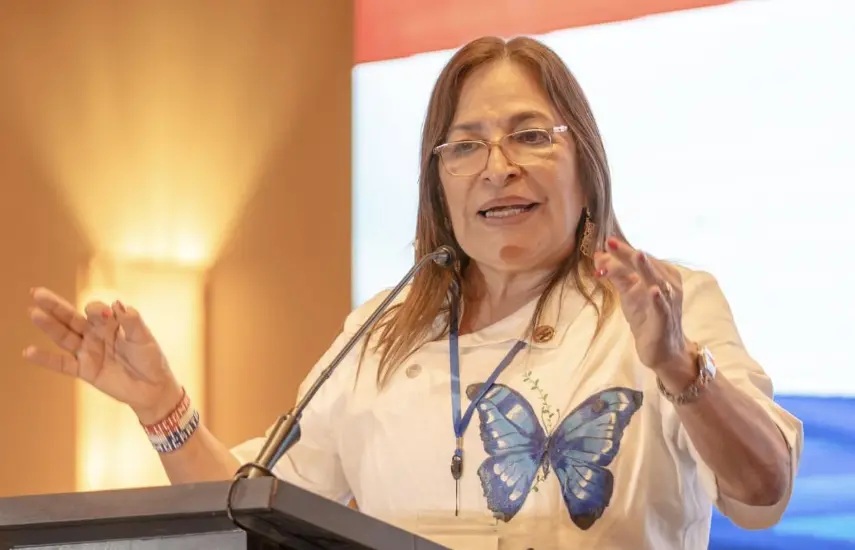
Balbina Del Carmen Herrera Araúz (born in 1955) is a Panamanian politician and was a presidential candidate in the 2009 Panamanian general election. On May 3, 2009, she lost the race to the presidency of the Republic of Panama to center-right candidate Ricardo Martinelli. She has always had negative views regardinjg expats and foreigners in Panama.
The general secretary of the Democratic Revolutionary Party (PRD), Balbina Herrera Araúz, shook the structures of her collective by sending an energetic letter to the caucus of deputies, expressing her open rejection of the modifications introduced in Bill 699 of reforms to the Electoral Code. The document was addressed directly to the party’s legislative leadership, headed by Benicio Robinson pictured below as president of the caucus; Raúl Pineda, vice president; and Flor Brenes, secretary, marking a strong distancing from the course that the current leadership is trying to impose. The crux of the conflict lies in a proposed amendment to the bylaws that seeks to grant legal representation of political parties exclusively to their presidents.
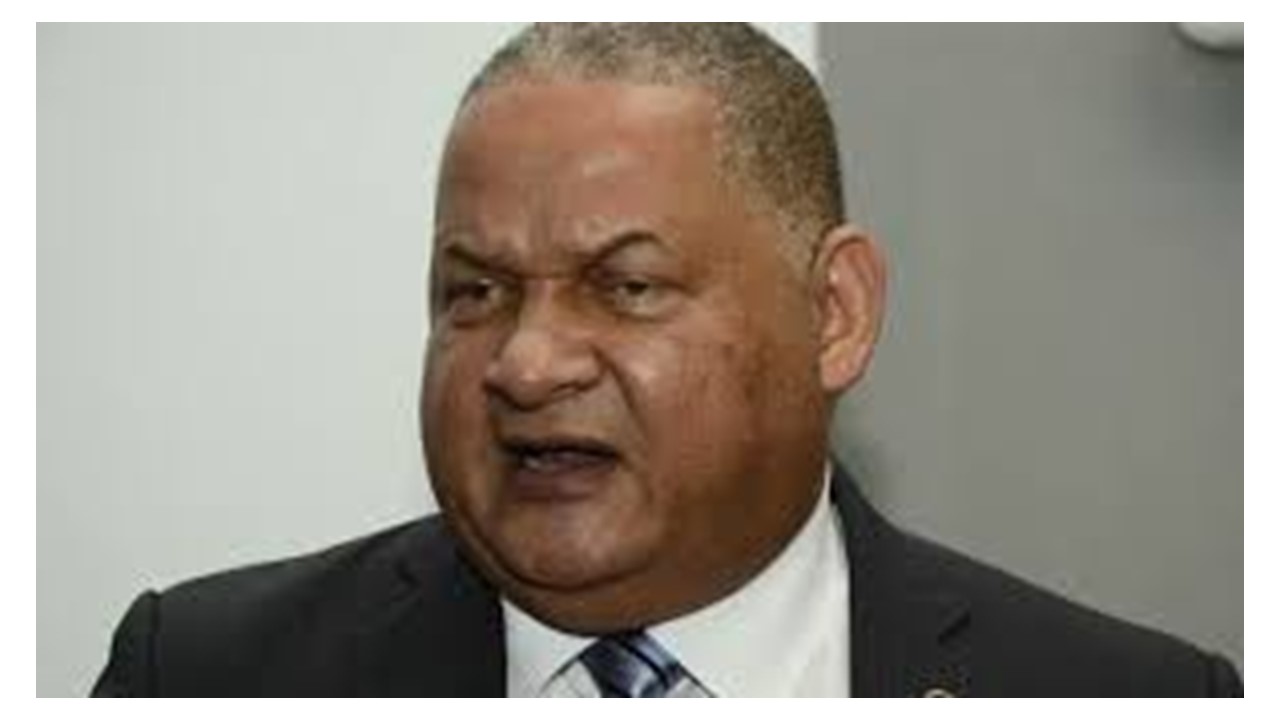
In the current PRD structure, this power rests with the General Secretariat, so this move—driven by Benicio Robinson pictured above, himself, who simultaneously serves as party president and head of the Assembly’s Government Commission—has raised internal concerns by concentrating all institutional power in a single figure. For Herrera, this legislative maneuver transcends mere legal technicality and directly violates the “constitutional essence” and autonomy of the party. The leader argues that the PRI has historically been sustained by a model of collegial leadership, so altering this balance of power would completely disrupt the party’s democratic and structural philosophy.
Invoking Article 138 of the Constitution, the Secretary General reiterated that the functioning of political parties must be governed by strictly participatory principles. Along these lines, she criticized the fact that such a far-reaching reform was implemented without going through the proper internal procedures, omitting the necessary debate among the grassroots members, the National Executive Committee (CEN), the National Steering Committee, and the National Congress.
Herrera stated that fundamental decisions regarding the institutional future of the group cannot be subject to the criteria of a small group of political actors. Finally, the leader concluded with a firm call to the party’s legislators to defend unity and institutional integrity, stressing that the current dispute is not about safeguarding personal privileges or positions, but about protecting the historic decision-making system that has characterized the PRD’s grassroots.