Losing their Electoral Immunity. These are the Panama Political Party Leaders in Question.
Pictured below are members of political parties at the Electoral Reform table. The proposal would also exclude electoral delegates and liaisons from this benefit.
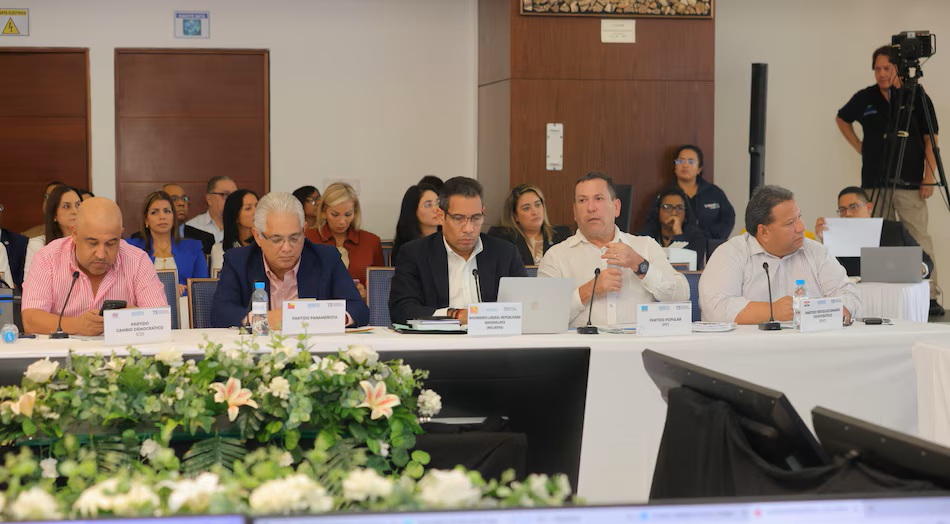
Vice-presidents and undersecretaries of political parties would be excluded from the protection of electoral criminal immunity, if the proposed reform to the Electoral Code is approved, which will begin its first debate this week in the Government Commission of the National Assembly, chaired by PRD deputy Benicio Robinson pictured below. The exclusion of these positions would directly impact the leadership of political organizations.

In the Democratic Revolutionary Party (PRD), two vice presidents, the former mayor of the capital, José Luis Fábrega pictured below, and Jesenka Espinosa would be left without this legal protection. Also without legal protection are six undersecretaries, including deputies Raúl Pineda, Raphael Buchanan, and Arquesio Arias, in addition to former representative of San Francisco, Carlos Pérez Herrera, who faces a trial for the alleged crime of embezzlement.

Currently, the president of the PRD is precisely the deputy Benicio Robinson and the general secretary is Balbina Herrera, former minister and former presidential candidate. In the Realizando Metas (RM) party, five vice presidents would be excluded, including Jaime Ford, one of those charged in the Odebrecht case, and Lourdes Castillo, former director of the Panama Canal Authority. Furthermore, seven RM undersecretaries would not have electoral criminal immunity, including former minister Alma Cortés, who was investigated for the alleged crime of embezzlement, and Alejandro Pérez. The president of RM is Ricardo Martinelli, currently in exile in Colombia to avoid a sentence of more than 10 years in prison for money laundering in the New Business case, while the secretary general is Congressman Luis Eduardo Camacho pictured below on the right of Ricardo Martinelli.

In the People’s Party (PP), six vice-presidents and three undersecretaries would lose their immunity. In the Nationalist Republican Liberal Movement (Molirena), six vice presidents would be excluded from this protection, including the corregimiento representative Sheyla Grajales and the former vice Mayor Judy Meana, in addition to three undersecretaries. In the Panameñista Party, the measure would apply to three vice presidents and three undersecretaries. In Democratic Change (CD), two vice presidents and three undersecretaries would be excluded. In the Broad Front for Democracy (FAD), three vice presidents, including union leader Saúl Méndez, considered an international fugitive, as well as six undersecretaries, would not receive this benefit.
Proposal and Opposition.
The initiative to modify article 305 of the Electoral Code and reduce the number of people benefiting from electoral criminal immunity was presented by the Electoral Tribunal (TE) to the board of the National Commission for Electoral Reforms (CNRE) in September 2025. The proposal faced opposition from the outset. Alma Cortés was one of the most vocal opponents of limiting immunity during the discussion of the initiative at the CNRE. “This exclusion violates a fundamental right,” questioned Cortés, who also pointed out that other positions within the parties, such as directors, would retain the benefit. “There are parties that have up to 27 boards of directors. I think excluding them (vice presidents and undersecretaries) is a step backward. I don’t agree,” he said at the time.
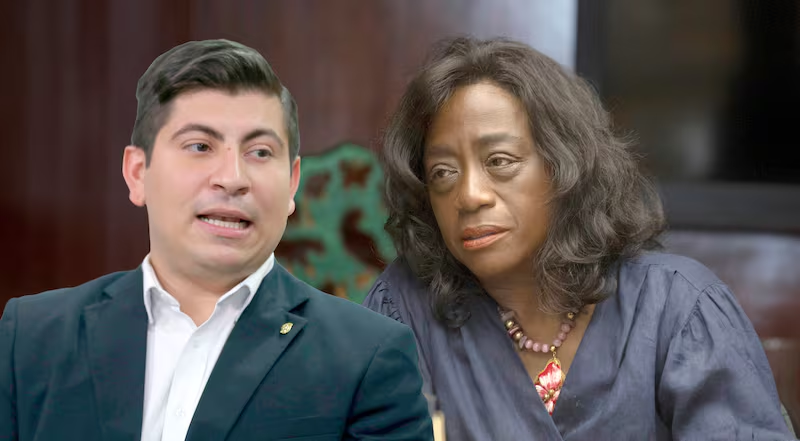
Another opponent was Ricardo Torres, the PRD’s fourth undersecretary. Although he admitted that on many occasions “there are four scoundrels who seek to protect themselves with immunity,” he maintained that the party does not agree with the initiative. Others, however, welcomed the proposal. One of them was Jorge Bloise pictured above left, a deputy from the Vamos party. He explained that, while the independent bloc sought to eliminate immunity altogether, reducing the number of people benefiting from it was better than nothing. “We welcome these small steps,” he said.
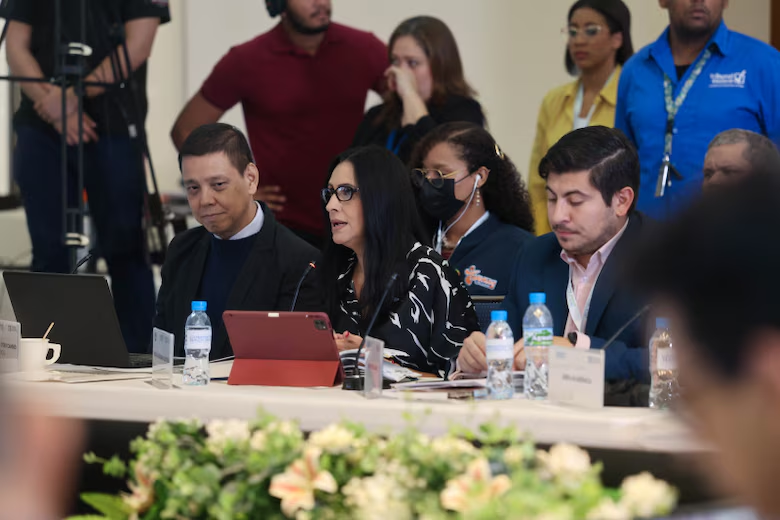
Felix Wing, from Moca, electoral prosecutor Ana Raquel Santamaría, and Representative Jorge Bloise voted in favor of limiting immunity.
The TE’s proposal was approved by a narrow margin in the CNRE. It received seven votes against, from the PRD, Realizando Metas, Molirena, the Panameñista Party, Cambio Democrático, the Popular Party, and the Alianza Party, and seven votes in favor, from the Otro Camino Movement, the Electoral Attorney General’s Office, the Independent Candidate, academia, NGOs, private companies, and workers. The tie-breaking vote was cast by Magistrate Narciso Arellano, and the proposal was approved with eight votes in favor and seven against.
Purification of the Jurisdiction.
Last Monday, August 31, when the TE presented the package of reforms to the legislative plenary, Magistrate Arellano highlighted the change related to electoral criminal immunity. He recalled that this legal figure constitutes a guarantee linked to the protection of the exercise of political functions and rights, “but this guarantee must maintain a scope strictly related to its purpose.” Consequently, he argued that the project refines the list of people eligible for immunity, including electoral delegates and liaisons. “The amendment seeks to prevent a guarantee of an exceptional nature from becoming an excessively broad procedural immunity mechanism,” he said. In the past, several politicians who have enjoyed electoral criminal immunity have faced legal proceedings.
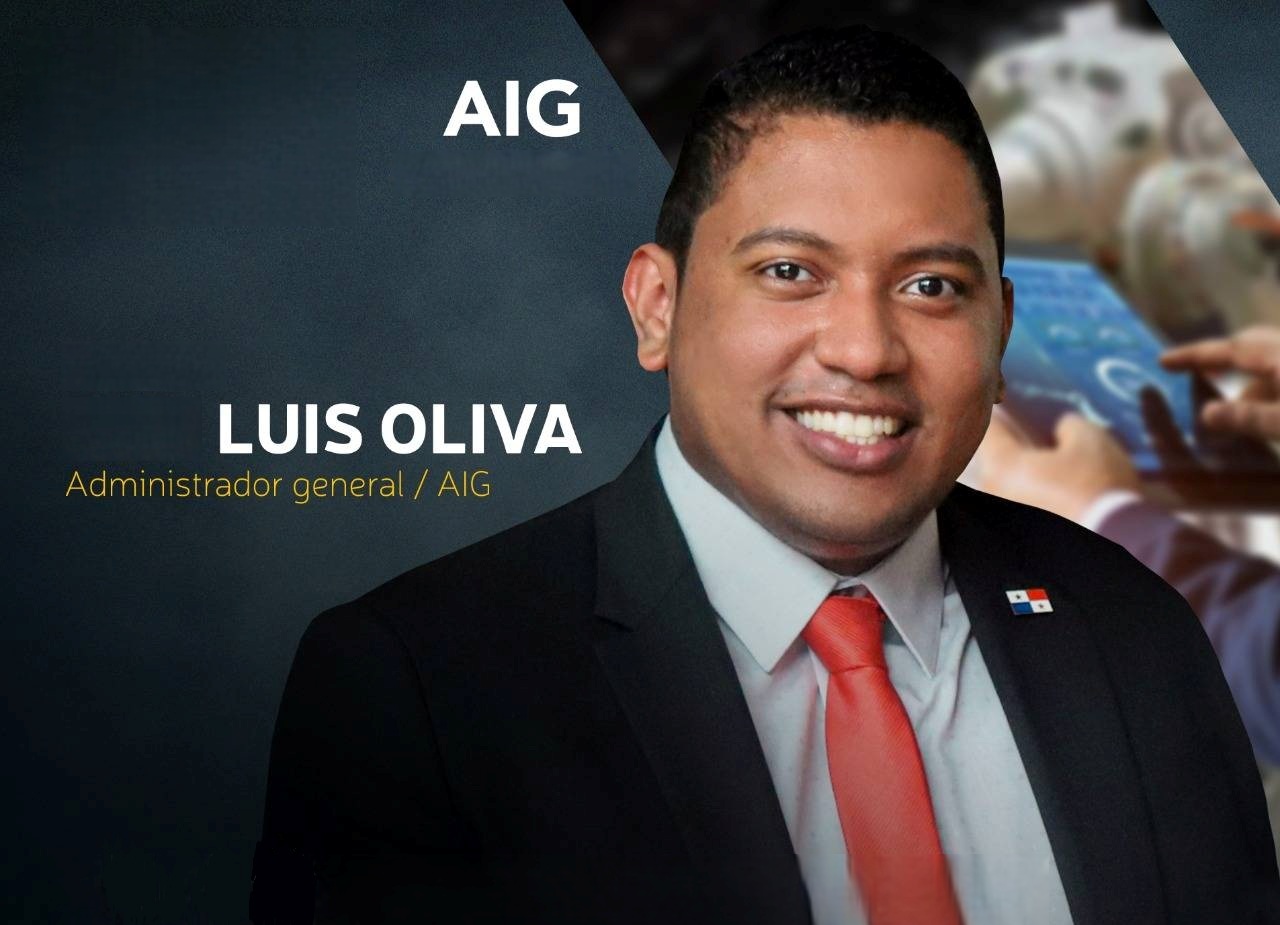
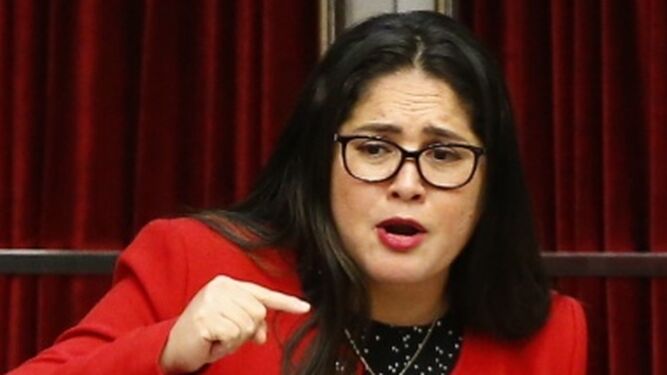
For example, Luis Oliva pictured above, former director of the Authority for Government Innovation (AIG) and former congressional candidate, who was charged with the alleged crime of unjust enrichment, decided to waive this legal protection. Bernardo “Nando” Meneses, former director of the Institute for the Training and Development of Human Resources (Ifarhu) and congressional candidate for the PRD, also had this legal protection and has been investigated in several cases, including one related to financial aid. The Electoral Tribunal ordered the removal of immunity from prosecution for former congresswoman and presidential candidate Zulay Rodríguez pictured below, in connection with the alleged misappropriation of gold sheets belonging to Mexican national José Luis Penagos.
Former President Martinelli pictured below, also enjoyed immunity during his legal proceedings, including the Odebrecht case. The concept of electoral criminal jurisdiction was created in 1983, with the Electoral Code of that year, established by Law 11 of August 10, 1983. Its validity is activated when a political party holds internal elections, primaries, or participates in general elections.