A New Era at the Panama Canal Begins with Ilya Espino de Marotta.
The first woman to head the Canal begins a new stage marked by the global water crisis and the challenge of maintaining the competitiveness of the interoceanic waterway.

This Monday, September 7, Ilya Espino de Marotta will formally assume the administration of the Panama Canal. The ceremony took place at 7:00 a.m. in the outdoor area of the Administration Building, before approximately 150 guests. It will be a historic moment: she will become the first woman to lead the interoceanic waterway in its more than 100-year history. Beyond the significance of being the first woman to hold this position, Espino de Marotta faces one of the greatest challenges the Canal has ever faced: ensuring its future in a scenario where water levels have become an increasingly critical condition for keeping the waterway operational, efficient, and competitive.
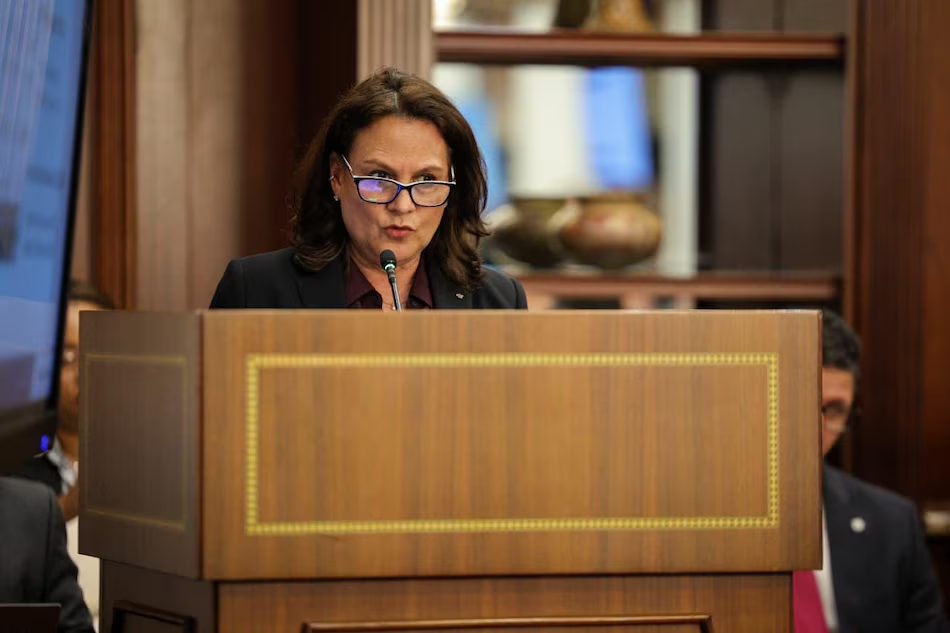
The Canal cannot function without water. But that same water does not belong exclusively to the ships. Lakes Gatun and Alhajuela are the source of water for more than 2.5 million people, more than half the country’s population. The new administrator will then have to navigate between two needs that share the same resource: maintaining the road’s transit capacity and ensuring the supply for human consumption amidst a global water crisis. The magnitude of that challenge has already become evident. In 2023, the third driest year in the Canal’s history, the lack of water forced a reduction in transits from between 36 and 38 daily to 24. Some 1,700 ships stopped passing through, and the estimated impact was $900 million.

“Why did the Canal have to reduce transits? Because otherwise, it would have impacted water consumption in the population,” Espino de Marotta recalled a few days ago at a financial conference. On Friday, September 4, during a conference with the financial sector, Espino de Marotta explained that the Canal has already begun taking measures to ensure its lakes reach reasonably optimal levels by the summer of 2027. Since July, the draft has been progressively reduced, and as of September 4, transits have decreased from 36 to 34 per day. Starting September 15, the number will be 32.
What is Happening in Panama is Part of a Larger Problem.
Ocean warming is making some extreme weather events more frequent or intense and altering rainfall patterns. The World Meteorological Organization has warned that El Niño (2026-2027) could worsen droughts and floods and cause economic and social impacts around the world. For the Canal, the long-term answer lies in one of the projects that will occupy a central place in its administration: the Indio River reservoir. Espino de Marotta has said the project could add 10 to 15 lockages per day and provide water security for the Canal for about 50 years. The Category III Environmental Impact Study is scheduled for January 2027, while the Panama Canal Authority (ACP) continues its dialogue with the communities that would be affected.
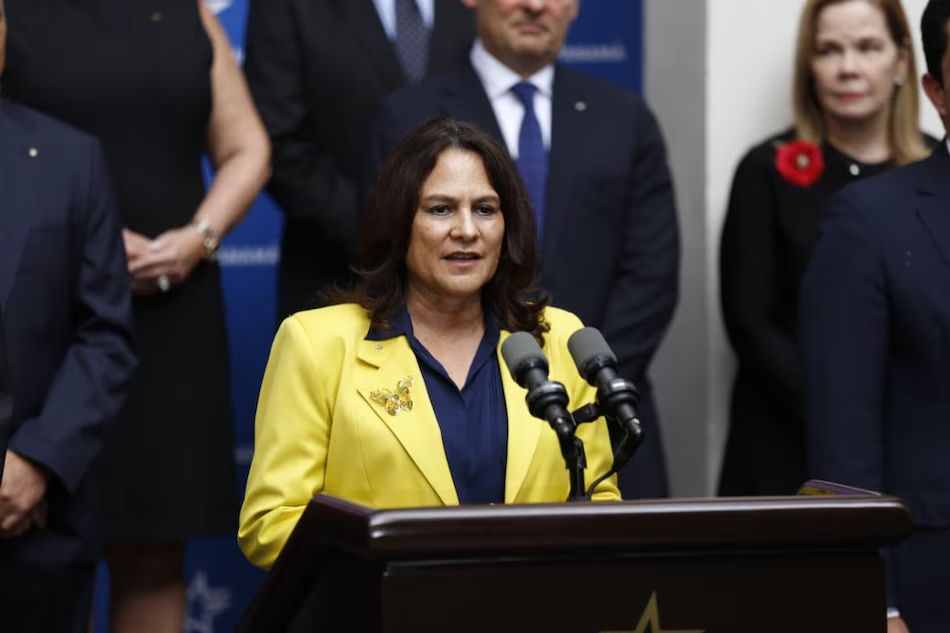
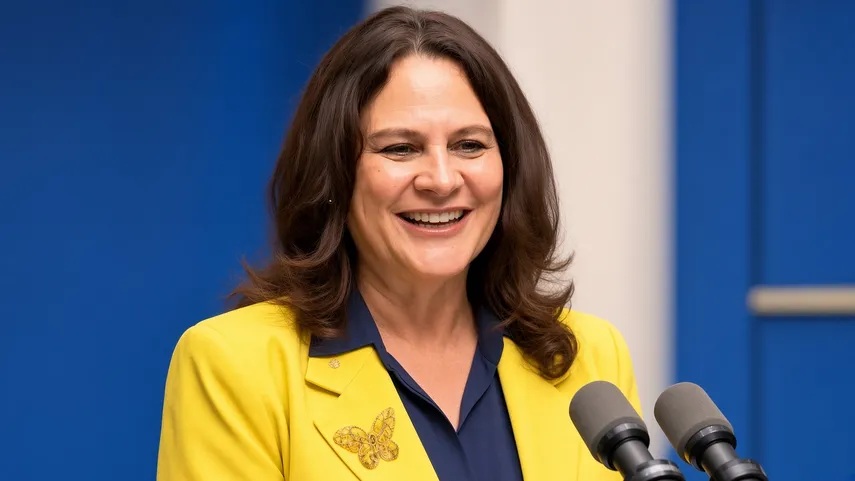
Thus, water emerges as the thread connecting many of the challenges facing the new administrator. It is not simply a matter of ships continuing to pass. It is about ensuring the Canal can continue generating value for Panama without compromising a resource that Panamanians also need. As she herself said in an interview days before her appointment was announced last May: “without water, everything else loses relevance.” Perhaps that is why it is impossible not to return to that image from May 21st. That day, when Ilya Espino de Marotta pictured above and below, appeared in the oval room of the Canal Administration building, dressed in yellow to receive the news of her appointment, the color seemed to say something more. Yes, she surely knew it suited her. But yellow is also associated with energy, optimism, and abundance. And perhaps, unintentionally, she ended up wearing the symbols of what is now expected of her administration: energy to make decisions, optimism to face challenges, and, above all, an abundance of water.
Her arrival in the administration also crowns a career marked by firsts. When she arrived at the Canal in 1985, she was the only marine engineer in the Industrial Division’s shipyard. Thirty-five years later, in 2020, she became the first woman to hold the position of Deputy Administrator. In 2024, she achieved another milestone: she was appointed as the institution’s first Sustainability Officer. Now she crosses the most important threshold of her career. And she does so after a succession of four men who led the Panamanian administration of the waterway:
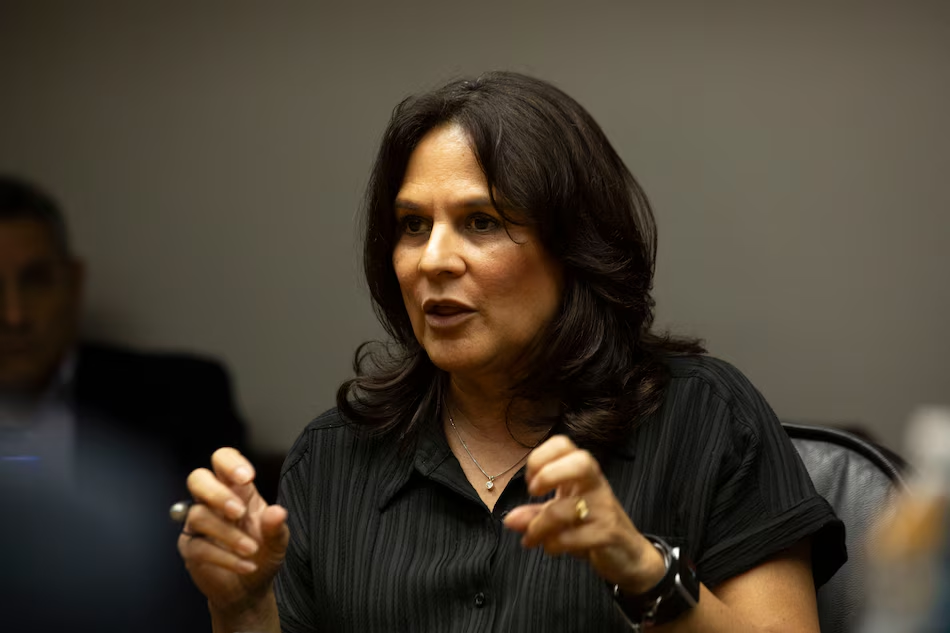
Gilberto Guardia Fábrega, the first, still under the Panama Canal Commission; Alberto Alemán Zubieta, who directed the transition to Panamanian administration and a good part of the expansion’s history; Jorge Luis Quijano, at the helm of the Canal during the construction and commissioning of the new locks; and Ricaurte Vásquez Morales, who took the reins in 2019 and during his administration promoted the diversification of the business. Ilya is therefore not arriving at an institution that is foreign to her, after having spent more than 40 years within the Canal itself, from that shipyard where she was the only marine engineer to the management of large projects, the expansion of the waterway and the sub-administration.
Now it is her Turn to Manage the Next Stage.
A stage in which the Canal will have to continue moving ships, generating revenue and expanding its business, but under a premise that is increasingly difficult to ignore: for the route to continue working, there will have to be water, it will have to compete with the new logistics corridors of the world and guarantee trust among customers. Espino de Marotta will assume the administration of the Canal on the same day that, 49 years ago, Panama and the United States signed the Torrijos-Carter Treaties, which paved the way for the interoceanic waterway to pass into Panamanian hands.
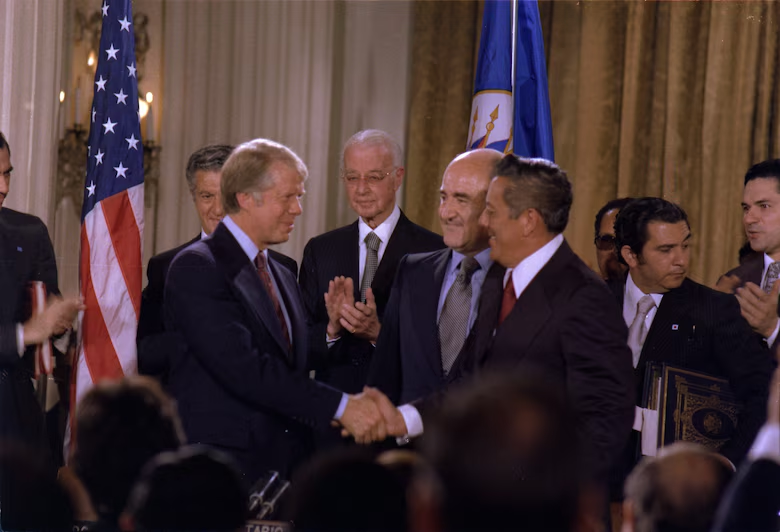
Jimmy Carter and General Omar Torrijos shake hands after signing the Panama Canal Treaty in the Pan American Union Building, Washington, September 7, 1977.