Why Brides Are Choosing East-West Engagement Rings Now
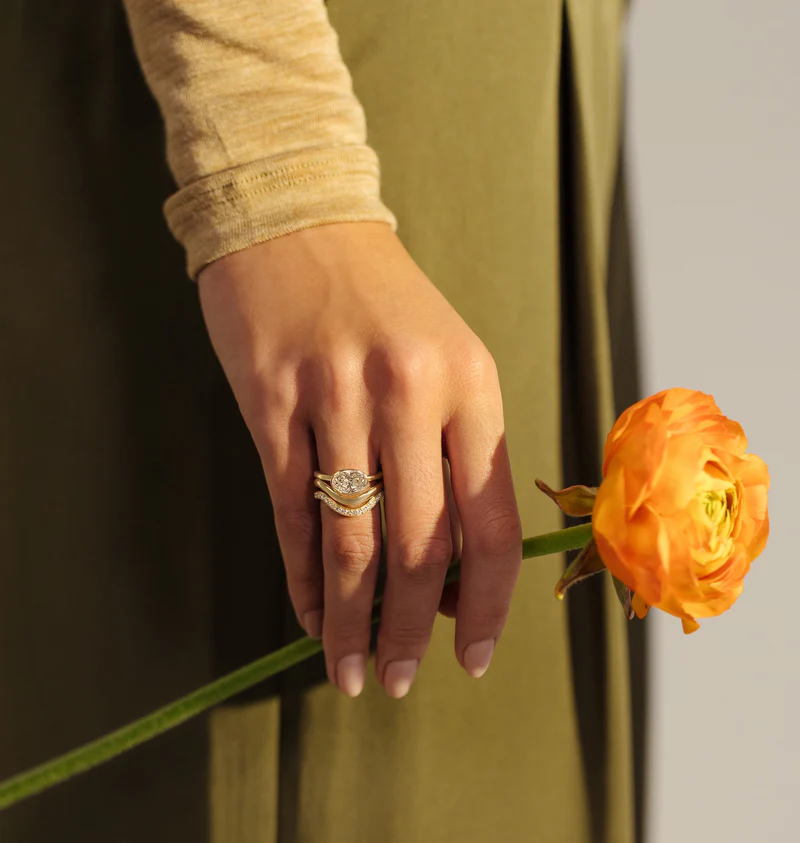
Turn a diamond on its side and something interesting happens. The stone stretches across the finger instead of pointing up it, and suddenly the whole ring reads differently. That small rotation is behind one of the more unexpected shifts in bridal jewellery this year.
What Actually Makes a Ring “East-West”
The name comes from orientation, not shape. A traditional solitaire runs north to south, with the point of the stone aligned with the finger. An east-west setting rotates that same stone 90 degrees, so it sits horizontally instead. Oval, marquise and emerald cuts tend to suit the style best, since their length becomes the star of the design rather than an afterthought. Round stones can work too, though the effect is subtler.
It sounds like a small tweak. On the hand, it isn’t. The ring sits lower and wider, which changes how it catches light and how it moves when you gesture, type, or just rest your hand on a table.
The Shift Away from Traditional Settings
Bridal trends usually move slowly, so this one is worth paying attention to. Search interest in “east-west engagement ring” has climbed steadily over the past two years, and independent designers report the style outselling some of their long-running classics. Part of the appeal is practical. A horizontal stone sits more securely against everyday knocks than a tall, upright one, which matters if you’re not planning to take the ring off for gardening, cooking or the gym.
There’s also a generational element. Brides who grew up watching older relatives wear the same three or four solitaire shapes are looking for something that still feels like an engagement ring, just not an identical one. East-west settings deliver that without straying into novelty territory.
Why the Silhouette Suits Modern Hands
Stylists point to proportion as the real driver here. A horizontal stone tends to elongate the finger visually in a way a vertical one doesn’t, which is one reason the look photographs so well on Instagram and in real life. It also pairs cleanly with thinner bands and minimal prongs, since the stone itself is doing most of the visual work. East-West Set by Cullen is a good example of the style done with restraint: a single elongated stone set low against the knuckle, with no distracting halo or side stones to compete with the shape. It’s the kind of ring that reads as deliberate rather than trend-driven, which is exactly what most brides are after when they choose something unconventional.
What to Consider Before You Commit
Not every hand suits every orientation, so it’s worth trying one on rather than judging from photos alone. Shorter fingers can sometimes look better balanced with an east-west stone than a tall one, while those with narrower fingers may prefer a smaller carat weight to keep proportions in check. Ask about the setting’s security too. A well-made east-west ring should have prongs or a bezel positioned to protect the stone’s more exposed edges, not just mirror a standard solitaire mount rotated sideways.
Whichever direction you land on, the point of an engagement ring was never really about following the expected layout. It’s about picking the one that looks like it was made for your hand specifically, not the average one.