To Cross the Panama Canal a Ship Pays a Record Amount of 5.3 Million United States Dollars.
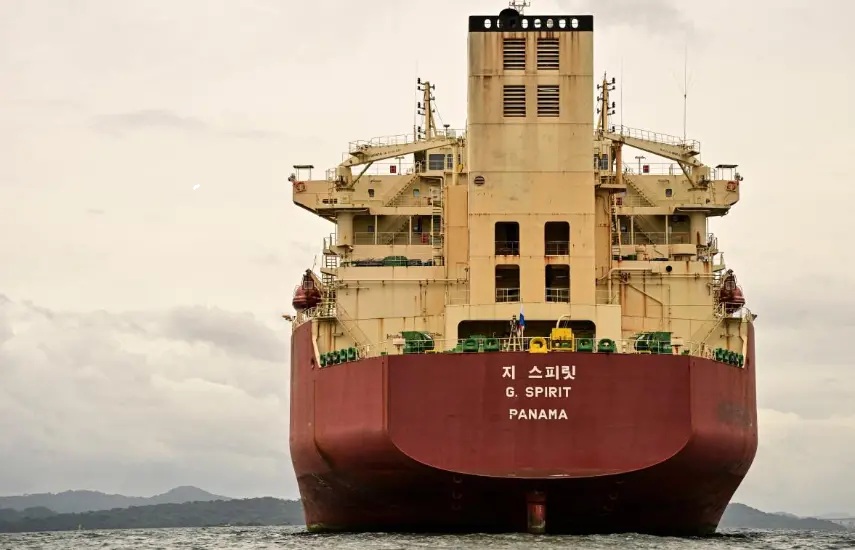
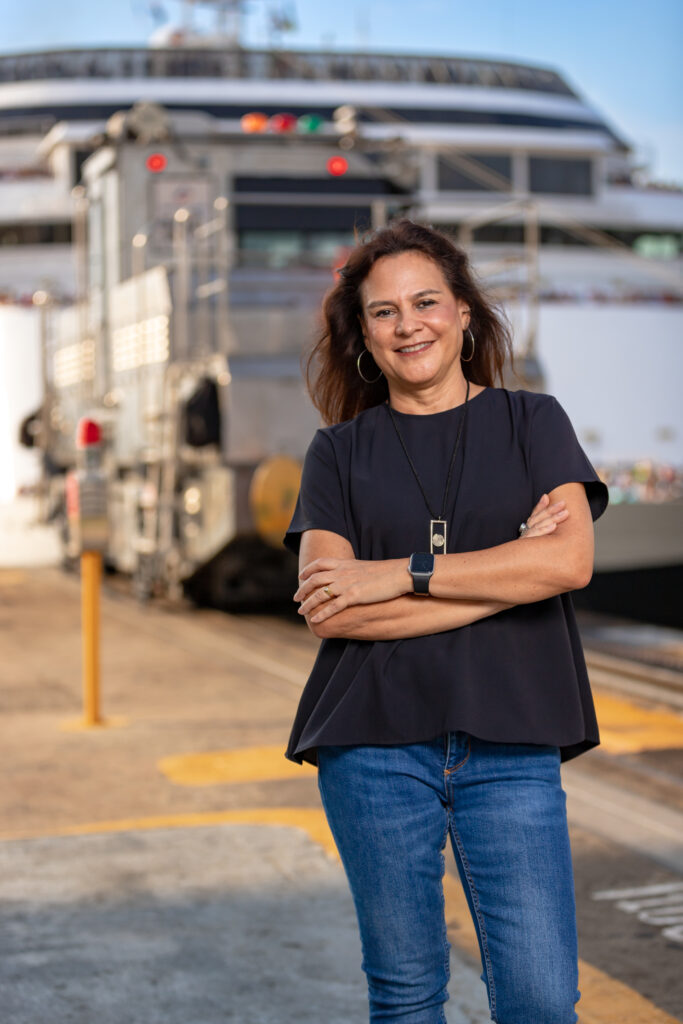
A ship carrying liquefied petroleum gas paid $5.3 million to cross the Panama Canal faster, which will reduce transits in a week due to the El Niño phenomenon, an official source reported. The canal, through which 5% of global maritime trade passes, will reduce the number of daily transits from 36 to 34 ships starting September 3. Twelve days later, it will reduce this to 32 to conserve water due to the low levels of the lakes that supply the waterway. This system operates using rainwater stored in the artificial lakes of Gatún and Alhajuela, whose levels have decreased due to the adverse effects of the El Niño phenomenon. The designated administrator of the canal, Ilya Espino de Marotta pictured below, confirmed in response to a question from AFP that a ship paid $5.3 million to cross the route, although she did not give details of the vessel.
However, Bloomberg reported that South Korean company SK Gas Ltd paid the sum to have the G. Spirit ship cross on September 1, two days before the start of the transit restrictions. “We’ve had three auctions like this recently that were a bit high,” he said. And he confirmed that “this is the highest amount” paid so far, he added. Nine out of ten crossings through the canal are scheduled by reservation. The remaining slots or those transits that are modified due to a last-minute contingency are auctioned. In April, one ship paid up to four million dollars in one of those auctions due to the urgency of crossing hydrocarbons as a result of the increased demand caused by the blockade in the Strait of Hormuz.

Espino de Marotta pictured above, clarified that the auction price is “dictated by the market; the Canal sets a base price, and then it depends on which ship has the greatest need to make a transit, which is what drives up the figures.” The Panama Canal Authority said in a statement that the average auction price between October 2025 and February 2026 was approximately $55,000. However, recent results were three times higher. The Panama Canal, whose main users are the United States and China, primarily connects the US East Coast with the Asian giant, South Korea, and Japan.