Correction of Non-Compliance Demanded by MiAmbiente During the Inspection of Cobre Panamá.
The office of Juan Carlos Navarro reported that more than a dozen specialists are at the Donoso mining project this week evaluating water, soil, air, and ecosystems. Among the pending issues are reforestation obligations, ecological restoration, acid mine drainage, erosion, and water management.

A team of more than 12 scientists and specialists from the Ministry of Environment (MiAmbiente) is inspecting the facilities of Cobre Panamá this week, in Donoso, Colón province, as part of the environmental monitoring that the State maintains on the mining project closed since the end of 2023. The information was released by the office of Minister Juan Carlos Navarro, who explained that biologists, geologists, chemists, and engineers are conducting new measurements and taking samples to assess the quality of the water, soil, and air, as well as the condition of rivers and other ecosystems located around the mine.
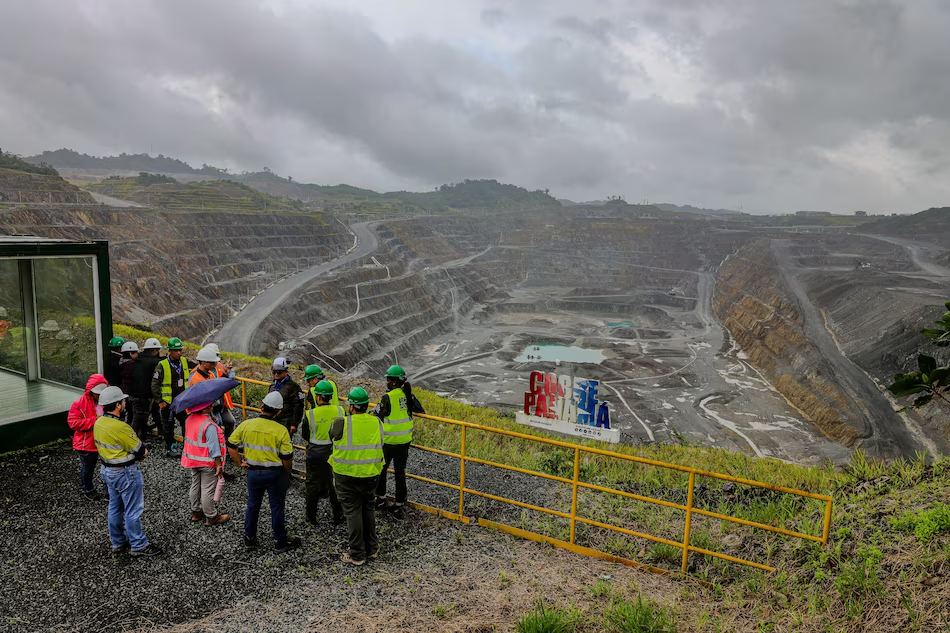
The audit coincides with the results of the comprehensive audit carried out on the project, which identified a lack of compliance in matters of reforestation, ecological restoration and environmental management. The Ministry of Environment clarified that one of the main issues concerns the reforestation and compensation obligations that the mine must fulfill. According to the ministry, 7,375 hectares outside the project’s footprint and another 3,100 hectares within it remain under monitoring. Compliance is required for these areas through reforestation or monetary compensation, subject to the institution’s technical approval. Last July, Minister Navarro explained that the project was only supposed to involve 2,100 hectares, but more than 332 additional hectares were affected. He specified that the excess area represented 15.8% over the permitted limit.
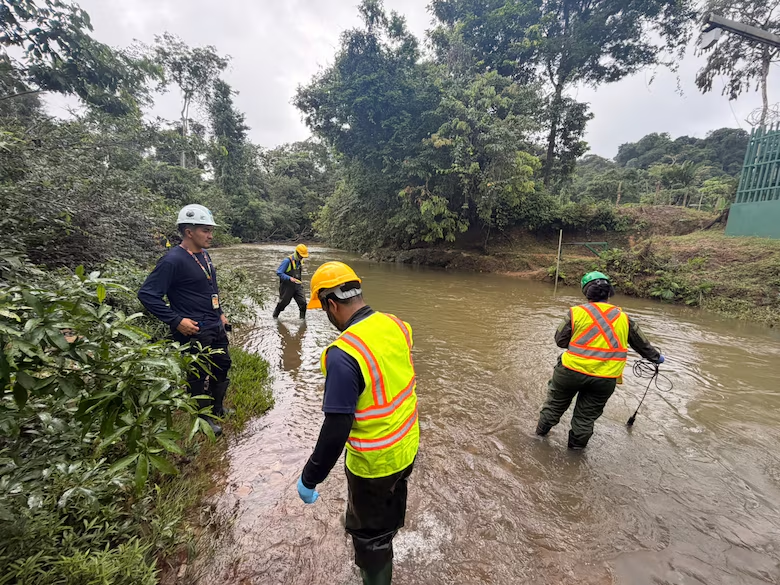
Scientific personnel from the Ministry of Environment took water samples from near the Donoso mine. Courtesy of Miambiente.
Navarro warned that non-compliance in reforestation ranges between 40.7% and 45.7%, depending on the area. Furthermore, the Ministry of Environment indicates that the mine needs to demonstrate the effectiveness of measures to control erosion and sediment, preserve water quality, recover aquatic ecosystems, restore habitats, and establish functional corridors for wildlife. The list also includes long-standing issues that continue to be monitored, such as acid mine drainage, erosion, tire disposal, tailings transport, discharges, reuse of treated water, and the capacity of contact water ponds. Some of these cases have already been subject to administrative proceedings and sanctions, but the ministry notes that they still need to demonstrate effective remediation. “It is not enough for the mine to be closed. Our obligation is to be there, with science and rigor, verifying every commitment and demanding that what needs to be corrected is done,” said Environment Minister Juan Carlos Navarro.
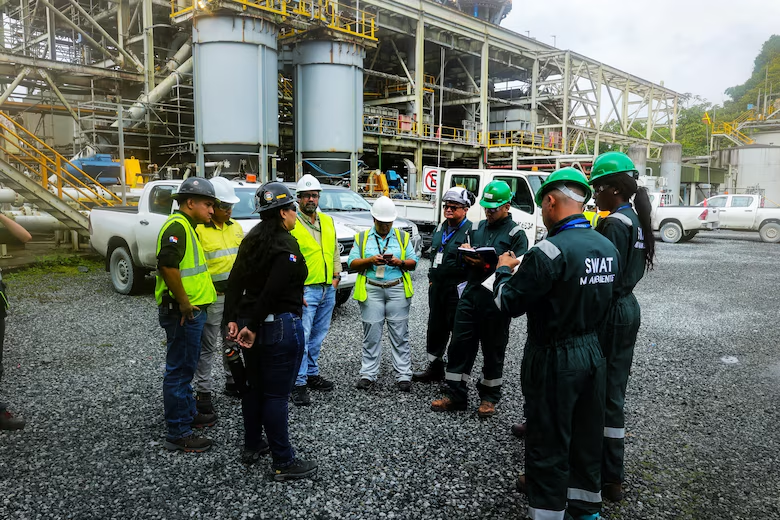
The Ministry of the Environment reported that it has been conducting several inspections of the mine since 2024.
He clarified that the monitoring did not begin with the delivery of the audit. He asserted that since 2024, the Directorate of Environmental Performance Verification (Diveda) has maintained oversight of the complex and has prepared more than a dozen technical reports on environmental auditing and monitoring. This Saturday, Cobre Panamá was asked about the inspections by the Ministry of Environment, but they indicated that these are routine visits and they have nothing to add. It was recently announced that the company plans to export some of the copper processed from the exposed and stored material at the project this month. This information was provided by Tristan Pascall, CEO of First Quantum Minerals, Cobre Panamá’s parent company, during the presentation of the second-quarter 2026 results report.
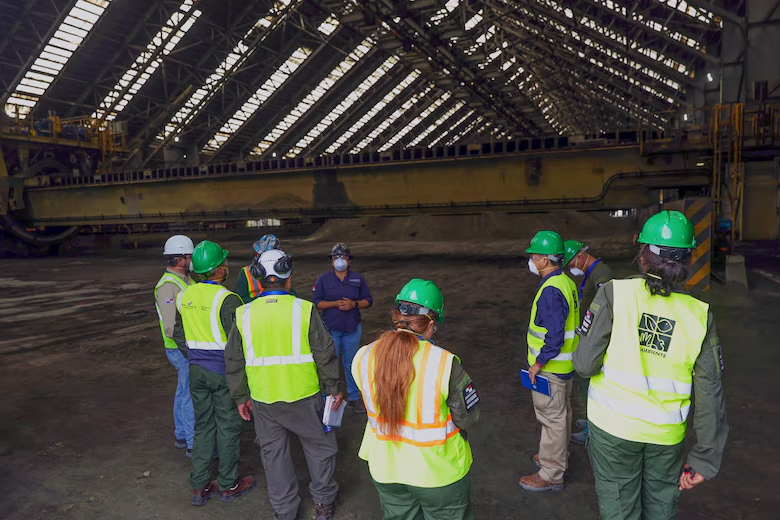
Inspection of the storage area at the Donoso mine.
In the report, the company noted that the government authorized the removal, processing, and export of the ore stored at Cobre Panamá on April 7, 2026. Consequently, in May, it launched the first of three milling circuits and began producing copper concentrate. During the second quarter, the company indicated that it processed 2.1 million tons of ore and produced 3,216 tons of copper, and estimates that 38 million tons remain in storage, with about 70,000 tons of recoverable copper. So far, the High-Level Commission, made up of the Ministries of Commerce and Industries, Environment, and Economy and Finance, has indicated that it will present a proposal to the President of the Republic regarding the fate of the mine before the end of the year. Meanwhile, environmental groups have warned about the shortcomings of the audit and have requested that compliance with all commitments be demanded and that the report not be accepted due to technical and verification failures.