Due to the El Niño Phenomenon the Panama Canal Evaluates Adjustments to Ship Transit.
The Panama Canal Authority is reviewing its transit capacity in anticipation of an El Niño event that could last longer than usual. Ricaurte Vásquez, administrator of the ACP, indicated that new measures will be announced in the coming hours.
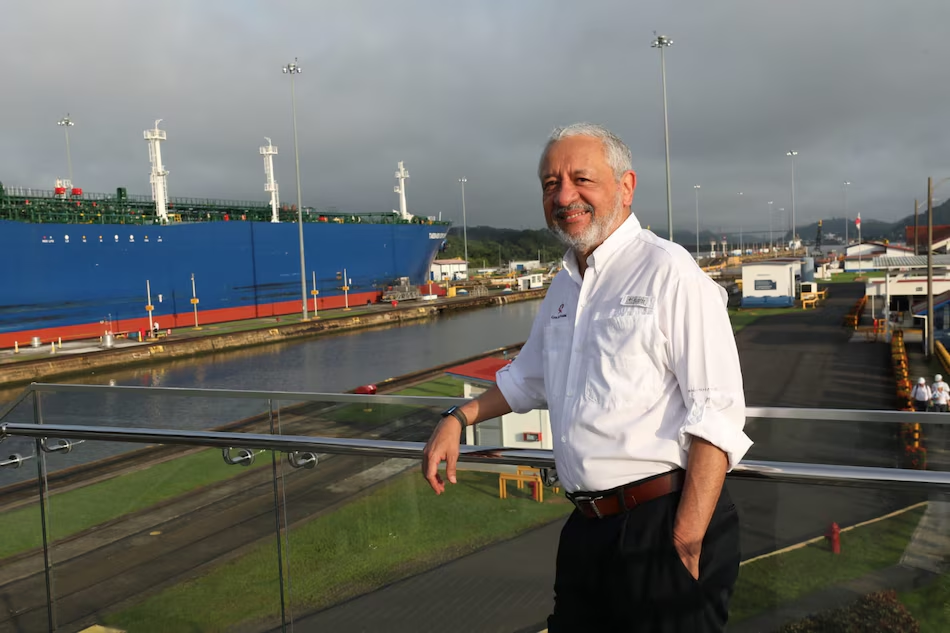
The Panama Canal Authority (ACP) is evaluating new adjustments to daily ship traffic due to the effects of the El Niño phenomenon and the need to preserve enough water to maintain operations during the upcoming dry season and for the population, the administrator of the interoceanic waterway, Ricaurte Vásquez pictured below, revealed this Wednesday. Vásquez explained that the Canal currently handles around 34 transits per day, but warned that this capacity could be modified as part of the measures being analyzed by the administration. “We are currently processing 34 transits. We may have to make an adjustment in that regard and make an announcement within the next 48 hours,” Vásquez told news media sources.
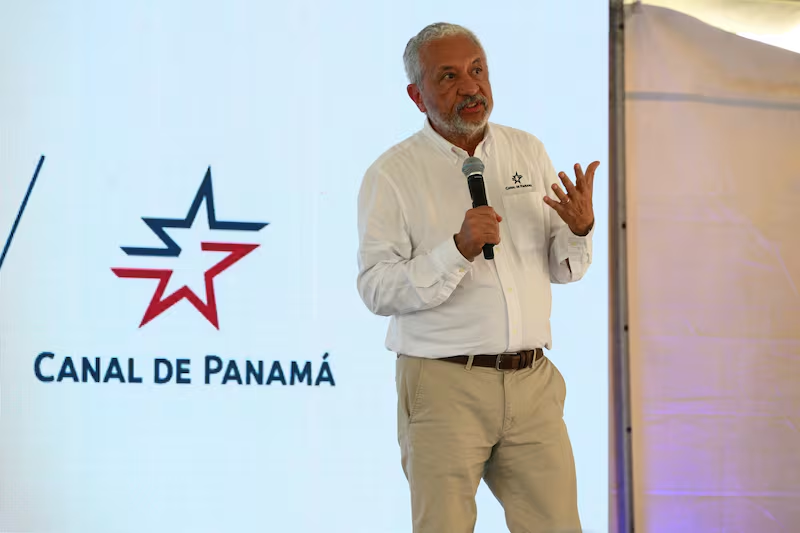
The administrator declined to specify whether the adjustment would involve a reduction or an increase in the number of transits and indicated that the announcement would be made no later than this Thursday. The decision is in response to a climate scenario that, according to Vásquez, presents different characteristics than previous El Niño episodes. Although the phenomenon found the Canal’s lakes at higher levels, the concern is focused on its potential duration. “This is a different El Niño event. This is an El Niño event that is showing very early signs. It is an El Niño event that finds us, or found us, with the lakes at higher levels.
But it will possibly last much longer than any previous phenomenon,” he explained. Given this scenario, he indicated that measures to address the dry season must be adopted in advance and could go beyond the draft restrictions usually used. “Provisions to get through the Panamanian dry season need to be made well in advance. And that requires not only the draft checks we usually do, but we’ll also have to consider capacity, as was done in ’23 and ’24,” he said. Vásquez recalled that during the 2023-2024 drought, the Canal had to restrict both the draft and the number of daily transits due to the decrease in water levels.

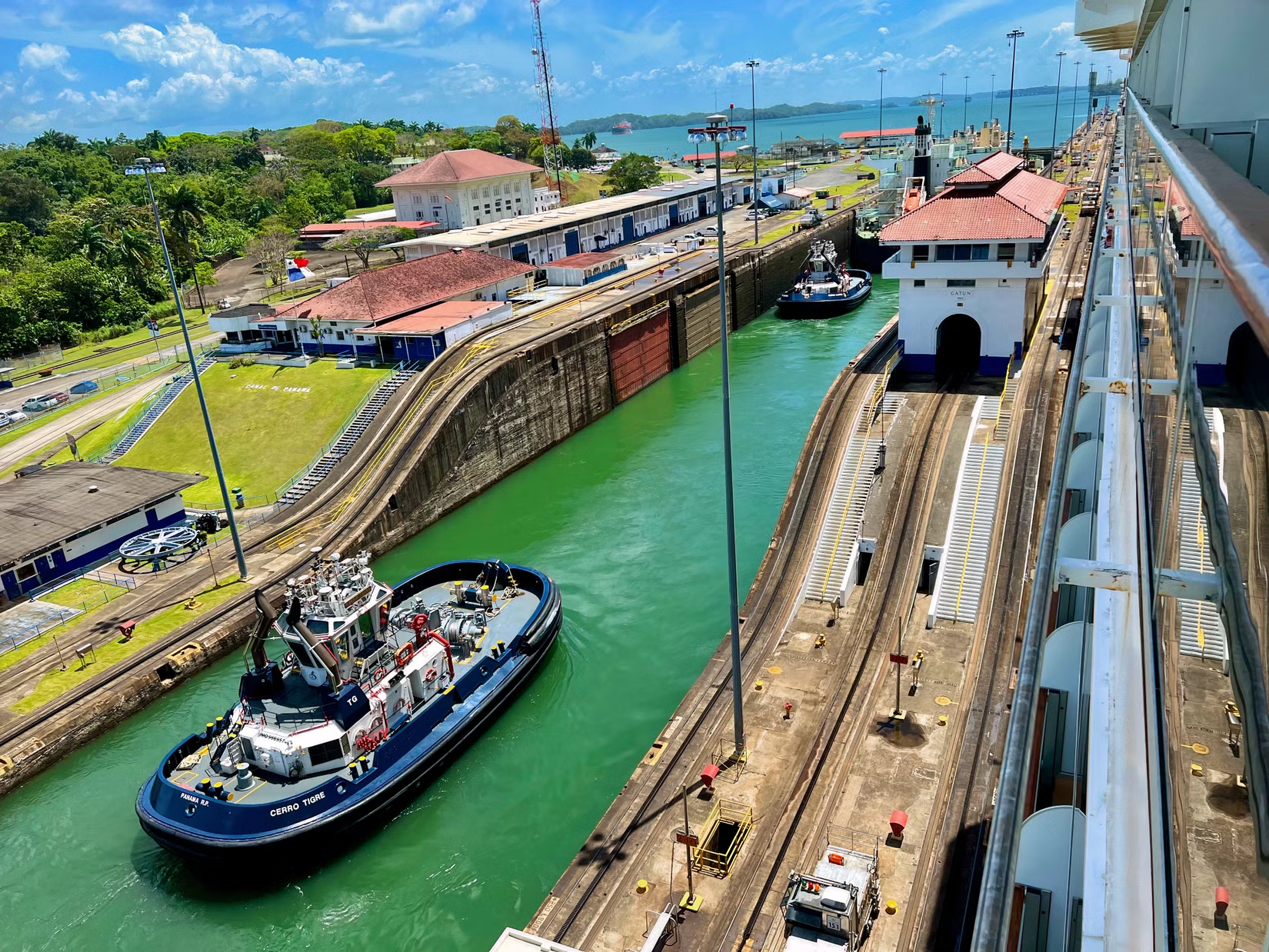
He asserted that this experience allowed the Panama Canal Authority (ACP) pictured above, to better prepare for the current situation. “The experience of the 23rd and 24th has prepared us very well for this, both in terms of what we know and in terms of the discipline needed to address what we don’t. The Canal does not improvise. The Canal is prepared,” he stated. The administrator explained that any adjustment to traffic capacity will not only respond to the immediate situation, but also to the need to manage available water until the rains return next year. “We have to adjust the traffic volume so that we can not only handle what is already there but also make sure that we make it through December, get through the dry season next year, and wait for the rain in May and June next year,” he said.
He added that the decisions being made are being evaluated with a perspective of approximately eight months. “This isn’t an improvisation because it reflects what’s happening today. It’s designed not only to address this situation but also to address it over the next eight months,” he stated. The Panama Canal is currently operating with a draft of 48.5 feet (14.78 meters) in the Neopanamax locks since August 15, which was the third adjustment to the announced schedule: the draft first dropped to 49.5 feet (15.09 meters) on July 3, then to 49 feet (14.94 meters) on July 24 and subsequently to the current 48.5 feet. The program also includes further reductions to 48 feet (14.63 meters) on August 26 and 47.5 feet (14.48 meters) on September 3.
Vásquez also indicated that there is currently greater demand for both Neopanamax and Panamax locks, in a context of instability in the markets for petrochemical products, oil, fuels and derivatives. “We have more traffic and more demand on both lines. So that’s what we have to adjust to the capacity of the water availability we have,” he explained. Regarding the high sums recently paid by some ships in auctions, around one million dollars and up to four million dollars in some cases, to obtain a transit slot, Vásquez pictured below, defended the value of the Panamanian route.
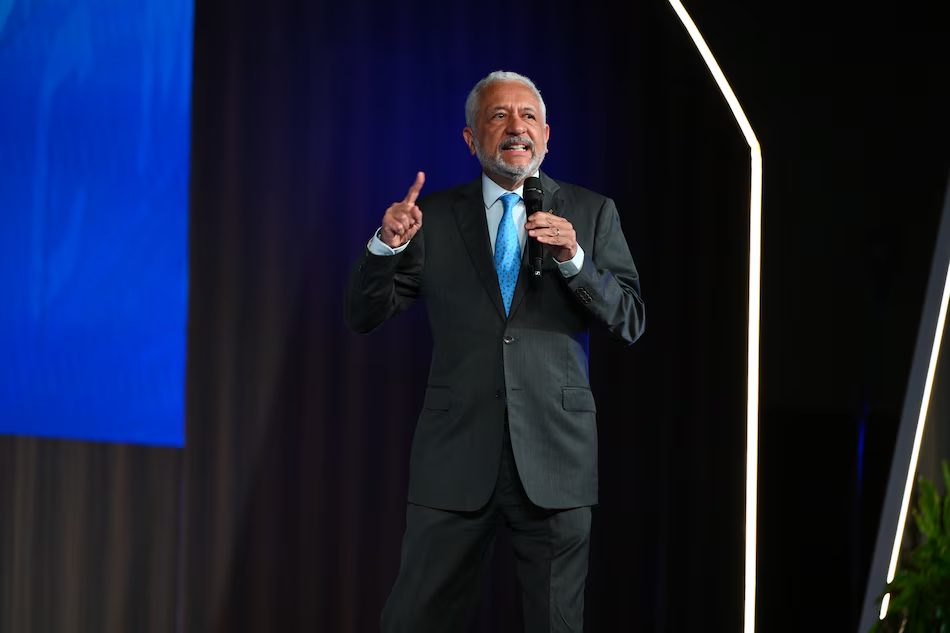
“We Panamanians shouldn’t be ashamed that the value of our route is so high. On the contrary, we Panamanians should recognize that this is the value of the route through Panama and that we have every right to generate that benefit for Panama,” he stated. He also insisted that ships must use the reservation system and that those arriving without reserved space will have to resort to opportunities that may eventually open up through auctions.
Río Indio and the Water Challenge
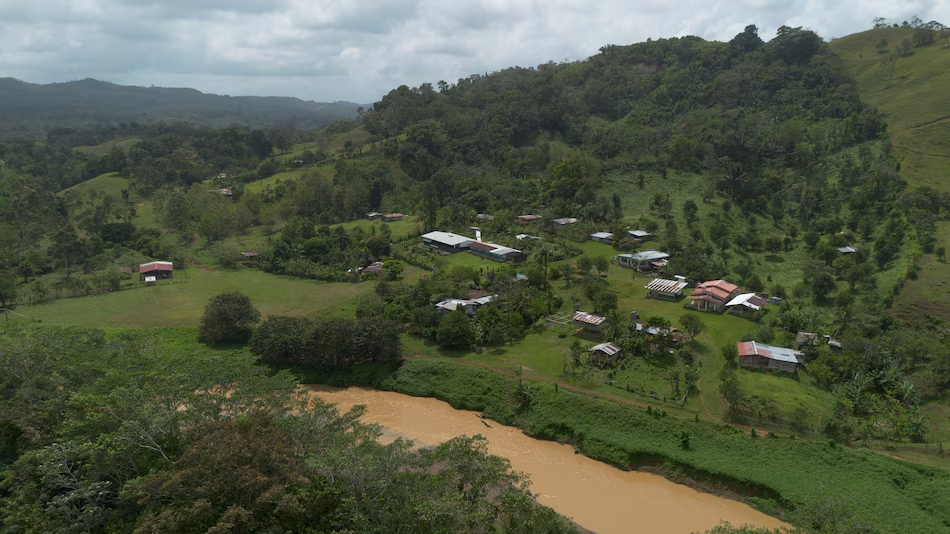
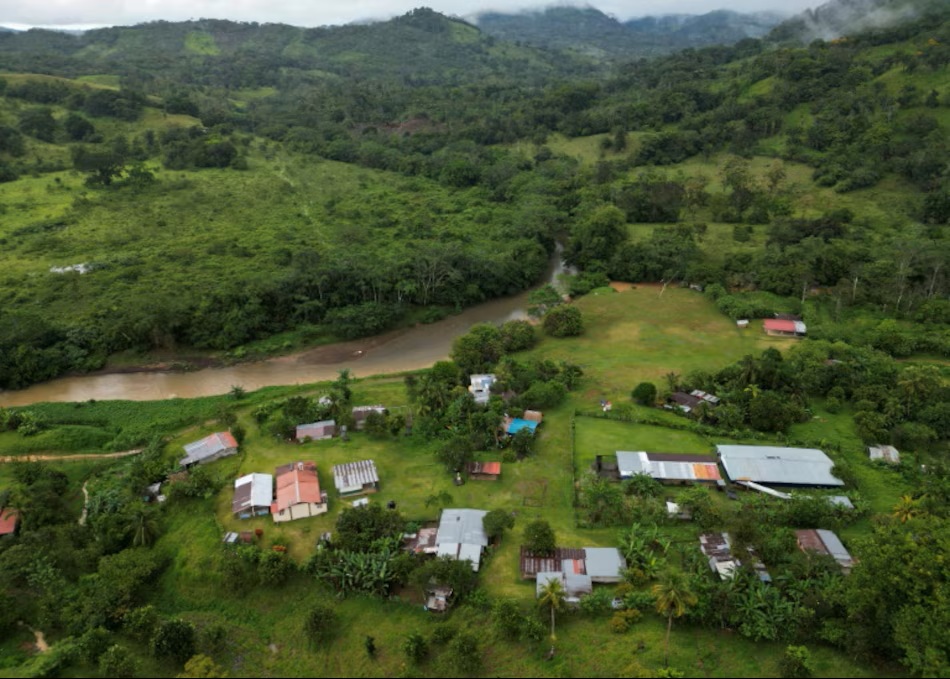
Ricaurte Vásquez argued that the new scenario caused by El Niño reinforces the need to move forward with the Río Indio project pictured below, aimed at expanding the water capacity of the Canal. However, he assured that the weather phenomenon will not alter the project’s timeline. In his view, the main challenge lies not in the engineering, but in reaching the necessary agreements with the communities. “The critical path of that project is not engineering, the critical path of that project is social consensus,” he stated. He also stated that Panama needs to address the water problem from a national perspective, as demand for human consumption continues to grow.
“The Panama Canal may be the largest user of water, but it is the issue of water for human consumption that is driving the demand for water,” he noted. Vásquez’s statements were made during an event of the Chamber of Commerce, Industries and Agriculture of Panama, where he was honored with the Ernesto de la Guardia Jr. Order, in recognition of his work leading the Canal for the past seven years. In assessing his administration, Vásquez asserted that the achievements of the ACP during that period establish a foundation for future projects of the interoceanic waterway. “What the Panama Canal has done in these seven years is unprecedented.
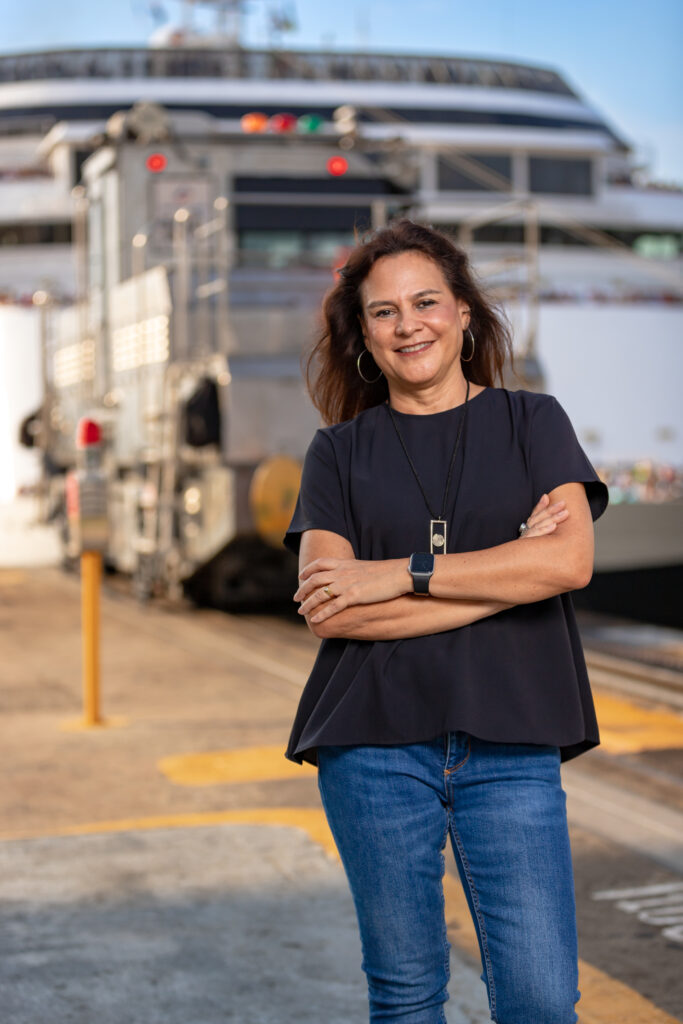
And I believe it sets the bar for what’s to come,” he said. Vásquez will leave the Canal’s administration in September, when Ilya Espino de Marotta pictured below, the current deputy administrator, will take over. Regarding the transition, he stated that the new administration will have to adapt its decisions to the circumstances without losing sight of the long-term strategic objectives. “One has to adjust to the current situation, but not alter the long-term objective. What is at stake right now is the development of Panama, and that development transcends the operation of the Panama Canal,” he stated.