Fake Contracts Were Used in Operation Pandora: Panama’s BAC Complained that the Prosecution Ignored that Fact
Panama’s BAC International Bank filed a criminal complaint over forged contracts used in Operation Pandora, but the public prosecution initially shelved the case.
The Ignored Complaint
- Prior Warning: BAC reported that contracts had been falsified more than a year before the major public sweep to justify the transfer of manipulated tax credits.
- Dismissal by Prosecutor: Deputy Prosecutor Salustiano González provisionally archived BAC’s complaint on October 25, 2025, claiming an inability to locate the physical falsified documents despite copies being provided.
- Missed Leads: The prosecutor failed to interview key individuals or corporate representatives tied to front companies like Master Eco Green and Servicios de Asesoría y Administración Jurado, who are now formally charged in Operation Pandora.
The Context of Operation Pandora
- The Fraud Scheme: A criminal network allegedly infiltrated the General Directorate of Revenue’s (DGI) E-Tax 2.0 system to erase legitimate tax debts and generate roughly $40 million in fraudulent tax credits.
- BAC’s Position: The bank maintains it acted as a buyer in good faith, purchasing tax credits that were officially validated within the government’s digital platform.
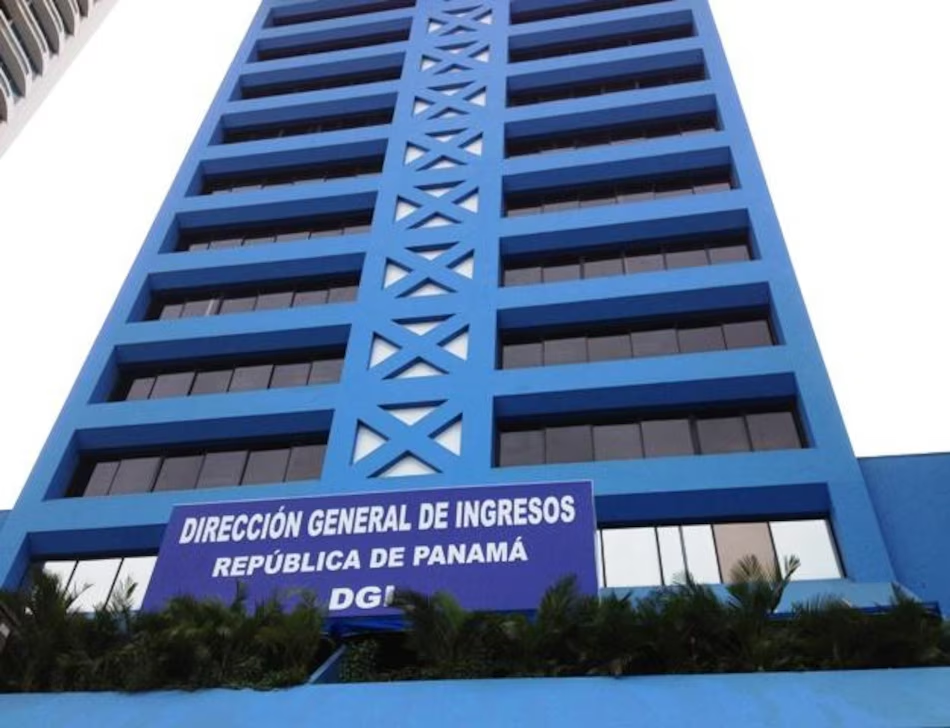
General Directorate of Revenue. The dismantled network allegedly operated from 2022 to May 2025.
BAC International Bank filed a criminal complaint more than a year ago alleging that contracts had been falsified to justify the transfer of tax credits manipulated by an internal network that penetrated the e-Tax 2.0 system of the General Directorate of Revenue (DGI). On July 21, 2025, BAC International Bank, through the law firm Infante & Pérez Almillano, filed a complaint for falsification of documents, in which it warned that contracts and other writings were circulating “with a signature improperly attributed to a representative of the bank.”