Learn How to Protect the Leatherback Turtle in Panama: Beaches Turned into Classrooms
People at the beach watching leatherback sea turtle hatchlings being released.
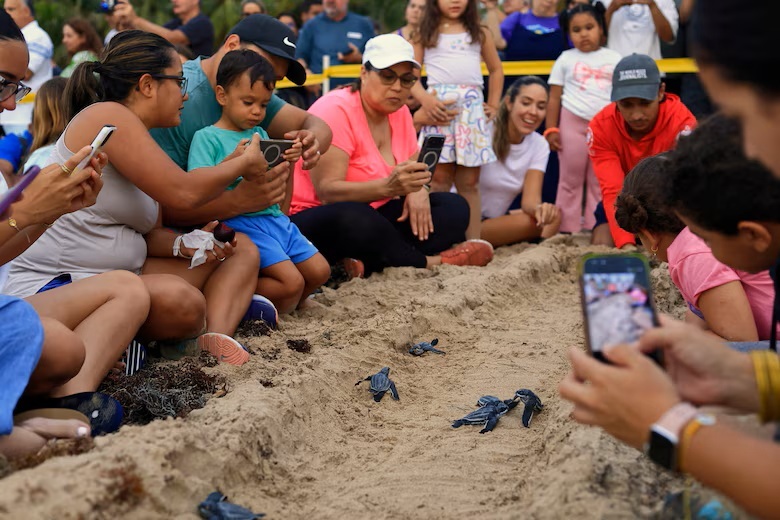
During the summer, the beaches of Puerto Rico become open-air classrooms where children are taught about protecting leatherback turtles, while ensuring that the hatchlings reach the sea safely after emerging from the nests. “One turtle out of every thousand survives. To nest, they almost always come in at night when there are no predators, although there is a lot of light pollution on this coast,” explains Karen Schneck, a volunteer with 7 Quillas, one of the 14 turtle conservation groups that protect the nesting of the world’s largest and most endangered turtles between March and July. Schneck emphasizes the importance of caring for the leatherback turtles with a megaphone to ensure that the dozens of curious onlookers who approach the security perimeter, including children eager to see newborn turtles, are aware of the need to conserve this pelagic turtle that faces great challenges to survive.
Implant Awareness Via Pedagogy
Pedagogy is the method, theory, and practice of teaching. It bridges the gap between educational goals and what students actually experience by combining instructional strategies, learning activities, and assessments. Ultimately, it determines how content is taught to maximize meaningful learning. Lehyrin Cruz took her three daughters to Ocean Park, a central beach in San Juan, so they could learn about leatherback sea turtles and see how the newborns venture into the waves that help them reach the open sea and begin their migratory journey to the north of the Atlantic Ocean. “I think it’s excellent that we can appreciate this process and that all the children can also participate in it.
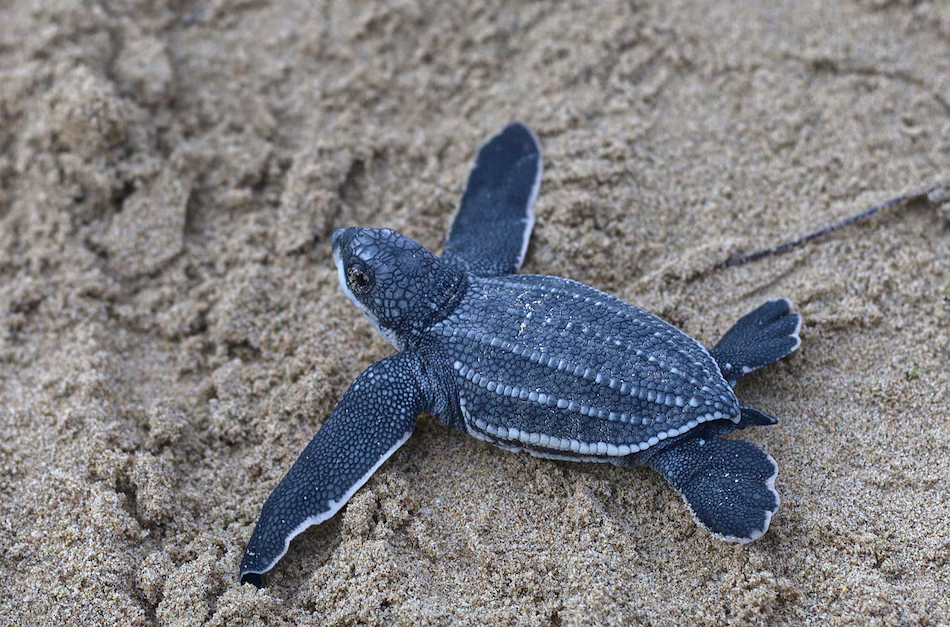
They can build the channels, they can be close to the baby turtles. It’s a more productive learning experience,” Cruz told News Media. For his part, Eduardo Álvarez, president of 7 Quillas, an organization that operates in the San Juan area, emphasizes that it is an essential requirement to disseminate all the information to new generations to protect this species, which can reach between 1.5 and 2.4 meters in length and weigh between 250 and 700 kilograms, and which this year has left 18 nests in the metropolitan area of Puerto Rico. “When you bring your child to release a baby turtle or see how that turtle goes through that process from the nest, they already have it here (internalized in their mind). That is, that child is going to defend the turtles, is going to defend their natural resources because they feel it in their heart,” explains Álvarez, leader of the non-profit organization that also carries out a monthly beach cleanup.
Light Pollution and Human Presence are Drawbacks
Female leatherback sea turtles undertake long migratory journeys that can exceed 6,000 kilometers to the Caribbean islands to lay between 70 and 100 eggs in each of the nests they leave during the season. Turtles, which can lay up to nine nests, have an amazing geographical memory that allows them to return to nest in the same area and even the exact beach where they were born, even if it is crowded with people. “Keep in mind that it is an urban beach, a beach with buildings, many athletes, swimmers, pets, light pollution, etc. So it is very important that humans, in this case the 7 Quillas group, are present both when the turtle nests and when the baby turtles hatch,” Álvarez points out.
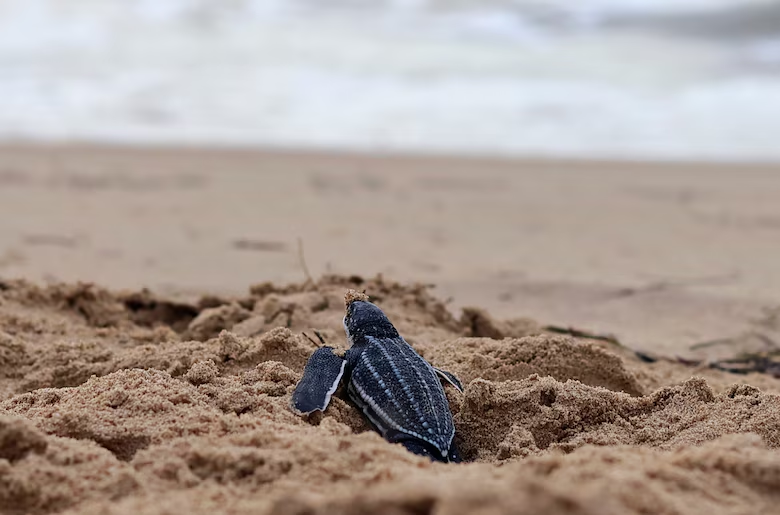
Between 55 and 60 days after laying their eggs, the hatchlings emerge and take three days to surface. If they hatch during the day, they are kept until dusk, when the beach empties and a safety perimeter can be established along the shore so children can observe them closely and receive an educational talk. The work of these volunteers is crucial to mitigating the threats to the species. One example is Esther, a leatherback sea turtle that returned to nest in Puerto Rico this season after two years. She had to abandon her attempt to lay one of her eggs because tourists cornered and photographed her, forcing her to return to the water and hold off on laying her eggs until late into the night.