Surge in Homicides in Panama: Gangs and Drug Rip-Offs Along with Hired Killings
Jaime Fernández, director of the National Police pictured below. Although official figures showed a decrease, March saw a spike in homicides in Panama linked to gangs, drug trafficking, and territorial disputes.
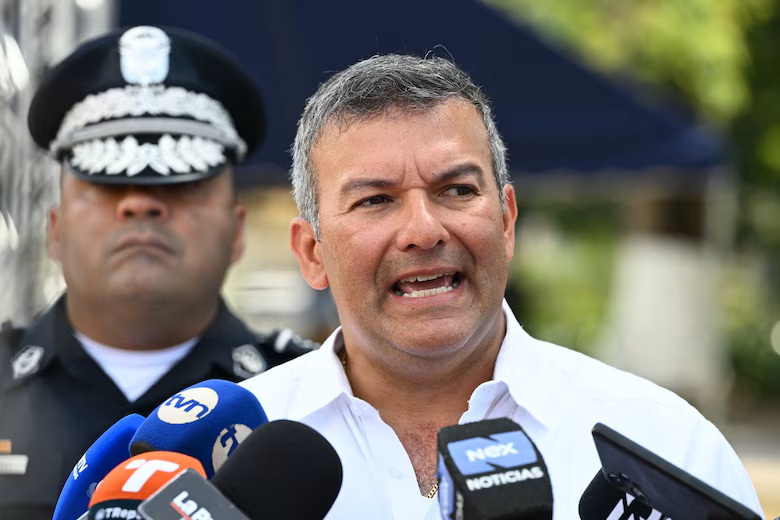
Official statistics, updated as of February 22, show that homicides in the country have decreased compared to 2015. At that time, 68 murders had been recorded, according to reports from the Integrated Criminal Statistics System (SIEC) prepared by the Ministry of Public Security. However, the director of the National Police himself, Jaime Fernández, admits that there has been an increase in homicides in March.
With Malice
Some of these crimes have caused a stir due to their brutality, the time of day, and the locations. This is the case of the murder of 37-year-old lawyer Nadine Silvera in Costa del Este, a high-security area with technological surveillance. One day after that crime, on Saturday, March 7, another man was shot dead in Don Bosco. The tranquility of the Costa del Este area was shattered on the night of Friday, March 6, by a shooting in which a woman was killed inside a pickup truck.
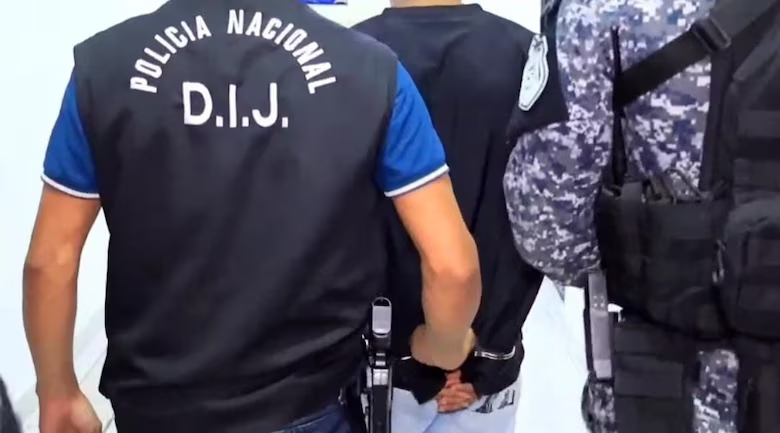
In recent days, a charred body was also found inside a vehicle in Chepo. Meanwhile, in Chitré, Herrera, a merchant was murdered, raising concerns about the spread of crime to the interior of the country. SIEC figures also show that most crimes are concentrated in the provinces of Panama, Colón, and Panama Oeste. Terms such as criminal feuds and gang activity also stand out.
Not Everything is Organized Crime: Expert Analysis:
According to Mejía, the intense police pressure in critical “corridors” such as the capital, San Miguelito and Colón could be displacing crime, but he emphasizes that it is up to the Public Ministry to investigate the origin of each incident. According to security expert Severino Mejía, it is crucial to avoid hasty generalizations. While he acknowledges the expansion of gangs into the interior of the country, a reality previously uncommon in provinces unrelated to drug trafficking, he cautions that not all crimes should be automatically labeled as a consequence of organized crime. Before drawing conclusions, the root of these homicides must be identified, as they are not always related to gang activity,” he points out.
More than Six Shots: ‘It’s Not Normal’
Much of the security authorities’ theory rests on what the SIEC says. The police chief stated on TVN that it is “not normal” for a person to die with more than six gunshot wounds. In his opinion, this reinforces the hypothesis that 80% of homicides are linked to gangs, criminal records, and disputes over territorial control for micro-trafficking, the sale and distribution of drugs at the retail level in local communities.
Drug Heists
According to the National Police, it is estimated that between 7% and 10% of the drugs that pass through Panama remain in the national territory as payment for local groups. At the end of February of this year, in what was called Operation Azuero, authorities arrested 20 people in Los Santos and Herrera who were involved in micro-trafficking. During the raids, they found envelopes, bags, and straws containing drugs, as well as cell phones and cash.
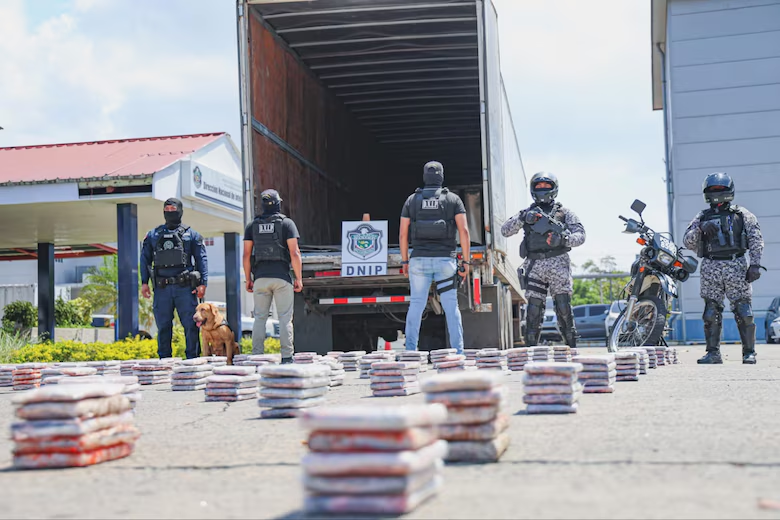
This surplus of illicit substances is what Fernández calls the “oxygen” of the gangs, which in turn generates the phenomenon known in the criminal world as “tumble” or drug robberies that raise levels of violence and lead to executions. Fernández, who arrived at the agency in July 2024, also revealed that police intelligence has detected murder orders issued by criminals from inside prisons, which has forced the institution to carry out daily operations called “Armageddon”.
The Struggle for Control and Recruitment
Beyond the statistics, the police chief revealed that the current wave of violence stems from an all-out war between two major criminal groups that have shifted their operations toward drug trafficking. In addition to controlling routes, there is a marked effort to recruit new members to join their ranks, which drastically increases the violence rate in critical areas. More than 180 gangs currently operate in Panama, with a massive concentration in the districts of San Miguelito and Colón.
Contract Killing: The Professionalization of Crime

In Panama, security authorities have a “file” with the names of multiple people who are exclusively dedicated to committing homicides. The murder of the lawyer who was traveling through Costa del Este, which occurred on the night of Friday, March 6, was committed by men traveling on a motorcycle. Contract killing is an imported phenomenon. It has gone from being an occasional activity to a subcontracted industry.
In countries like Colombia and Mexico, for example, criminal organizations operate under an outsourcing model, or on commission, where local groups are hired by larger cartels solely to carry out “clean-ups” or settling of scores.

Oriel Ortega, former director of the National Border Service, states that most of the people involved in these practices are Panamanians, although he warns that some come from abroad. “They come to Panama to carry out assassinations, they kill someone, and they leave on the afternoon flights if they aren’t apprehended,” he asserted.
The Financial Arm and Justice
In the past five years, the Executive, then led by Laurentino Cortizo, promoted a bill for the extinction of ownership of assets of people linked to organized crime. However, he was not supported by a majority of the National Assembly members. In Panama, drug trafficking is also intertwined with politics. There are numerous cases, some of which have reached the courts. President José Raúl Mulino has spoken of promoting a bill that would allow criminal organizations to be “financially bankrupted”, but to date that has not happened.