When is and What Should you Avoid Eating During Holy Week in Panama
Find out when Holy Week 2026 will be celebrated in Panama and why Catholics avoid eating meat during this religious period.
In Panama, the 2026 holidays include religious celebrations, national holidays, carnivals, and end-of-year festivities. One of the most anticipated periods is Holy Week, also known as Semana Santa as pictured below, when many families take the opportunity to travel, relax, or participate in religious activities.
When is Easter in 2026?
In 2026, Holy Week will be Celebrated on the Following Dates:
- Palm Sunday: March 29
- Holy Thursday: April 2
- Good Friday: April 3 (national holiday in Panama)
- Easter Sunday: April 5
During these days, thousands of believers participate in processions, masses and liturgical acts that commemorate the passion, death and resurrection of Jesus Christ.
Why Don’t We Eat Meat During Holy Week?
During Lent, many Catholics practice abstaining from meat on Fridays, especially Good Friday. This religious tradition symbolizes penance, sacrifice, and spiritual preparation for Holy Week. The practice commemorates the Passion and death of Jesus Christ, who, according to Christian tradition, was crucified on a Friday. For this reason, many believers choose to abstain from certain foods, such as red meat, as an act of reflection and humility. Instead, it is common for families to consume fish, seafood, or traditional meat-free meals during these days.
Holy Week: Seafood Prices Rise Due to High Demand at the Seafood Market
Seafood Market vendors report increased demand for fish during Holy Week and warn that prices may rise. The tradition of abstaining from meat during Holy Week is boosting seafood sales in Panama. Vendors explain which fish are most in demand and how to properly store them.
Demand for Fish Increases for Easter
Merchants at the Panama Seafood Market acknowledged that during Holy Week the demand for fish and seafood increases, which can cause a slight increase in prices. Moisés Arias, tenant of stall 51 in the market, explained that among the most sought-after products are red snapper, corvina and sea bass, especially for traditional preparations such as baked fish or stuffed fish. He explained that some fish can cost around $5 per pound, depending on the season and product availability.
Recommendations for Preserving Fish
Vendors also recommend buying the fish in advance and freezing it in sealed bags to maintain its freshness and flavor. For its preparation, Arias recommends a simple recipe: “garlic, salt and cook it naturally to preserve the flavor of the fish”. Besides fish, other products in high demand at this time of year are mixed seafood for seafood rice, whose prices can start from $3. In the case of shrimp, merchants reminded that it is currently in a closed season until April 11, so the available supply is limited.
Holy Week: What do the Hooded Nazarenes in Processions Signify?
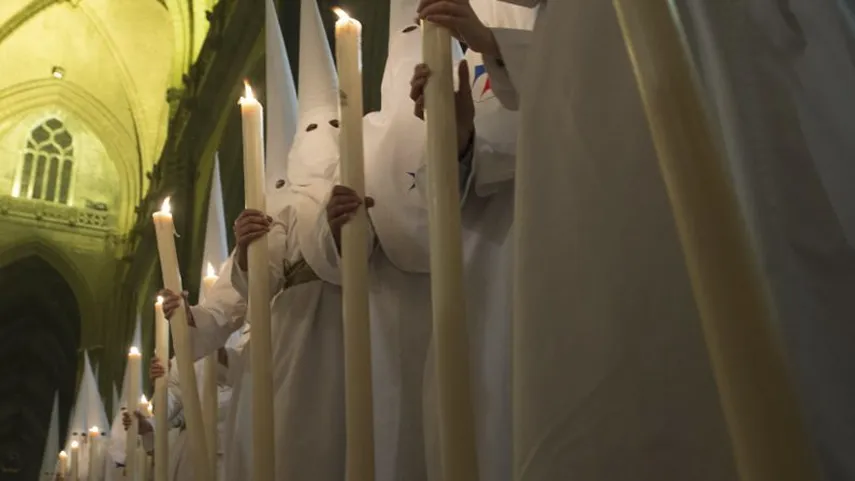
During Holy Week, the figure of the hooded Nazarene is a symbol of anonymity, sacrifice, and profound Christian penance. In the Holy Week processions, the Nazarenes represent one of the most solemn forms of spiritual devotion, whose attire is a historical legacy of humility in the Christian religion.
History and Origin of Clothing
The origin of the Nazarene habit dates back to the 15th and 16th centuries, linked to the brotherhoods of flagellants in Spain. According to the Royal Spanish Academy (RAE), the “capirote” is a cardboard cone covered with fabric, designed to hide the penitent’s face and prevent vanity. The Institute of Religious History and Culture at the University of Navarra clarifies that this garment is a symbol of penance that predates any external organization by centuries. They point out that confusing them with groups like the Ku Klux Klan is an anachronism based on superficial visual similarities that lack historical and liturgical context.
The Symbolism of Colors and Brotherhoods
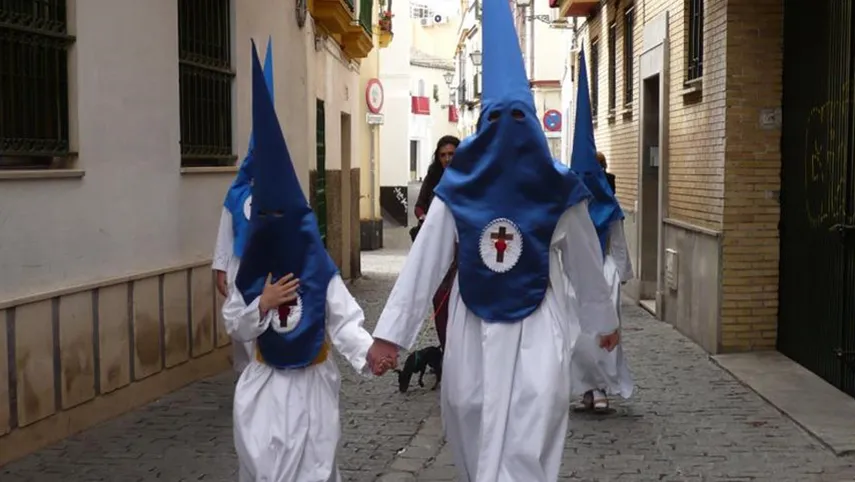
Each brotherhood or confraternity chooses its colors based on Marian devotions, Passionist themes, or liturgical elements:
- Purple: Represents the Passion of Christ and the suffering of penance.
- White: Symbolizes purity, resurrection, and light.
- Black: It evokes mourning for the death of Jesus and the solemnity of Good Friday.
- Red: It recalls the blood shed by Christ during his martyrdom.
The brotherhoods, secular organizations within the Church, dedicate the year to spiritual formation. Their structure, regulated by ancient statutes, organizes processions to narrate the Passion, where the Nazarene, by covering himself, fulfills the biblical mandate to perform prayer and penance “in secret” according to Matthew 6:4.
Sacrifice as a Path of Faith
The presence of the Nazarenes during Holy Week is not a spectacle, but an exercise in asceticism. The silence and the physical exertion of walking the streets in their heavy robes are a form of bodily penance. This cultural heritage demands sobriety and respect, transforming participation into an active meditation on divine sacrifice.
Holy Week: Discover the Deepest Traditions that Shape Faith in Panama
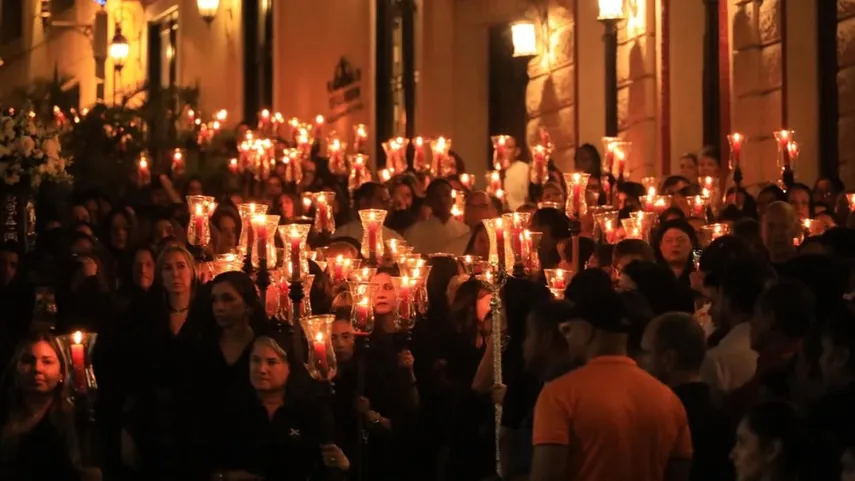
From salt carpets to typical dishes, Holy Week in Panama is a mosaic of devotion, culture and unique gastronomy. Holy Week in Panama is experienced with a mixture of solemnity and ancestral traditions that mobilize thousands of faithful towards the interior and the Old Quarter.
Devotion and Folk Art During Holy Week
One of the most visually striking aspects of Panama’s Holy Week celebrations is the creation of salt and sawdust carpets, especially famous in regions like La Villa de Los Santos and the Old Quarter. These ephemeral works of art cover the streets along the processions’ route, depicting biblical scenes and Christian symbols. In addition, the drama of “The Passion of Christ” is staged in various towns, where local actors recreate the Stations of the Cross with a realism that moves locals and visitors alike, keeping the message of the season alive.
Gastronomy and Regional Customs of Holy Week
The tradition extends to the table as well, where red meat is replaced by emblematic dishes that define this time of year. The most deeply rooted customs include:
- Fish consumption: Whether pickled, fried or in guacho, it is the protagonist of the diet during Good Friday.
- Traditional sweets: The consumption of fruit sweets such as papaya, cashew and the famous “bienmesabe” pictured below.
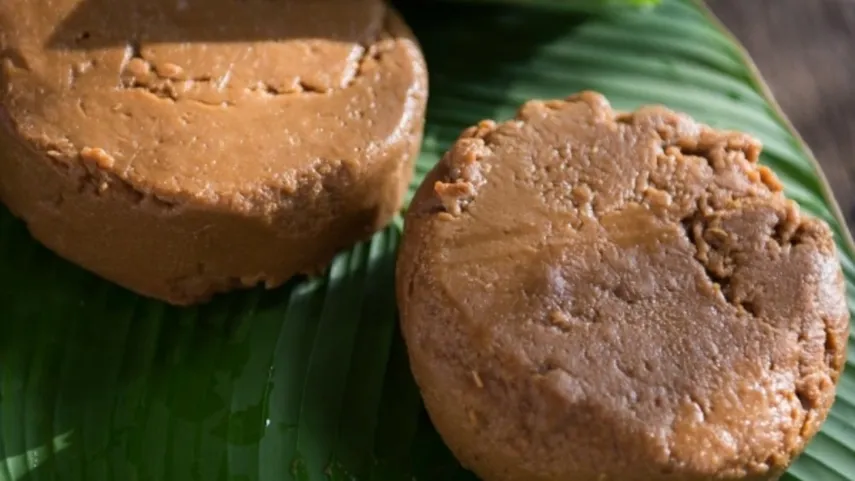
- Cocada: This sweet made with coconut and sugarcane honey is an essential item at roadside stops and homes during the holy days.
- The cross bread: An essential element on many Panamanian tables during Holy Week.
- Visiting the seven churches: A common practice on Holy Thursday, especially in the Old Town of the capital.