Panama Government Seizes 2 Main Canal Terminals: China’s COSCO Halts Panama Canal Port Calls as a Result
The institutional dispute has quickly intersected with geopolitical competition between the US and China surrounding the canal’s logistics infrastructure.
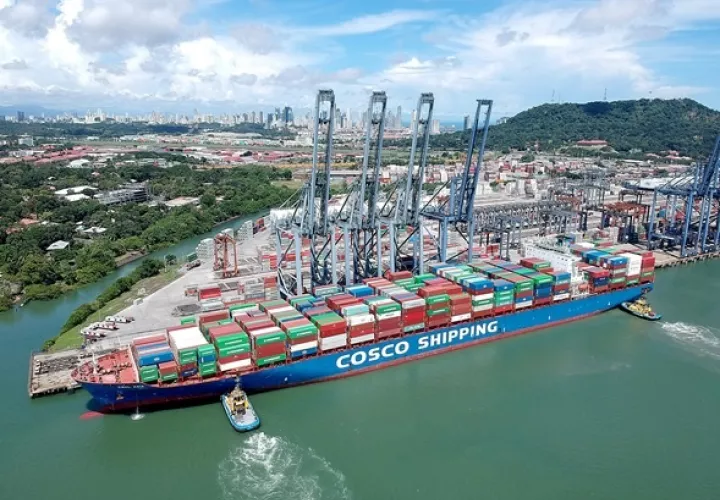
The abrupt suspension of services by China’s state-owned shipping giant COSCO at the Pacific-side port of Balboa marks the most visible commercial reaction yet to Panama’s decision to seize control of two strategic terminals flanking the Panama Canal, a move that has triggered legal disputes, diplomatic rows and logistical adjustments across global shipping networks.
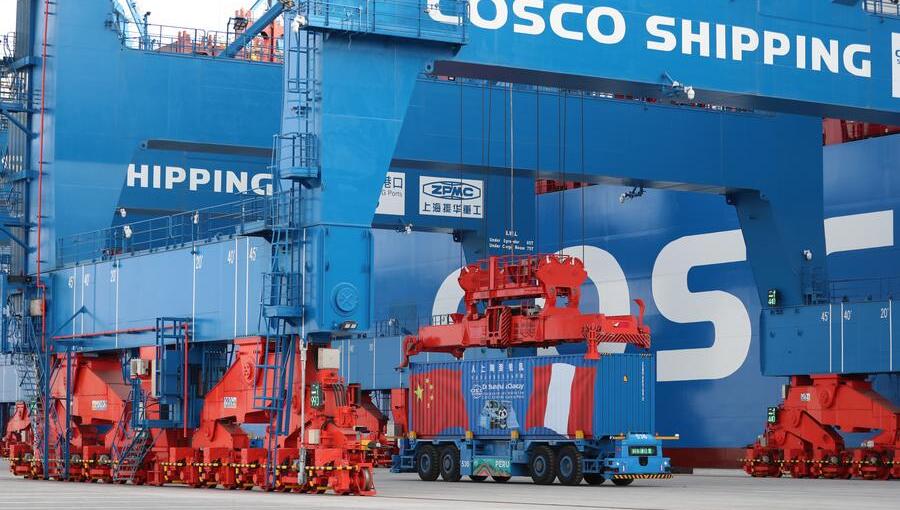
COSCO Shipping Lines informed clients on March 10 that all arrivals and departures at Balboa would cease with immediate effect, cancelling previously confirmed bookings while continuing to process import cargo already in the port system. Empty containers must instead be returned to Caribbean-side terminals such as Manzanillo International Terminal or Colón Container Terminal, and Balboa will temporarily stop accepting empty units.
The decision effectively removes one of China’s largest maritime operators from a key Pacific gateway of the canal. However, the immediate operational impact appears limited: the Danish shipping group Maersk already handles roughly 75% to 80% of container traffic at the facility, according to data cited by La Prensa. In that sense, COSCO’s move carries as much strategic signal as it does logistical weight. The company has also begun rerouting some transhipment activity through the Colombian port of Buenaventura.
COSCO’s move follows a sweeping institutional rupture in Panama’s port governance structure. In January, the country’s Supreme Court declared unconstitutional the concession granted in 1997 to Panama Ports Company (PPC), a subsidiary of Hong Kong-based conglomerate CK Hutchison Holdings, which had operated the Balboa and Cristóbal terminals for nearly three decades. The ruling became final when it was published in the official gazette on February 23.
Within hours of the publication, the Panamanian government executed Executive Decree No. 23 to assume control of both facilities, citing “urgent social interest” and the need to guarantee continuity of operations. Authorities subsequently awarded temporary 18-month operating contracts to APM Terminals, part of A.P. Moller-Maersk, for Balboa, and to Terminal Investment Limited, the port arm of Mediterranean Shipping Company (MSC), for Cristóbal.
The transitional arrangements include financial terms worth approximately $26.1mn for the operation of Balboa alone, according to documents posted. During the interim period, the Panama Maritime Authority intends to organize an international tender to select long-term operators for the two ports, which together represent one of the most important logistics clusters in the Americas.
The administrative transition has rapidly evolved into a complex legal confrontation with international ramifications. PPC has launched arbitration proceedings against the Panamanian state under the rules of the International Chamber of Commerce, seeking at least $2 billion in damages. The company argues that the government’s actions amount to an unlawful seizure that violates contractual commitments and international investment protections.
CK Hutchison has also expanded a dispute notification under a bilateral investment treaty framework — the specific treaty has not been publicly identified — invoking protections typically used by foreign investors when alleging unfair treatment or breaches of legal stability. Maritime analyst Eduardo Lugo noted that the legal strategy aims both to defend acquired rights and to raise the political and financial cost of the confrontation for Panama.
The Panamanian government, by contrast, argues that the court ruling reflects constitutional principles rather than expropriation. According to port specialist Carlos González de La Lastra, the country’s constitution defines ports as public assets that cannot be privately owned. Private operators may manage them through concessions but do not possess property rights over the infrastructure itself.
By invoking both ICC procedures and protections under a bilateral investment treaty, PPC and CK Hutchison are effectively expanding the case beyond a domestic constitutional ruling into the sphere of international investment law. Such proceedings typically hinge on whether the state respected principles of due process, transparency and fair treatment toward foreign investors. Even if Panama ultimately prevails, the litigation itself could prolong uncertainty for port operators and infrastructure investors assessing political risk in logistics concessions.
The institutional dispute has quickly intersected with geopolitical competition surrounding the canal’s logistics infrastructure. The ports sit at the Pacific and Atlantic entrances of a waterway that handles about 5% of global maritime trade and a substantial share of cargo flows between Asia and the Americas. The terminals also function as major transshipment hubs for commodities including liquefied petroleum gas and bulk materials moving between Pacific and Atlantic shipping routes.
Beijing’s reaction has been cautious but increasingly loud. The Chinese government has stated it will safeguard the legitimate rights and interests of its companies operating abroad. According to Bloomberg, Chinese authorities had already advised state-owned shipping firms to consider diverting cargo away from Panamanian ports if cost implications were limited, and had instructed state companies to suspend discussions on new investment projects in the country. China’s Ministry of Transport also summoned executives from Maersk and MSC for discussions on “international shipping operations” — a move that, in China’s regulatory context, typically signals heightened scrutiny of commercial conduct in sectors considered vital to national trade interests.
These dynamics unfold against a broader geopolitical backdrop: instability in Middle Eastern shipping lanes and intensifying strategic rivalry between Washington and Beijing. Since taking office in January 2025, US President Donald Trump has repeatedly argued that Washington should reassert influence over canal-related infrastructure and has criticised China’s presence in regional logistics networks, claims that both Panama and China have rejected. The Panamanian case has therefore become a focal point where constitutional law, commercial arbitration and great-power competition converge.
For Panama, the immediate challenge remains maintaining uninterrupted operations in one of the world’s most critical maritime corridors while navigating simultaneous legal arbitration and diplomatic pressure. Ángel Sánchez, president of the National Logistics Business Council, emphasized that the stability of the logistics hub must remain the priority regardless of legal disputes: “The resolution of legal disputes belongs exclusively to the realm of law. Our absolute priority is the integrity of the national logistics hub.”
Whether the episode evolves into a contained contractual dispute or a broader restructuring of shipping flows will depend on three parallel processes now unfolding. The first is operational continuity: Balboa and Cristóbal collectively handled close to 4mn TEUs in 2025, representing roughly two-fifths of Panama’s container throughput. Any sustained disruption to transhipment efficiency, berth availability or hinterland logistics could encourage shipping alliances to adjust routing strategies across the Caribbean and Pacific basins.
The second process concerns strategic realignment within the global shipping industry. With APM Terminals and Terminal Investment Limited now managing the ports temporarily, Maersk and MSC have gained operational influence over infrastructure previously controlled by a Hong Kong-based conglomerate. While COSCO’s suspension of Balboa services appears limited in immediate scale, the behavior of global alliances and vessel-sharing agreements will determine whether the shift remains symbolic or develops into broader network reconfiguration.
The third process is the arbitration and its implications for Panama’s investment environment. The outcome of international litigation will partly define perceptions of political risk associated with infrastructure concessions in the country. A resolution that upholds Panama’s constitutional position could reinforce its reputation as a stable hub; an adverse international ruling would introduce a lasting layer of uncertainty.