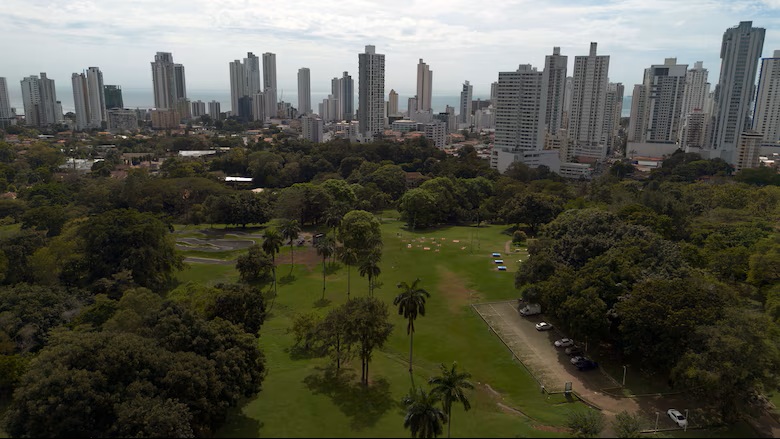
Digitalization of Ngäbe-Buglé mountain communities and a focus on youth
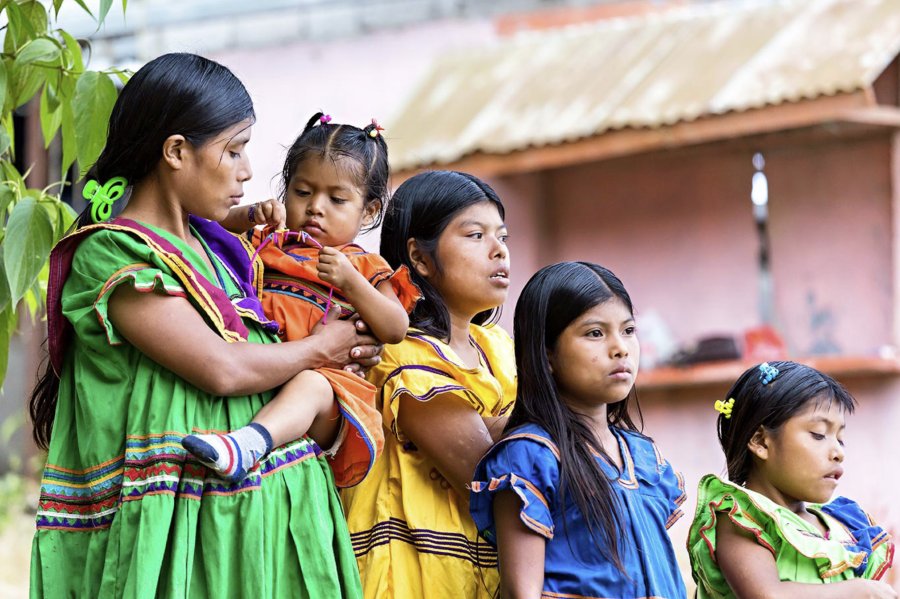
Guest Contribution – In western Panama, in the mountainous Ngäbe-Buglé region, Indigenous Ngäbe settlements remain remote from major cities. The terrain shapes the rhythm of life no less than the economy does. Homes and fields are scattered across the slopes, and familiar routes often run along trails where motor transport gives way to walking and horseback travel.
The tropical climate adds unpredictability. A clear morning can turn into a downpour within hours, and such a change matters not only for agricultural work. Rain affects road passability and the stability of connectivity, turning the internet into a resource that comes and goes.
Roads, poverty, and a weak signal as a shared knot of problems
The region’s vulnerability is made up of several factors that reinforce one another. This is not about a single cause, but about an interconnected set of conditions that is hard to escape with a single solution.
The key constraints cited by members of local associations are as follows:
- poor accessibility of villages and unpaved roads that are washed out by heavy rains and become impassable
- limited access to basic services during periods when links with the outside world are hampered
- dependence on subsistence farming and livestock raising, where incomes are sensitive to weather and market conditions
- the digital divide, a weak signal, and internet outages, especially during rains
Proponents of rapid technological solutions usually emphasize that connectivity helps the economy and education. Skeptics remind us that in the mountains, the stability of the internet is determined by infrastructure, maintenance, and power supply, not only by the availability of devices, so any digitalization ultimately depends on day-to-day operation in practice.
How the internet is used in remote regions
The experience of other countries has shown that the introduction of new technologies has a positive impact on remote communities. They gain access to educational programs, including university-level courses, telemedicine, and remote work. For young people, it is very important that they can become part of the modern world – watch streams and stream themselves, actively use social media, and play mobile games.
To check internet quality, several tests are usually used. The least demanding is browsing websites in a browser. The ability to communicate via video calls, which is necessary for study and telemedicine, is checked. To test connection stability, demanding activities such as mobile online games and apps are used.
Popular arcade-style crash games such as Aviatrix, Lucky Jet, Aviator, JetX have some of the highest requirements for signal stability. This applies to both browser versions and mobile apps. The internet is needed not only to enable Aviatrix game download, but also for gameplay, with the need for continuous communication with the server. High-quality internet, even in remote areas, makes it possible to do both.
For ethnic communities, the internet is an opportunity to preserve their identity and at the same time be part of the broader global community. Educational projects, such as implemented in Ngäbe-Buglé, are a necessity.
An FAO and China project for the region’s rural areas
A partial response to these challenges in Ngäbe-Buglé is linked to a joint initiative by FAO (the Food and Agriculture Organization of the United Nations) and the People’s Republic of China within the framework of South-South cooperation. Through a digital literacy program and the supply of equipment, four producer organizations were able to strengthen access to the internet and to applied information.
The project titled “Digital Transformation and Innovation in Agriculture” was launched by FAO jointly with the Community of Latin American and Caribbean States. It is designed to support rural sources of income and small and medium-scale producers in Panama and 11 other countries in the region, with the set of solutions in each country tailored to local conditions.
How the work was organized in Panama and who ensured implementation
On the ground, the project relied on four producer organizations from Ngäbe-Buglé. During the design period, the team was strengthened by two experts sent by China’s Ministry of Agriculture and Rural Affairs. One specialized in digital agriculture, the other in the digitalization of rural areas, and their visit included not only consultations but also joint work with local specialists.
The experts shared experience and provided training for FAO technicians and government specialists, and also met with community members. This format makes it possible to transfer practical skills faster, but leaves open the question of long-term sustainability if technical support and equipment updates are not anchored within local institutions.
Local partners and two stories of youth leadership
The Nuestra Señora del Camino Foundation and Panama’s Institute of Agricultural Innovation (IDIAP) played an important role in delivering the training and implementing solutions. A significant part of the practical work went through these organizations, from coordinating classes to on-the-ground support, where logistics becomes a challenge in its own right.
Among the participants, Juan Sedeño, 20, and Milka Rodríguez, 23, stood out in particular. Both represent the Ngäbe people, help their families with agricultural work, and study in the bilingual intercultural education program at the Autonomous University of Indigenous Peoples (UAPI). Their participation became an example of how the project relied on young people not as an audience, but as a resource to support organizations.
The road to education and digital skills
Every Friday, Juan and Milka travel to the campus in Llano Tugrí and stay there until Sunday, after which they return to their communities of Cerro Tula and Cerro Gavilán. For Juan, the one-way trip takes about 1.5 to 2 hours, with part of the route on foot through mountainous terrain. The return trip can stretch to 4 hours when the entire route has to be walked.
They came to the training through family connections and for pragmatic reasons. “The opportunity came through FAO, and my dad got me involved because technology is already advancing and we need to learn more,” Milka recalled. Juan explained his motivation differently: “I became interested in this association thanks to my mom; she had already participated before. From a very early age, I liked taking part in what has a positive impact on the community.”
Five weeks of classes were enough to systematize and expand their skills. The program included the internet, social media, work-related software, the use of tablets and laptops, as well as basic techniques of digital communication for the cooperative’s needs. According to the organizers, both participants quickly became noticeable, helped other participants, and assisted the instructor, combining classes with everyday responsibilities.
After that, their role went beyond the classroom. At the invitation of FAO IT specialist Archimedes Perez, they helped install antennas and other equipment, learned to configure devices, and troubleshoot common errors. A separate module was training in the maintenance of solar panels that provide electricity to four associations. Perez described this logic as follows: “Young people are the renewal of communities. The goal of involving young people from each community is for them to provide first-line support for their associations.”
The practical effect can be seen in several changes that participants associate with the emergence of new tools:
- speeding up organizational work in associations through digital procedures and communication
- finding new sales channels through pages on social media
- access to online data on agronomic practices, weather forecasts, and market information for decisions on crops and sales
Milka has already sold handicrafts, grain, and legumes to buyers inside and outside the community through digital channels. Juan and Milka also pass skills on to other young people and help sort out basic technical problems when the connection is unstable or a device needs configuration, and this gradually builds local competence, without which the technology remains alien and silent.
________________________________________________________________________________________________________________
Advertisements placed in our Guest Contribution sections are in no way intended as endorsements of the advertised products, services, or related advertiser claims by NewsroomPanama.com, the website’s owners, affiliated societies, or the editors. Read more here.