US Blow up Drug Boats on Both Sides of the Panama Canal: Crisis in Venezuela Documentary
An image from a video released by the United States Southern Command showing a vessel accused of trafficking drugs. U.S. Kills 11 in Boat Strikes in Pacific and Caribbean.
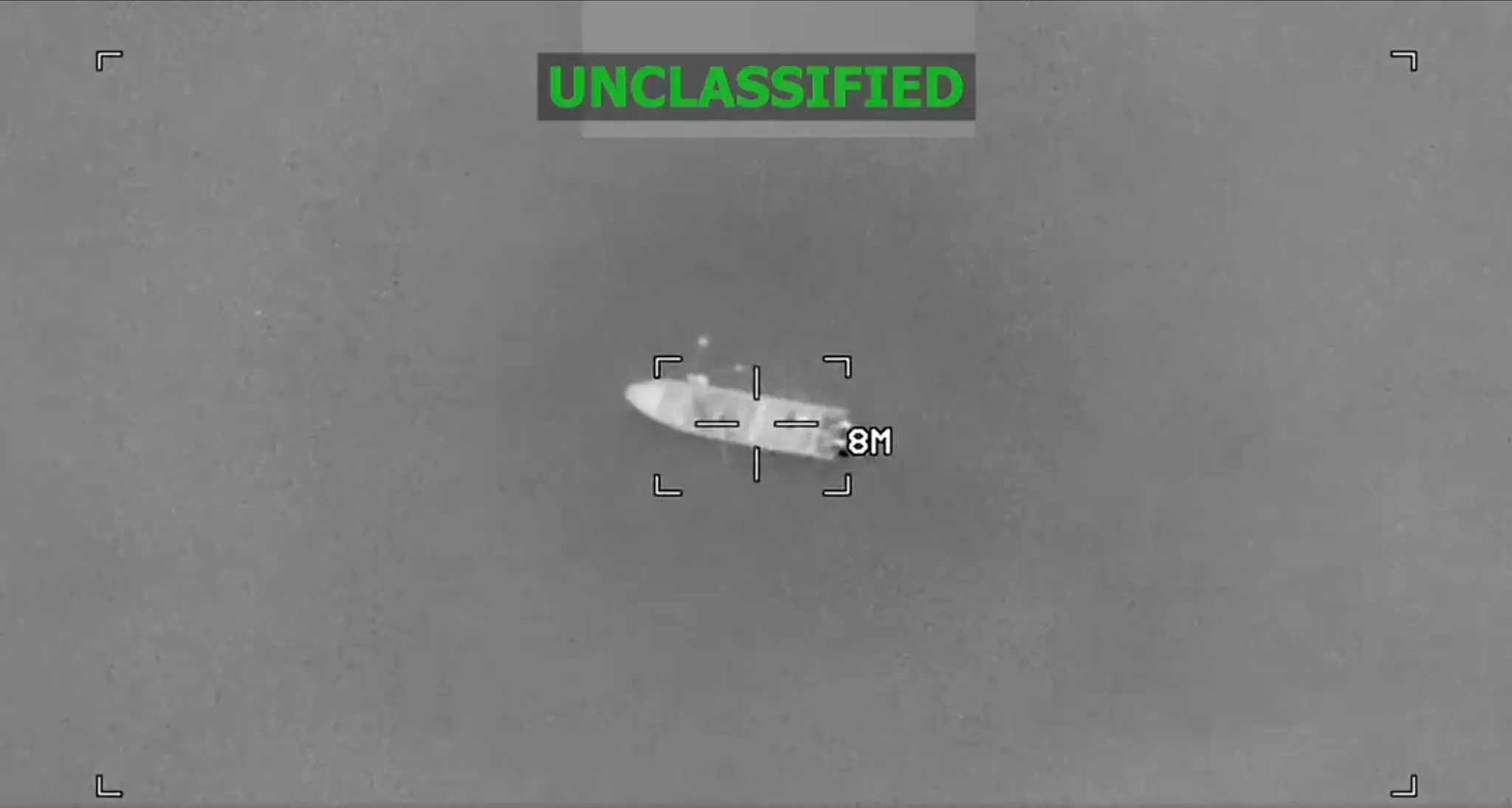
American forces blew up three boats overnight, killing 11 men in strikes in both the Eastern Pacific Ocean and Caribbean Sea, the military announced on Tuesday. The strikes raised the death toll in the U.S. campaign against people it accuses of drug smuggling at sea to at least 144. The triple strike late Monday was the first time the Trump administration bombed targets on both sides of the Panama Canal on the same day in its five-month string of boat attacks. It was also the deadliest day of strikes this year. Of the 11 men killed, eight were on the two boats in the Pacific and the other three were in the Caribbean, the military said. The United States Southern Command announced the strikes on social media with a 39-second video clip that appeared to show the three boats being destroyed.
One was on the move, its outboard motors leaving a wake, while the other two appeared to be at full stop in the water. A broad range of legal specialists on the use of lethal force have said the strikes are illegal, extrajudicial killings because the military cannot deliberately target civilians who do not pose an imminent threat of violence, even if they are suspected of engaging in criminal acts. The command, which oversees U.S. military operations in Latin America and the Caribbean, cited unspecified intelligence in its announcement. It said all three boats had been traveling on “known narco-trafficking routes” and were “engaged in narco-trafficking operations.”
The attacks suggested an uptick in the campaign. The military last killed 11 people in coordinated strikes on Dec. 30, when it attacked three boats that were traveling in a convoy in the Pacific. Those killed included eight people who the military said jumped overboard before the second and third boats were hit, but were presumed dead after a search by the Coast Guard. The U.S. military has carried out strikes every three or four days since the new leader of the Southern Command, Gen. Francis L. Donovan, took over last month after the previous leader, Adm. Alvin Holsey, abruptly retired. Defense officials said Admiral Holsey had expressed concerns about the strikes.
Crisis in Venezuela: An Uncertain Future
In “Crisis in Venezuela,” FRONTLINE and The Associated Press investigate President Trump’s long campaign to topple Maduro, the legacy of corruption in Venezuela, the challenges to democracy and the fight over who will control the oil-rich South American country. The documentary probes Venezuela’s uncertain future and the Maduro regime insiders who’ve been left in charge while opposition leader María Corina Machado remains in exile. Those insiders include Venezuela’s acting president Delcy Rodríguez — who, the AP found, has been on the radar of the U.S. Drug Enforcement Administration for years.
It also examines the Trump administration’s relationship with Rodríguez and its approach to democracy in Venezuela in the aftermath of Maduro’s capture. “Crisis in Venezuela” is a FRONTLINE production with Mongoose Pictures and Documento Films in association with The Associated Press. The reporters are Joshua Goodman and Regina García Cano. The writers are Jeff Arak & Juan Ravell. The producer is Jeff Arak. The director is Juan Ravell. The senior producers are Dan Edge and Eamonn Matthews. The managing editor of FRONTLINE is Andrew Metz. The editor-in-chief and executive producer of FRONTLINE is Raney Aronson-Rath.