
November Patriotic Holidays in Panama.
November is known as El Mes de la Patria (Month of the Homeland) in Panama, covering nearly all of the country’s major patriotic holidays. Together, these holidays celebrate Panama’s history, national symbols, and long journey to independence.
November 3 Separation Day (Día de la Separación): This marks Panama’s official separation from Colombia in 1903, which led to the creation of the modern Republic of Panama. Three key points led to the separation.
Following its voluntary union with Colombia in 1821 (after independence from Spain), Panama suffered from long-standing central government neglect, civil wars, and economic instability.
The Hay-Herrán Treaty was rejected by the Colombian Congress on August 12, 1903, which had promised a United States built interoceanic canal that Panamanians desperately needed to boost their local economy.
The United States desired control of the canal project after the French effort failed. President Theodore Roosevelt backed the Panamanian separatists, deploying the USS Nashville to block Colombian troops from landing or crossing the Darien Gap jungle. The separation happened rapidly and without a traditional military conflict between Colombian and Panamanian forces. Colombia initially refused to recognize Panama’s independence, leading to long-standing tensions, which were eventually settled years later through the Thomson–Urrutia Treaty in 1914.
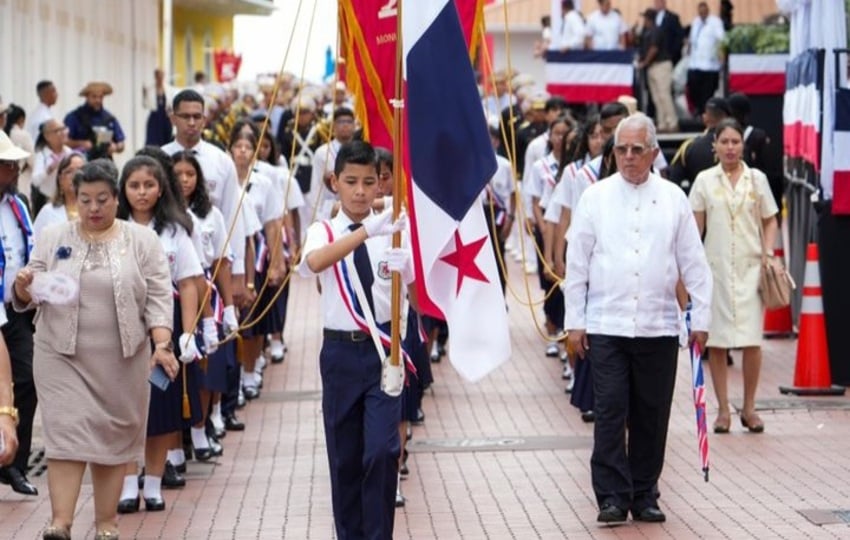
November 4 – National Symbols Day (Día de los Símbolos Patrios)
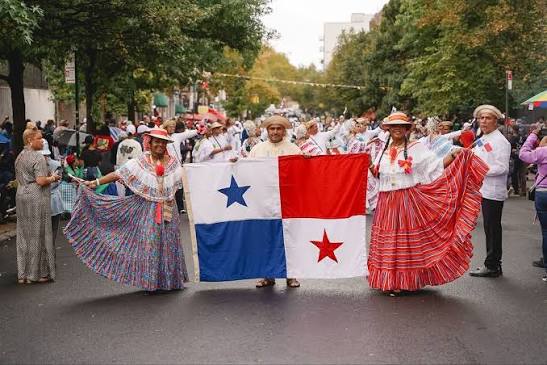
Originally celebrated as Flag Day, this holiday now honors Panama’s three national symbols: the flag, the national anthem, and the coat of arms.
María de la Ossa de Amador designed and sewed the first Panamanian flag with help from her family. The original flags were publicly displayed on November 3, 1903, the day independence was proclaimed. The flag was provisionally embraced during independence and later formally adopted by Law 48 on March 25, 1925
White: Represents peace and harmony where the political parties operate.
Blue and Red Quarters: Represent Panama’s two historical political parties, blue for the Conservative Party and red for the Liberal Party.
Blue Star: Symbolizes purity and honesty.
Red Star: Symbolizes authority and law.
November 5 – Colón Day (Día de Colón): This day commemorates the actions taken by the citizens of the city of Colón in 1903. A large contingent of the Colombian army was still stationed in the port city of Colón, preparing to march toward Panama City to crush the independence movement. The citizens successfully prevented Colombian troops from traveling across the isthmus to Panama City by train, effectively securing and finalizing Panama’s new independence. According to local lore, generously plying the troops with local alcohol and entertainment, they successfully convinced the Colombian military to stand down and retreat.
November 10 – The First Cry of Independence (Primer Grito de Independencia): This holiday remembers the 1821 uprising in the town of La Villa de Los Santos, which triggered Panama’s ultimate break from the Spanish Empire. On November 10, 1821, townspeople in La Villa de Los Santos—led historically by figures like Rufina Alfaro staged the first open revolt against Spanish colonial rule in Panama.
This uprising sparked momentum across the isthmus, leading directly to Panama’s formal declaration of independence from Spain later that month on November 28, 1821.
November 28 – Independence Day from Spain (Independencia de España): This marks the official date in 1821 when Panama declared total independence from the Spanish Monarchy and subsequently made the decision to join Gran Colombia. It marks the final major celebration of El Mes de la Patria (Patriotic Month). After the initial anti-Spanish uprising in La Villa de Los Santos on November 10, Panama formally cut ties with the Spanish Monarchy on November 28, 1821. Following a bloodless revolt spearheaded by leader José de Fábrega, Panamanian officials signed the Independence Act in Panama City.
The entire country celebrates all these special dates with music, parades, speeches, marching bands, traditional Panamanian costumes and fireworks.