After Panama’s Removal from the EU list Foreign Minister Javier Martínez-Acha Defends Mulino’s Trips.
The foreign minister attributed Panama’s removal from the EU list to Mulino’s diplomatic strategy and acknowledged that there is still work to be done.
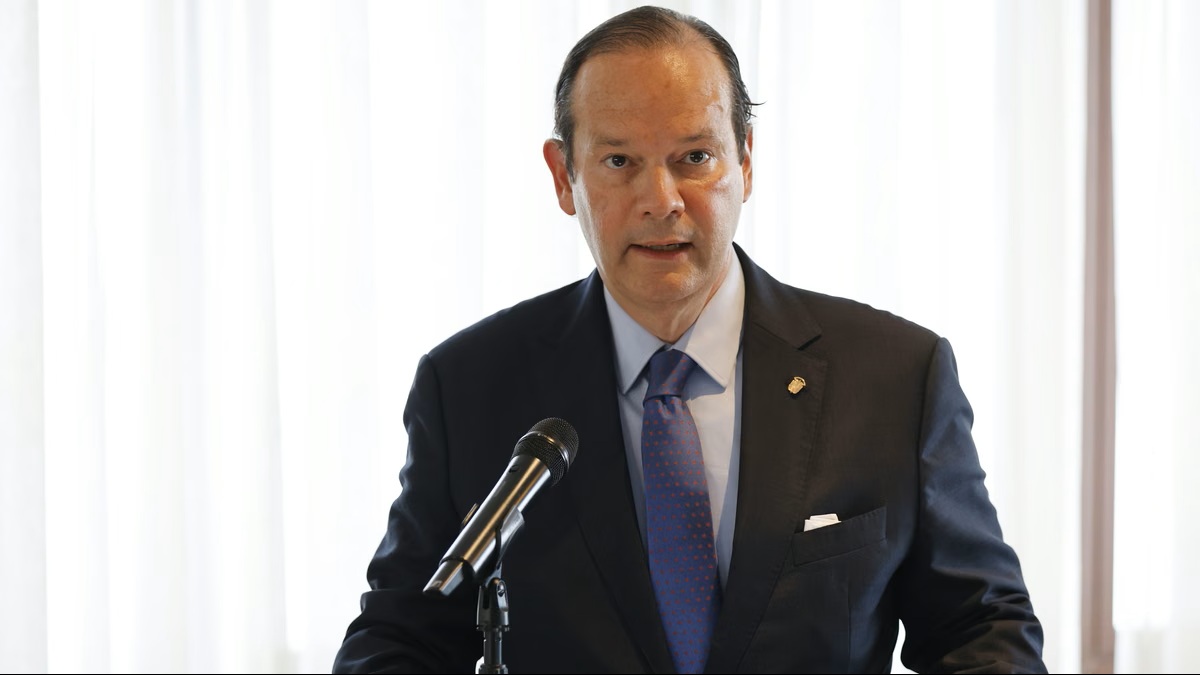
Panama’s Foreign Minister, Javier Martínez-Acha expressed his satisfaction with the country’s removal from the European Union’s (EU) list of non-cooperative jurisdictions for tax purposes and described the decision as an achievement for its international image and the attraction of investments. The foreign minister stated in a media interview that this result is part of a diplomatic strategy defined by the President of the Republic, José Raúl Mulino, since the beginning of his term, with the objective of defending national interests, fiscal transparency and the good name of Panama before the international community.
“Very happy, satisfied that this is achieved with a clear strategy, with a firm decision from our president,” said Martínez-Acha, highlighting the Executive’s commitment to positioning the country before the world.
Foreign Ministry Highlights the Impact of Panama’s Removal from the EU List.
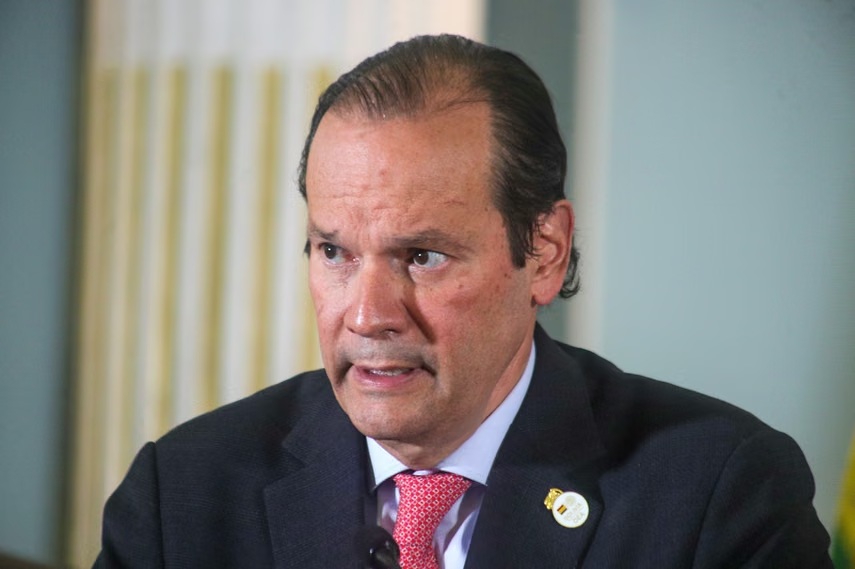
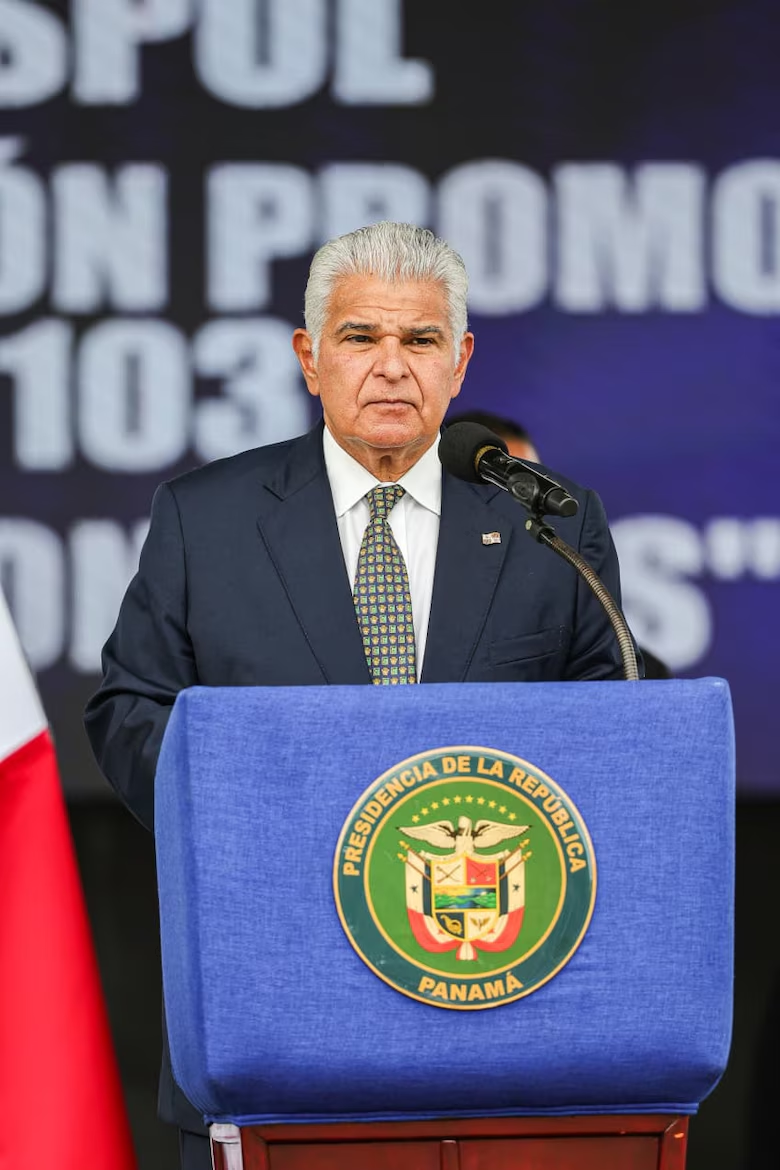
Martínez-Acha pict ured above stated that the European decision represents recognition for Panama as a jurisdiction and considered that it will allow for strengthening economic relations with the countries of the bloc. According to the foreign minister, Panama’s removal from the list will make it easier for European companies to evaluate investments in Panama without facing the tax penalties that could result from the country’s inclusion on that list in their home jurisdictions.
“This is a great achievement for the country, a great success for the country, that European companies can come to Panama without any fear in their jurisdictions of origin,” he said.
Javier Martínez-Acha Defends Mulino’s Trips.
The foreign minister also defended President Mulino’s international trips and asserted that direct meetings with other leaders have been important to explain the situation in Panama and present evidence in response to international reports about the country. In his opinion, bilateral meetings allow for directly addressing the concerns of other governments and defending the Panamanian position.
“Because the President can, with his counterparts, explain in detail the situations in Panama, demonstrating with evidence that Panama was not the country they received in different reports,” he said.
Martínez-Acha questioned those who criticize presidential trips and stated that some of these criticisms respond to objectives that he described as “petty”.
Foreign Minister Highlights Results of Tour of Vietnam and Singapore.
Referring to the president’s recent trips to Asia, the minister highlighted the results of the visit to Vietnam and Singapore, and mentioned Singapore’s accession to the Panama Canal Neutrality Treaty as one of the relevant issues on the international agenda. The official insisted that presidential trips should be evaluated based on their diplomatic and economic outcomes, not just their costs. Regarding the criticism related to the use of the presidential plane, Martínez-Acha maintained that the expenses must be presented and submitted to the institutional auditing mechanisms.
“The accounts have to be presented and they have to be audited institutionally,” he stated.
Panama Faces Challenges in Tax Cooperation.
Although he welcomed the European Union’s decision, Martínez-Acha acknowledged that the country must continue working on cooperation and the exchange of tax information. The minister maintained that being removed from the list represents progress for Panama’s international reputation and its trade relations with Europe, but noted that there are still commitments that must be met to consolidate that position. The decision also opens a new stage for Panamanian economic diplomacy, which seeks to strengthen international confidence and promote foreign investment.