María Corina Machado’s Last Attempt to Return to Venezuela by Sea Included a Diplomatic Passport and a Panamanian Official.
Pictured below is Venezuelan María Corina Machado during a press conference in Panama. Panama gave María Corina Machado a diplomatic passport for humanitarian reasons, as her attempts to return to Venezuela have now failed seven times. Donald Trump and Delcy Rodríguez Meet for the First Time in New York picture and story below.
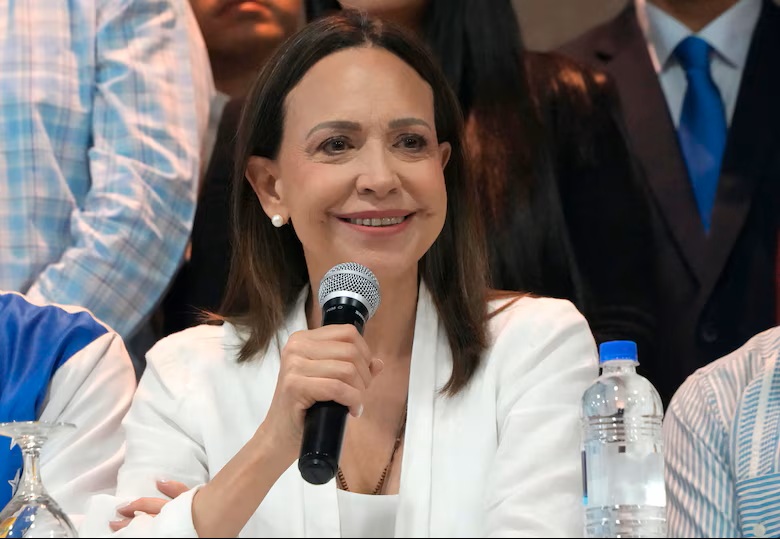
Venezuelan opposition leader María Corina Machado reportedly attempted to return to her country using a Panamanian diplomatic passport and accompanied by an advisor to Foreign Minister Javier Martínez Acha. Machado, who has been in Panama since at least last December, is prevented from returning to Venezuela and has tried to do so three times this week alone, without success. The Spanish newspaper ABC, whose correspondent is accompanying Machado, reported that the leader has a passport issued to her by the government of José Raúl Mulino for humanitarian reasons. The passport number was noted on a flight manifest. “Panama gave Machado a diplomatic passport to facilitate her return,” ABC posted on its X account. The measure does not imply that Machado has acquired Panamanian nationality, as Venezuelan media have stated.
The Attempts.
Machado has tried to return to Venezuela several times and on all these occasions he has been prevented from doing so. The last time, according to international media, the Nobel Peace Prize laureate tried to reach Curacao on a private flight from Marcos A. Gelabert International Airport in Panama City on Tuesday, September 22, but the trip did not materialize. One of the alleged passengers on that flight was Ferdelin Bonilla Bonilla, an advisor to Foreign Minister Javier Martínez Acha, according to Globovisión. Bonilla joined the payroll of the Ministry of Foreign Affairs on July 2, 2024, with a salary of $5,000 per month. In the May 2024 elections, Bonilla was a candidate for deputy for the PRD and Molirena alliance, in circuit 4.6. News Media contacted Bonilla to ask him about the matter but he did not answer. So far, the Ministry of Foreign Affairs has remained silent on the matter.
The ABC Story.
ABC’s Washington correspondent, David Alandete , reported from Panama on the details of Machado’s latest attempt to return to his country. In a video, Alandete recounted that, originally, a vessel was preparing to set sail from the Panamanian Pacific with Machado and a small group of people, in what he described as “a true Operation Ithaca, the name it received,” with the objective of crossing the Panama Canal to the Caribbean and clandestinely reaching the Venezuelan coast.
The vessel did not set sail. According to Alandete, the shipping company attributed the cancellation to “an engine failure,” but the correspondent noted that the explanation left doubts among the Venezuelan woman’s companions. “It’s quite a coincidence that the company didn’t even offer an alternative, or another ship. There were many ships in the marina where that ship was anchored. I would think there was some kind of pressure,” he stated. Faced with the impossibility of doing so by sea, Machado’s security team sought an exit by air to islands near Venezuela, including Curacao and Aruba, but the private flights did not obtain permission to take off “for certain manifest, technical reasons,” according to Alandete.
The correspondent clarified that the actual number of failed attempts is seven. “After seven attempts, via Curaçao and via Panama, on a commercial flight. We can also confirm that there were others before these attempts, on September 21 and 22.” Alandete also mentioned a land attempt that, he said, “did not succeed”. “It is clear that either she is one of the unluckiest people in the history of humanity or there is something preventing her from entering her country,” he said. He attributed that interest to the government in Caracas: “The regime of Delcy Rodríguez, who is currently in New York representing her country under the tutelage of the US administration, and who does not want Machado to return. This is a matter of fact.”
What the Passport Law Says.
Panamanian legislation provides for the issuance of diplomatic passports and establishes that these are issued by the Passport Authority at the request of the Ministry of Foreign Affairs. Law 32 of April 23, 2013, which creates the Panama Passport Authority, regulates in its articles 20 and 21 diplomatic passports and the persons who are entitled to them.
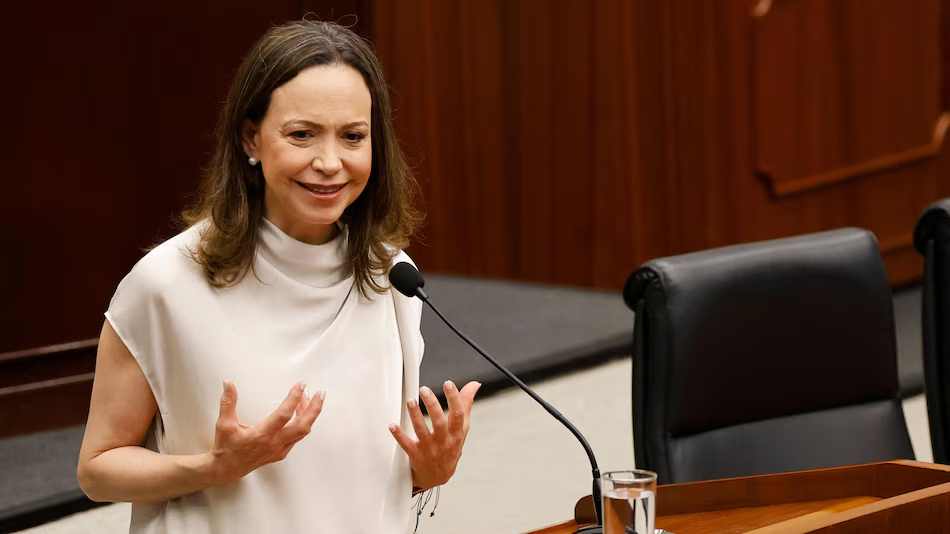
The Foreign Ministry also has a separate procedure for individuals assigned to specific missions or traveling for health or humanitarian reasons. This is the “Special Visa,” which allows travel with an ordinary passport accompanied by a note issued by the Ministry of Foreign Affairs.
Article 22 of Law 32 on Passports: “The Authority may also, upon request of the Ministry of Foreign Affairs, issue passports with diplomatic rank to Panamanians and distinguished foreigners of recognized national and international standing who provide or have provided valuable service to the Nation.”
This is not the first time Panama has issued diplomatic passports to figures who do not hold official positions. In October 2004, the government of President Martín Torrijos (2004-2009) cancelled 121 diplomatic passports that had been granted by his predecessor, Mireya Moscoso, including those of Scottish actor Sean Connery and Panamanian rap singer Edgardo Franco, known as “El General”.
‘It’s a Problem for Venezuelans’.
In New York, amidst activities related to the 81st United Nations General Assembly, President José Raúl Mulino was asked by a journalist whether he believes María Corina Machado should be in Venezuela. “That’s a problem for Venezuelans, not mine,” the president said.
The Minutes.
The statement contrasts sharply with the support Mulino has shown for the opposition leader over the past year. In January 2025, Panama agreed to safeguard in a vault at the National Bank the electoral records collected by the Venezuelan opposition after the July 2024 elections, the same records Machado described as “the records of truth.” The agreement stipulated that the documents would remain under Panamanian custody until Venezuela has a democratically elected government.
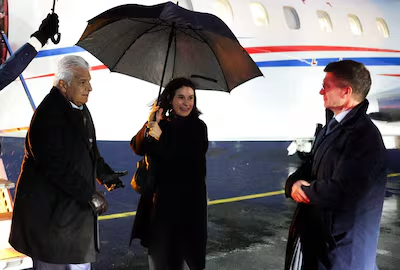
Mulino pictured above, also traveled to Oslo in December 2025 to attend the ceremony where Machado received the Nobel Peace Prize. There, he personally presented her with the dress she wore that evening. On that occasion, Machado pictured center above, had left Venezuela clandestinely with very little luggage.
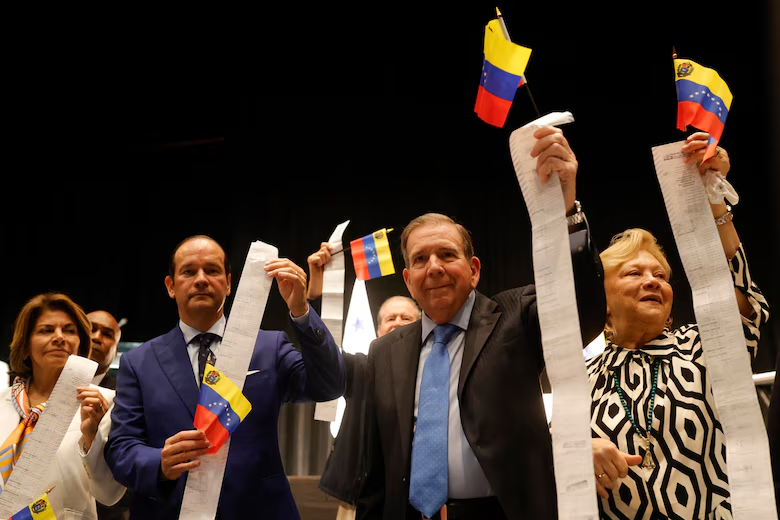
Venezuelan opposition leader Edmundo González Urrutia (second from right) holds electoral documents alongside his wife Mercedes López (right), former Costa Rican President Laura Chinchilla (left), and Panamanian Foreign Minister Javier Martínez-Acha.
Marco Rubio Speaks.
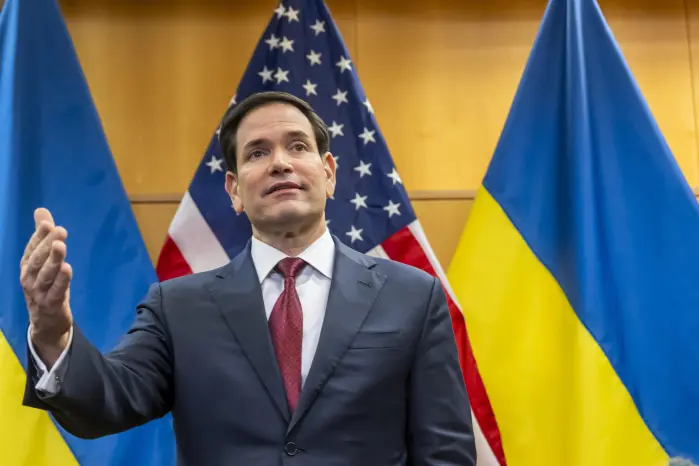
In New York, the United States Secretary of State Marco Rubio was asked about the issue. He responded as follows: “I was here all day yesterday, so I’m not sure what you’re talking about; but María Corina is very brave. We love her very much. I’ve known her for many years and have been in contact with her for a long time; but, and I don’t mean to belittle her, there are 8 million Venezuelans, her followers, who have left the country. Our policy is that we want to see that community return to their country, and then a country leadership vote. We want to reach the point where Venezuelans feel confident in returning home.”
Donald Trump and Delcy Rodríguez Meet for the First Time in New York.
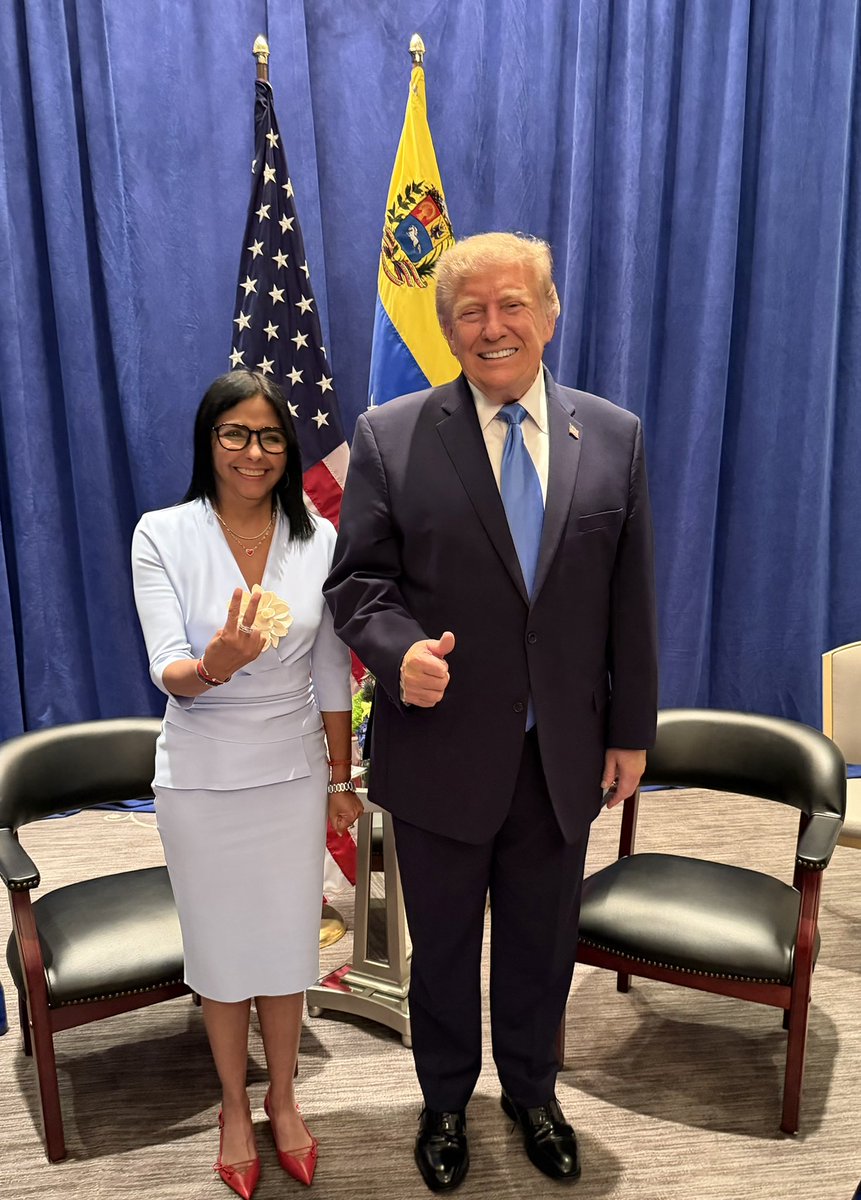
Delcy Rodríguez and Donald Trump in New York. This is the first meeting between a US president and a Venezuelan leader in more than eleven years.
US President Donald Trump and Venezuela’s interim president, Delcy Rodríguez, met for the first time in New York on Tuesday, in a meeting that represents an unprecedented rapprochement between Washington and Caracas, the White House confirmed. The meeting took place at the Lotte New York Palace Hotel, as part of a reception hosted by Trump for foreign leaders on the occasion of the UN High-Level Week. In addition to both leaders, those participating included US Secretary of State Marco Rubio; Treasury Secretary Scott Bessent; White House Chief of Staff Susie Wiles; and Deputy Chief of Staff Stephen Miller. The meeting was held behind closed doors and without press access, unlike other meetings held by Trump in New York, such as the one he held with Ukrainian President Volodymyr Zelensky.
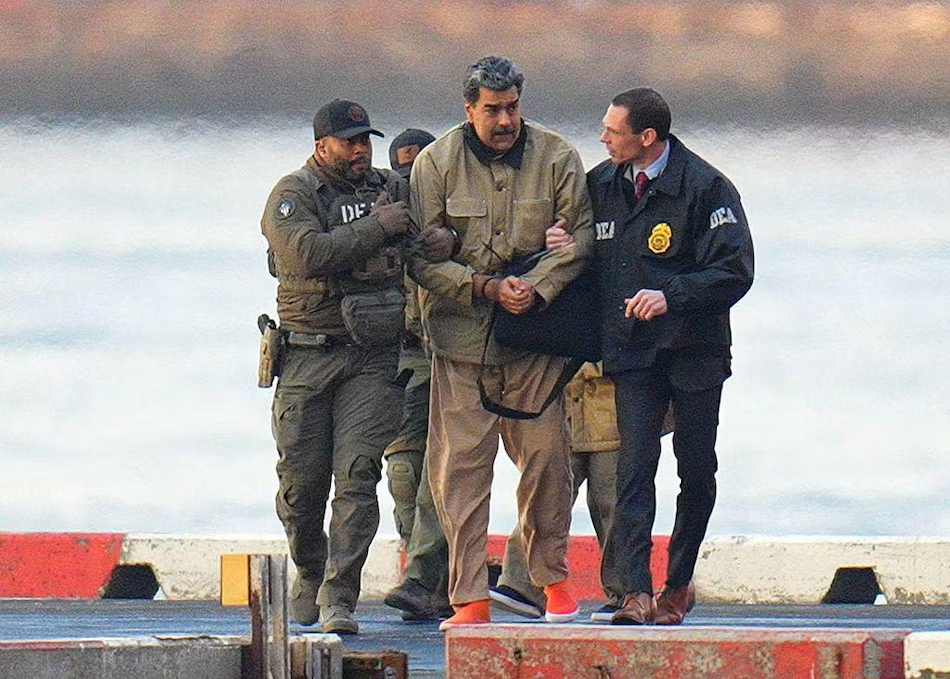
The meeting took place shortly after the controversial agreement by which Venezuela ceded part of its oil reserves to the United States, and just a few kilometers from the New York prison where Nicolás Maduro pictured above remains incarcerated, accused of drug trafficking. This is the first meeting between a US president and a Venezuelan leader in more than eleven years, since the brief meeting between Barack Obama and Nicolás Maduro during the 2015 Summit of the Americas held in Panama. Most observers agree that Delcy Rodríguez played a part in the removal of Maduro. Since the United States captured and deposed Maduro in Caracas last January, the Trump Administration has backed the new government of Rodríguez, formerly vice president, and has restored diplomatic relations with Venezuela, which had been severed since 2019. The main sign of the rapprochement between Washington and Caracas came recently with the announcement of an oil agreement that would allow the United States to control a fifth of Venezuela’s crude oil reserves. The agreement has raised concerns among sectors that believe the Trump administration is only interested in oil and is not actively promoting a democratic transition in Venezuela.