Panama’s Forests Tell Another Story After Dark
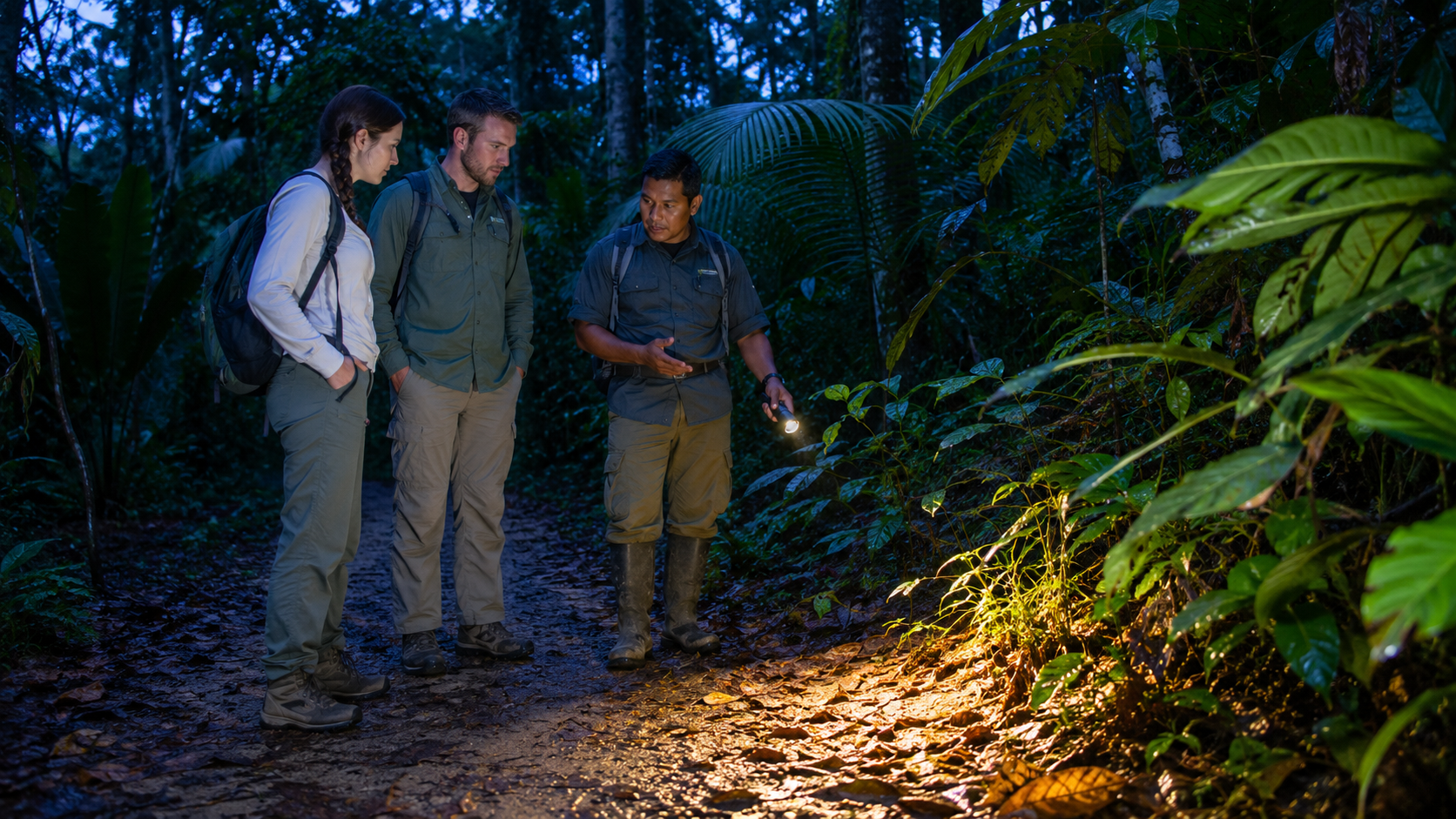
Guest Contribution – At dusk, a forest path begins to lose its familiar landmarks. Leaves merge into larger shapes, the next bend disappears, and a call beside a pond suddenly becomes easier to notice than the tree above it. A short stretch of trail can hold enough activity to keep a group still for several minutes.
For Panama’s nature tourism, that change offers another way to experience a landscape. An evening excursion can complement daytime birdwatching by revealing different behaviour, different animals and details that bright scenery tends to overshadow.
Listening Changes the Experience
A night outing rewards attention before movement. A guide may pause to separate an animal’s call from dripping water or rustling vegetation, then explain where the sound originates. The group begins building a picture of the surroundings before every part of it becomes visible.
That habit of listening for detail is familiar in digital casino entertainment, where sound carries deliberately assigned meanings. In online pokies, audio cues can accompany reel stops, winning combinations or the start of a bonus feature, while the game displays the relevant symbols and payout separately. The forest offers no such designed soundtrack, so a guide’s interpretation helps distinguish a meaningful call from the surrounding chorus.
This is one reason a quiet pause can be more productive than another hundred metres of walking. Conversation and constant movement make subtle sounds harder to follow, even when the animals themselves remain nearby.
A Night Tour May Use Wheels
The format deserves checking before booking. A guided walk, a vehicle excursion and observation beside a lodge offer different experiences, even when all three are described as night wildlife tours.
Canopy Tower, for example, lists a night excursion in its Birdmobile observation vehicle, looking for owls, potoos and nocturnal mammals. Its published conditions specify a minimum of four participants, a maximum of eight guests per guide for its nature tours, and access restricted to Canopy Tower guests. These details make it a specific lodge activity rather than an unrestricted public night walk.
Several practical distinctions follow:
- A walking excursion involves the trail surface, gradients and time spent standing.
- A vehicle outing changes the amount of walking and the available viewing positions.
- A lodge-based activity may require an overnight stay rather than a separate excursion booking.
- A specialist wildlife itinerary may devote longer periods to particular species than a general nature tour.
The useful question is what the evening actually involves. A dramatic photograph provides little information about transport, access or the patience required between sightings.

The Calls Have Consequences
Panama’s nighttime sounds also connect tourism with research. Scientists at the Smithsonian Tropical Research Institute have investigated how fringe-lipped bats use frog and toad calls to assess potential prey.
A study published in April 2025 tested wild-caught juvenile and adult bats using recordings of 15 local frog and toad species. Adults distinguished palatable prey from unsuitable species more effectively; juveniles recognised cues associated with prey size but had not developed the adult response to toxic species. The Smithsonian research announcement, reproduced by ScienceDaily, explains how experience helps refine those hunting decisions.
That finding gives an ordinary pond chorus another dimension. A mating call can attract a potential partner while also providing information to a predator. Hearing a frog does not mean a bat attack will follow, but understanding the relationship adds substance to an otherwise mysterious noise.
An excursion cannot reproduce a controlled experiment. Its value lies partly in making the questions behind that research tangible.
A Guide Makes a Small Area Interesting
Distance is a poor measure of a wildlife evening. Moving farther can mean leaving behind the very detail that deserves attention: a call repeated beside water, movement among leaves or an unfamiliar outline against a branch.
A useful explanation also separates three things: what was heard, what was seen and what remains uncertain. A possible identification should remain possible until the available evidence supports something stronger.
This approach gives the outing value even without a sought-after mammal. It also avoids reducing Panama’s forests to a checklist of photogenic animals. Watching how a guide searches, listens and interprets is part of the experience, rather than dead time between discoveries.
Good Preparation Keeps Attention on the Forest
The practical arrangements should be settled before darkness makes them harder to discuss. Conditions vary between properties and routes, so equipment and access requirements need confirmation with the organiser.
A sensible briefing covers:
- Closed footwear with suitable grip, clothing and weather protection for the chosen route.
- The expected walking distance, steps, uneven ground and available rest points.
- Who provides lighting and how the guide wants it used near wildlife.
- Rules on flash photography, touching animals, feeding and leaving the established route.
- Return transport and what happens if weather changes the plan.
Respectful observation leaves animals free to continue their activity. A better photograph never justifies handling wildlife or crowding it for a closer view.
The strongest night excursions leave more than an image on a phone. They make familiar surroundings newly legible: a pond becomes a place of courtship and hunting, a forest edge becomes worth studying, and a brief pause becomes part of the journey. Panama does not need every visitor to travel farther to reveal something different; sometimes the revealing change is the hour.
________________________________________________________________________________________________________________
Advertisements placed in our Guest Contribution sections are in no way intended as endorsements of the advertised products, services, or related advertiser claims by NewsroomPanama.com, the website’s owners, affiliated societies, or the editors. Read more here.