María Corina and Edmundo González Distance Themselves from a Dialogue Backed by the Venezuelan Government
The leaders described the country’s current situation as the result of “more than a quarter of a century of a regime that looted and repressed,” aggravated by the recent earthquakes of June 24.
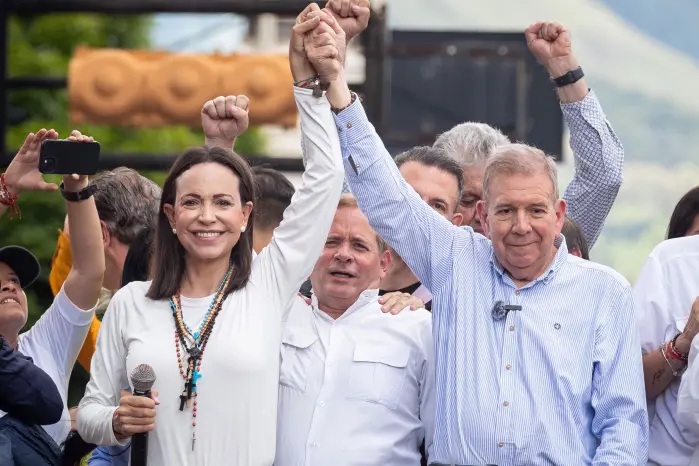
Venezuelan opposition leaders María Corina Machado and Edmundo González Urrutia took a stand on the country’s political and social situation, reaffirming the validity of their popular mandate and urging the consolidation of a democratic transition. The leaders stated that they were speaking as representatives of the ‘Popular Sovereignty expressed through votes in the primaries of October 22, 2023, and in the presidential elections of July 28, 2024.’ In the statement, they emphasized that this mandate remains fully in effect.
“We Will Not Be An Obstacle”
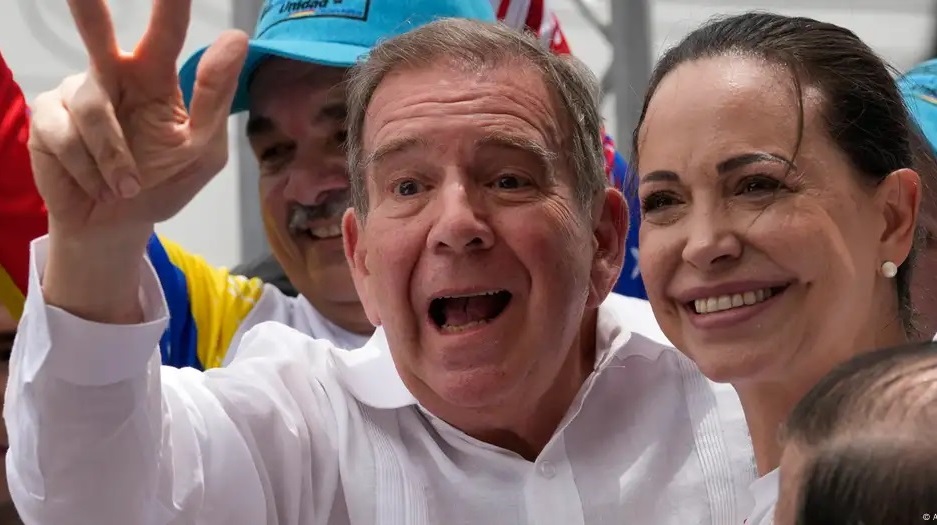
One of the central points of the statement refers to the recent announcement of a dialogue or coordination mechanism between members of the 2015 National Assembly and representatives of the ruling party. In this regard, Machado and González clarified that they did not participate in the design or development of this platform.
“We do not participate [in this mechanism]; therefore, it is not our responsibility to explain its scope or its decisions. Those who promote it must inform the country of its objectives, its method, and its timeline,” the statement reads.
However, opposition leaders asserted that they would maintain a constructive and pragmatic position: “We will not be an obstacle to any initiative that produces real progress.
They specified that they will evaluate any process based on concrete and verifiable achievements, among which they highlighted:
The restoration of democratic institutions.
The release of all political prisoners.
Real guarantees for all political actors without exclusions.
A timely presidential election schedule.
Full respect for popular sovereignty.
Focus on the Social Crisis
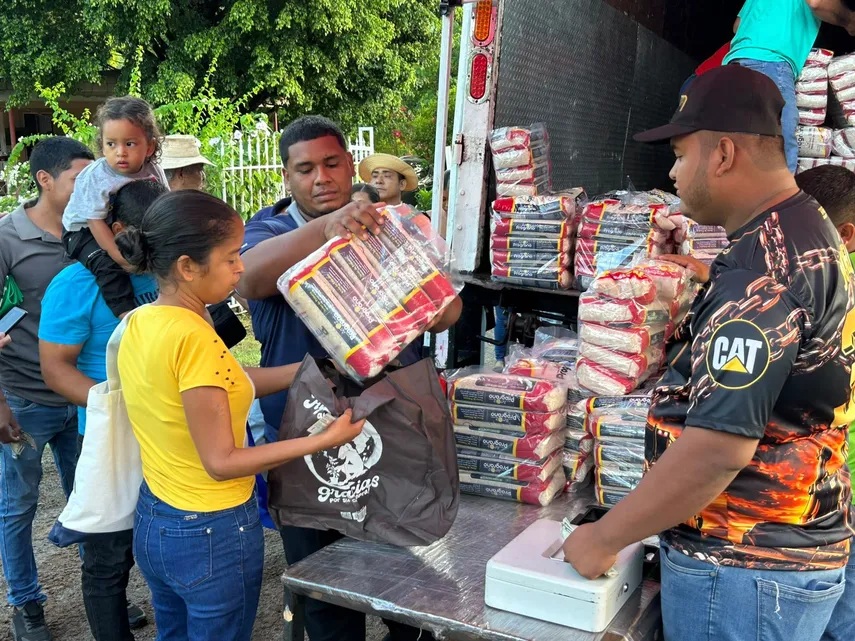
In the document, the leaders described the country’s current situation as the result of “more than a quarter of a century of a regime that plundered and repressed,” exacerbated by the recent earthquakes of June 24, which left death and destruction in their wake. They also denounced irregularities in the distribution of humanitarian aid organized by citizens.
Given this situation, they insisted on the need for a “new government with moral authority and managerial capacity” that would allow it to respond to social emergencies and restore institutional order to the Republic.
To achieve this, they reaffirmed the proposals put forward in the so-called Panama Manifesto, which include the release of political prisoners, the unconditional return of exiles, the creation of an environment of peace, and the consolidation of the Great National Agreement for the Reconstruction of the Republic.
Return Commitment
The letter concludes by reiterating the commitment of both leaders to return to the country to support the population on the ground and carry out the tasks of national reconstruction.
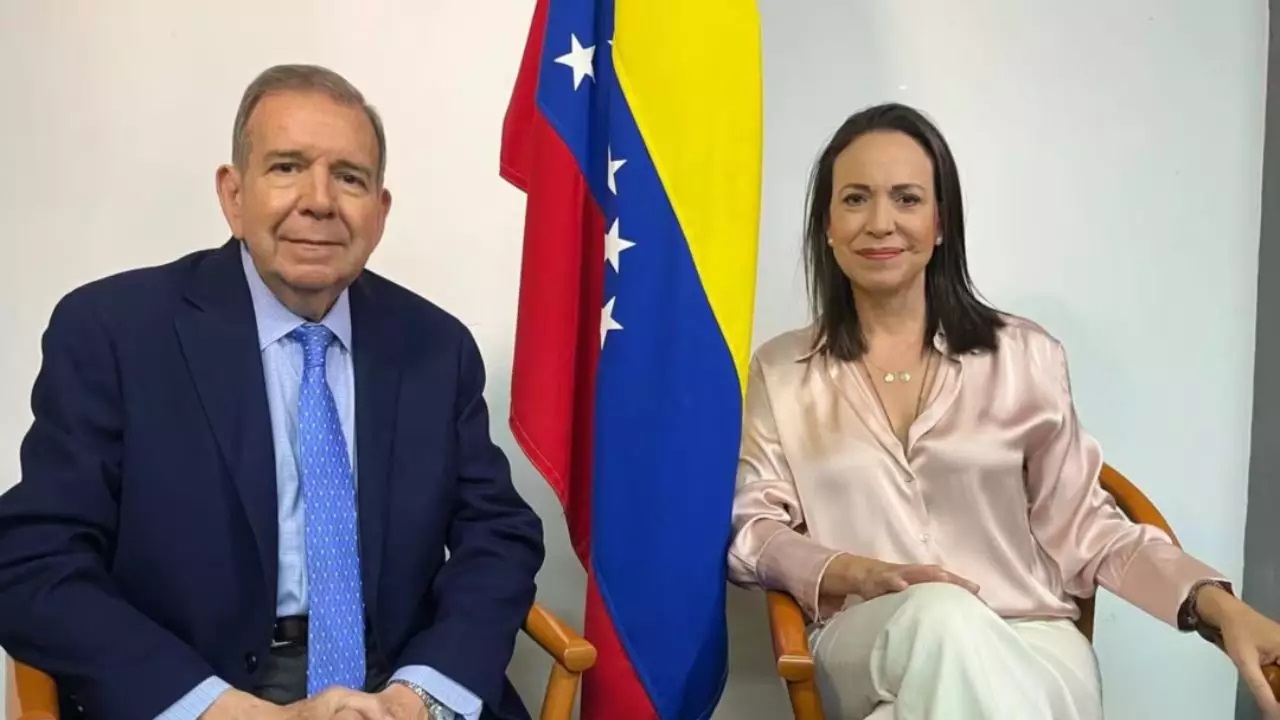
“We are going back to Venezuela, to accompany the people to whom we owe our allegiance, to travel the country and to build the Great National Agreement,” the statement emphasizes.