In the Face of the Climate Crisis Panama’s Mangroves are Positioning Themselves as Pillars of Blue Carbon
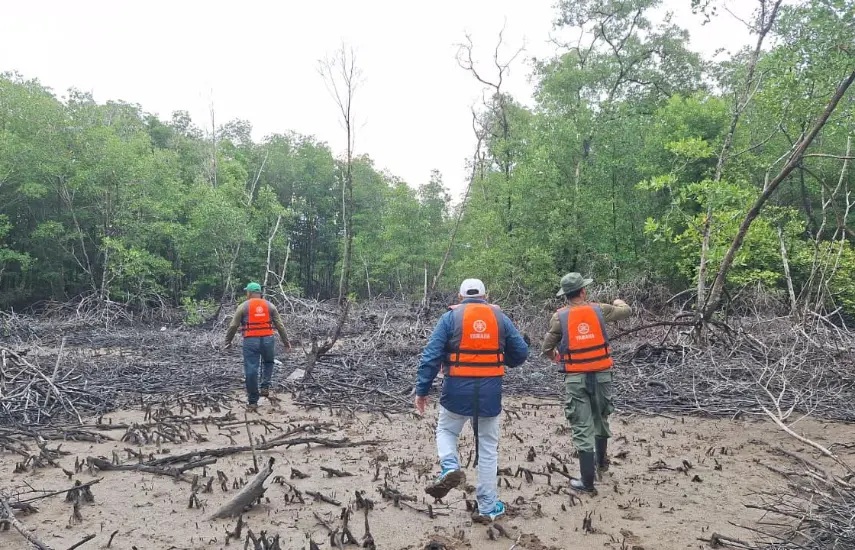
Panama’s mangroves are becoming a key pillar of blue carbon and a strategic asset in the fight against the climate crisis, due to their extraordinary capacity to capture and store carbon dioxide over long periods. A single hectare of mangrove can store up to four times more carbon than a terrestrial tropical forest, making these ecosystems one of the largest natural carbon sinks on the planet, reported the Ministry of Environment (MiAMBIENTE). Panama currently has approximately 183,774 hectares of mangroves distributed along both coasts, placing the country among those with the greatest coastal carbon sequestration capacity in the region.
Thanks to this coverage, these ecosystems represent a strategic component within national climate change mitigation policies. Digna Barsallo, National Director of Coasts and Seas at MiAMBIENTE, explained that the blue carbon stored in mangroves helps reduce the concentration of greenhouse gases and, at the same time, represents an opportunity for the country in terms of climate finance, conservation, and sustainable development. She added that, in the international context, natural ecosystems are beginning to be valued as measurable environmental assets.
However, this carbon storage capacity faces significant threats. According to estimates, Panama has lost approximately 50% of its original mangrove cover over the past 50 years, primarily due to the expansion of agro-industrial activities, unplanned real estate development, and various sources of pollution. This situation has diminished the potential of these ecosystems as carbon sinks and weakened their function as natural barriers against extreme weather events. Faced with this scenario, the country has promoted various initiatives aimed at conserving and restoring mangroves, as well as strengthening its participation in international mechanisms related to blue carbon.
Among these actions, the establishment of the National Chapter of the Global Mangrove Alliance stands out. This initiative was developed within the framework of the Blue Natural Heritage project, led by the National Audubon Society and the Audubon Society of Panama. Its objective is to establish a roadmap for the protection, restoration, and sustainable use of these ecosystems. Similarly, Panama has begun the process of strengthening its mangrove governance framework by harmonizing existing regulations, with support from the International Platform for Ocean Sustainability (IPOS).
This work is being carried out in conjunction with a group of experts who will consult with various sectors, prioritizing the protection and resilience of marine and coastal ecosystems. The goal is to restore 1,800 hectares of mangroves over the next three years. Furthermore, the country maintains international recognition for the mangroves present in the six Panamanian wetlands designated as Ramsar sites for their ecological importance. These are Panama Bay, Gulf of Montijo, Punta Patiño, Damani-Guariviara, San San Pond Sak, and the Matusagaratí Wetland Complex, the latter declared a National Park in March 2025.
Barsallo also highlighted that mangroves support complex biological networks that serve as shelter, food and reproduction for numerous species, including coastal birds and mammals such as the manatee, thus reinforcing their role in the conservation of biodiversity and ecological stability. Finally, the protection of mangroves and other coastal wetlands in Panama is supported by Law 41 of 1998, General Law of the Environment, as well as by Law 304 of 2022, which establishes the comprehensive protection of coral reefs, seagrass beds and associated marine-coastal ecosystems, in addition to the management mechanisms within the National System of Protected Areas (SINAP).