The Reality of Prisons in Panama and the Possible Shift Towards the Salvadoran Model
Retired commissioner and former director of Senafront, Oriel Ortega pictured below, details the reality of Panama prisons, analyzed the prison crisis in Panama, the mass escape, internal corruption and the possible shift towards the Salvadoran model as well as the announcements of new security measures for July 1.
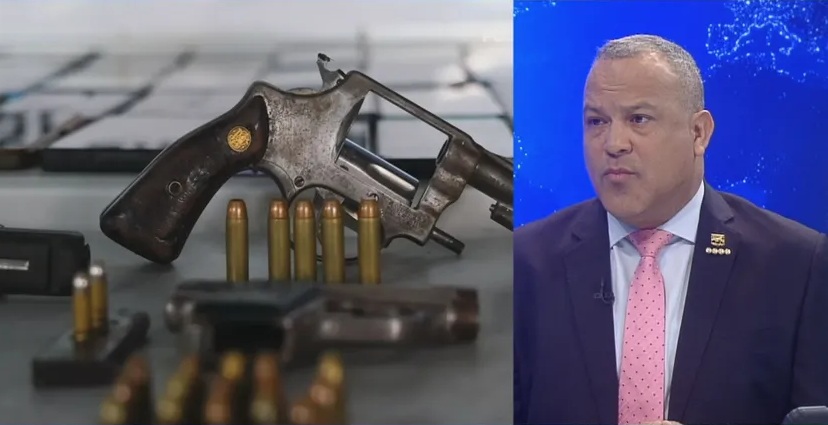
Panama City: The serious prison crisis in Panama has exposed the deep vulnerabilities of the country’s prison system. Retired commissioner Oriel Ortega, who served as director of Senafront and head of security at La Joyita prison, detailed in an interview about the complex reality faced by detention centers and the challenges of the new measures announced by the government.
Referring to the La Joya and La Joyita prison complexes, which house more than 14,000 inmates, Ortega described the situation as an “inhuman underworld” resulting from budget shortfalls, overcrowding, and the deterioration of the structures. Ortega noted that security is a shared responsibility between the Ministry of Security, which carries out perimeter control, and the Ministry of Government, which manages the centers.
The former director of Senafront highlighted the seizure of more than 3,000 cell phones, antennas, routers, firearms, and drugs. However, he warned that the underlying problem is corruption facilitated by the low salaries of the officers.
Transfer to Coiba
Regarding the transfer of 29 high-risk detainees to the National Aeronaval Service base on Coiba Island, Ortega justified the measure for a specific reason: lack of communication. “We have to find places where there is no cell service at the moment, where there is no nearby population,” he explained, contrasting the island with the prisons in the capital, whose perimeter fences are just a meter away from the surrounding neighborhoods.
Regarding the measures that the Executive Branch will present on July 1st to move to a stricter system, Ortega considered that a special executive decree is required to restructure Law 55. Furthermore, he indicated that the Panamanian State is obligated to explore the Salvadoran model.
Model of El Salvador
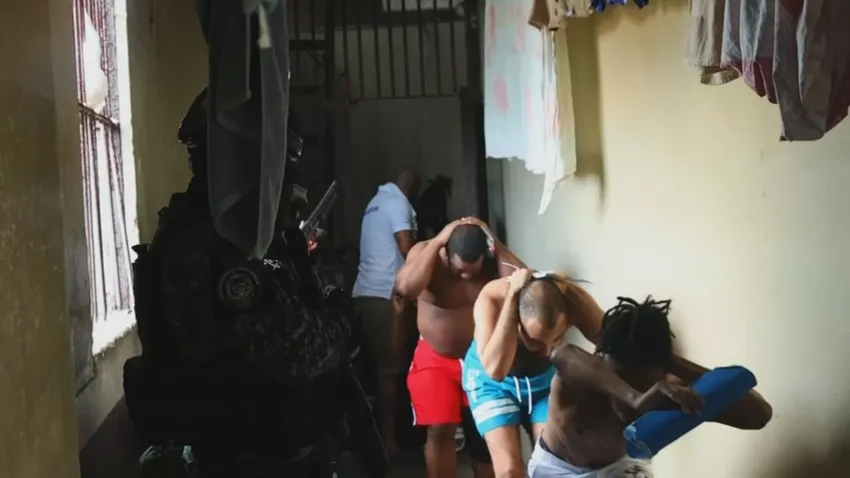
Analyzing the Terrorism Confinement Center, known as CECOT, the expert warned that replicating this rigid isolation model requires a large investment in infrastructure and raising awareness among staff, as they may need more than a thousand guards daily.
“The system is designed so that those deprived of their liberty are inside and are not allowed anything,” Ortega stated, acknowledging that this regime under a state of exception generates debates about human rights, but that for Salvadoran President Nayib Bukele, “this was what El Salvador needed.”
Finally, in response to the wave of homicides and contract killings, Ortega proposed abandoning vehicle-based patrols in favor of “police officers on foot.” He also demanded the installation of more facial recognition cameras and license plate readers at traffic lights to professionalize the police force.
16 Fugitives Remain at Large: An Escapee from La Joyita Prison has been Recaptured in San Miguelito
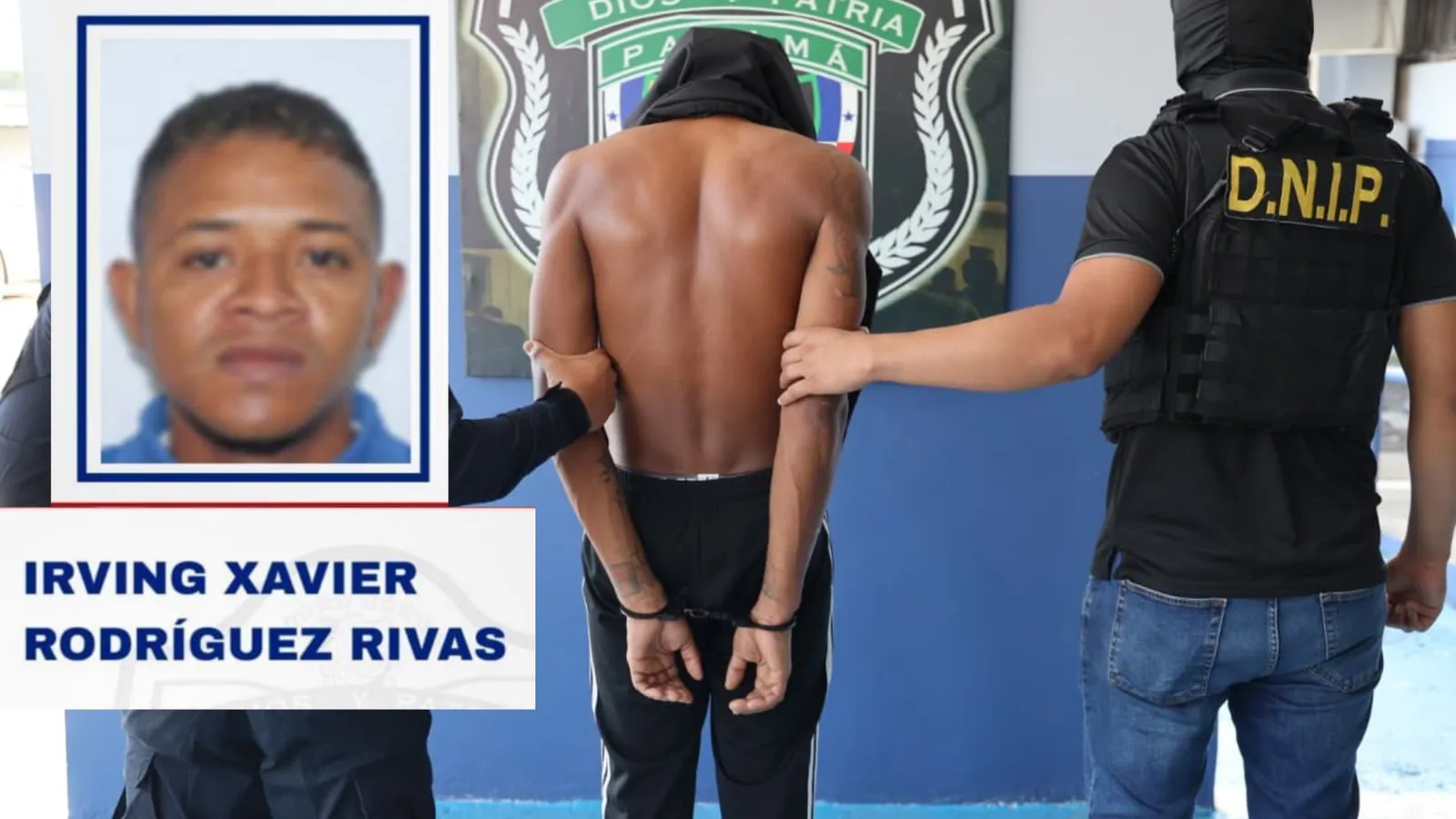
Irving Xavier Rodríguez Rivas, one of the men who managed to escape from the La Joyita Penitentiary Center on June 1, was recaptured in the district of San Miguelito this Friday, June 19, the National Police reported. The 30-year-old man, who is serving a sentence for a crime against collective security in the form of gang activity, was located in the Pan de Azúcar sector, Mateo Iturralde district. With the capture of Irving Xavier Rodríguez Rivas, there are still 16 fugitives to be recaptured.
The detainee will be transferred to the appropriate judicial facilities to continue the legal process following his escape. Security forces are maintaining intensive operations deployed in various parts of the country to locate the fugitives. According to the President of the Republic, José Raúl Mulino, as of Thursday, June 18, 178 had been located. With the capture of Irving Xavier Rodríguez Rivas, there are still 16 fugitives to be recaptured.
What did the President Say About the Escape?
Eighteen days later, President Mulino addressed the issue for the first time, detailing that in-depth internal investigations were ongoing and that, so far, some officials had been removed from their posts. However, he did not provide details on how many or what degree of responsibility they might have had in the lack of control that led to the mass escape. He also stated that a criminal complaint had been filed with the Attorney General’s Office, but did not explain who was responsible.
“My priority is to recover the escaped prisoners and find those responsible so they can pay. There will be no legal or political protection for anyone. Nor do I want to hand over a head just because someone asks for it as a way to cover up the true and profound nature of this event, so that nothing changes afterward, because in this troubled water there are several opportunists who are taking advantage, and they have their lines ready to cast their nets ,” he emphasized. The president, who said he was “outraged and ashamed” by the escape, assured that he has “no one under protection”:“I will sanction and denounce whoever is responsible once I have objective information from the authorities handling this.”
Reforms to the Penitentiary System
This event, described as the biggest escape in the country’s history, has caused a wave of criticism across all sectors of the country. Given this scenario, the president announced that the necessary adjustments will be made, first with the officials who failed to fulfill their duty and then with a “prison culture that must change, adapted to the current needs of maintaining order, discipline and isolation”. “It is time to use hard models, which are producing results elsewhere, with new structures and public policies that I will announce on July 1.” he warned.
After a Week of Silence, Minister Ábrego Explains How 195 Inmates Escaped Known as the “La Joyita Prison break”
Chiriquí: More than a week after the escape of 195 inmates from La Joyita prison, Security Minister Frank Ábrego broke his silence and offered new details about what happened. The official attributed the escape to a riot that erupted during the relocation of gang leaders and revealed that 16 inmates remain at large. He explained that the investigations are ongoing and are being carried out by different specialized units.
“I think it’s clear that our internal investigation units, the DRP, Judicial Police, intelligence agents, and also the Public Prosecutor’s Office are conducting investigations, and we are awaiting the results,” he stated. The head of Security explained that the National Police are maintaining specific operations to locate each of the fugitives. There are 16 people still at large out of the 195 who escaped. The National Police have 16 search teams pursuing each of them, and we could say that the search is, to a certain extent, personalized,” he stated.
Ábrego took the opportunity to ask for the public’s cooperation and urged them to report any information that could lead to the escapees’ location. “Report the whereabouts of these individuals, not so much for the reward, but for the peace of mind of the community ,” he stated. The minister assured that the security forces are maintaining a constant effort to find the fugitives. “The National Police are currently working without leave, without vacations, to bring that security to the entire Panamanian population,” he stated. Regarding the circumstances that triggered the escape, Ábrego explained that the incident occurred during a process of relocating gang leaders within the prison system.
“Following the relocation of some gang leaders from La Gran Joya to La Joyita, these inmates declared a riot inside the prison, prompting a response from law enforcement. Indeed, these individuals caused the fence to break down, because they had already torn down the gates.” he recounted.
The minister defended the actions of the authorities and maintained that information about the case has been handled transparently. “We are transparent with information,” he stated. Ábrego also referred to the structural problems facing the prison system, including overcrowding, a situation that authorities have recognized as one of the main challenges in terms of security and rehabilitation. The minister’s remarks came during a meeting between security officials from Panama and Costa Rica , in which both countries discussed joint strategies to combat organized crime and strengthen regional cooperation in the face of transnational threats.
Regarding the circumstances that triggered the escape, Ábrego explained that the incident occurred during a process of relocating gang leaders within the prison system.