Panama Rice Farmers Experience the Worst Crisis Since 2004
According to the producers, the 2025 cycle is shaping up to be one of the most critical.
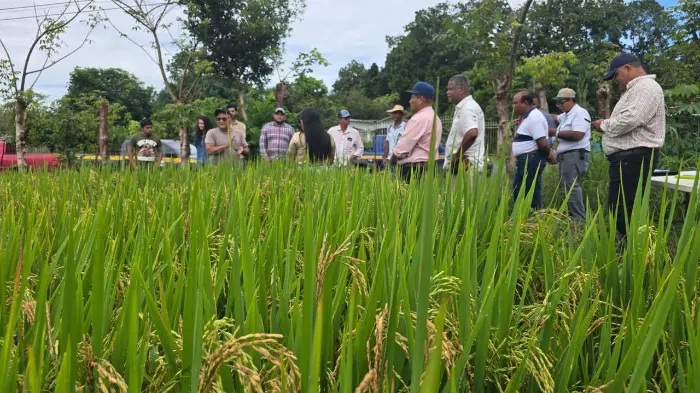
The 2025 cycle is shaping up to be one of the most critical in the recent history of the Panamanian rice sector, according to producers like Omar Spiegel. He explained that, since the appearance of the Spinky mite in 2004, national production had not faced a crisis as serious as the current one. This sentiment is shared by producers across the countries, who are reporting massive losses and a historic drop in yields. The situation has raised alarm bells given the uncertain outlook. In an article titled “Crisis in Rice Production in Panama,” producers warn of a worrying phenomenon: the partial loss of the rice panicle in numerous fields.
This damage, which occurs during critical stages of grain filling, has led to an estimated 40% to 50% reduction in total production, severely impacting the profitability and economic stability of rice farmers. Furthermore, rice farmers report receiving the lowest price in the last ten years in 2025, further exacerbating the situation. “In a year marked by unprecedented yield losses, this price collapse acts as an additional blow that threatens the continuity of the national rice industry,” Spiegel noted. The severity of the crisis is compounded by the lack of a clear diagnosis regarding the causes of the damage to the ear of grain. Initial hypotheses being considered include bacteria, fungi, mites, or unusual weather conditions, although these have not yet been confirmed.
According to Spiegel, this uncertainty hinders an effective response and leaves producers without a defined strategy to deal with the situation, increasing losses and uncertainty in the sector. To avoid an even greater impact, rice farmers insist on the need for urgent action, as the drop in yields threatens the country’s food security, given that rice is the main food in the national diet. Given this situation, the Ministry of Agricultural Development (MIDA) has launched a nationwide survey in all rice-producing provinces. The intervention includes evaluating harvested hectares, analyzing the performance of planted varieties, and conducting a detailed review of yields per hectare, among other actions, in order to understand the scope of the crisis and establish an action plan to mitigate its effects.