

Geosciences Institute Recorded 1,056 Aftershocks Since the Oct 9th Earthquake.
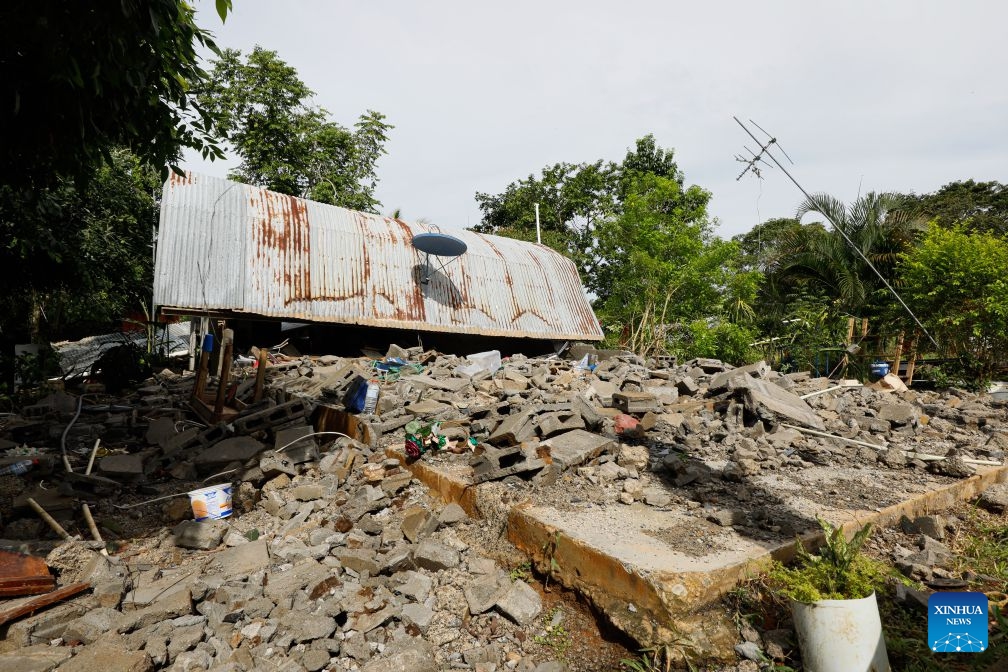
When a major earthquake happens, it causes a sudden shift along a fault line. This violent movement redistributes tremendous amounts of stress to the surrounding rocks and nearby sections of the crust. Aftershocks are minor readjustments as the displaced Earth’s crust settles into a new, stable state of stress.
Néstor Luque, the director of the Institute of Geosciences at the University of Panama, reported that, as of Monday morning Oct 26th, 1,056 aftershocks have been recorded following the magnitude 7.5 earthquake of October 9.
“We see that aftershocks continue to occur, as the theory indicates, but they are becoming more spaced out and decreasing in magnitude,” said Luque,
He pointed out that aftershocks are earthquakes of lesser magnitude and that they are located near the epicenter area, distributing themselves around this fault system that continues to readjust.
The epicenter of the earthquake on October 9 was located 39 kilometers west of Tonosí, in the province of Los Santos.
“The aftershocks are due to the readjustment of the fault system in search of equilibrium, where their movement is no longer perceived; only the systems will detect it, and people will not feel it,” Luque added.
In addition, two tremors were recorded Sunday Oct 25th that were not related the cluster of aftershocks occurring since Oct 9th. One was on the border between Colón and Guna Yala, a magnitude of 3.5, and the second event was a tremor in the border region between the provinces of Bocas del Toro and Chiriquí which had a magnitude of 4.0.
How long will these aftershocks continue? Depending on the size of the initial earthquake, aftershocks can continue for days, months, or even years before the area’s background seismic activity returns to normal. They are most severe and frequent immediately after the mainshock. Over time, both their magnitude and frequency steadily decrease.
Aftershocks can pose a significant threat even though they are lower in magnitude than the mainshock. The initial earthquake often weakens buildings, bridges, and infrastructure. Minor aftershocks can trigger total collapses, complicate ongoing search and rescue efforts, and cause severe psychological stress to local populations.