
After More than 36 Years of Uncertainty, Identification Provides Answers to Family and the Remains can Receive a Dignified Burial.
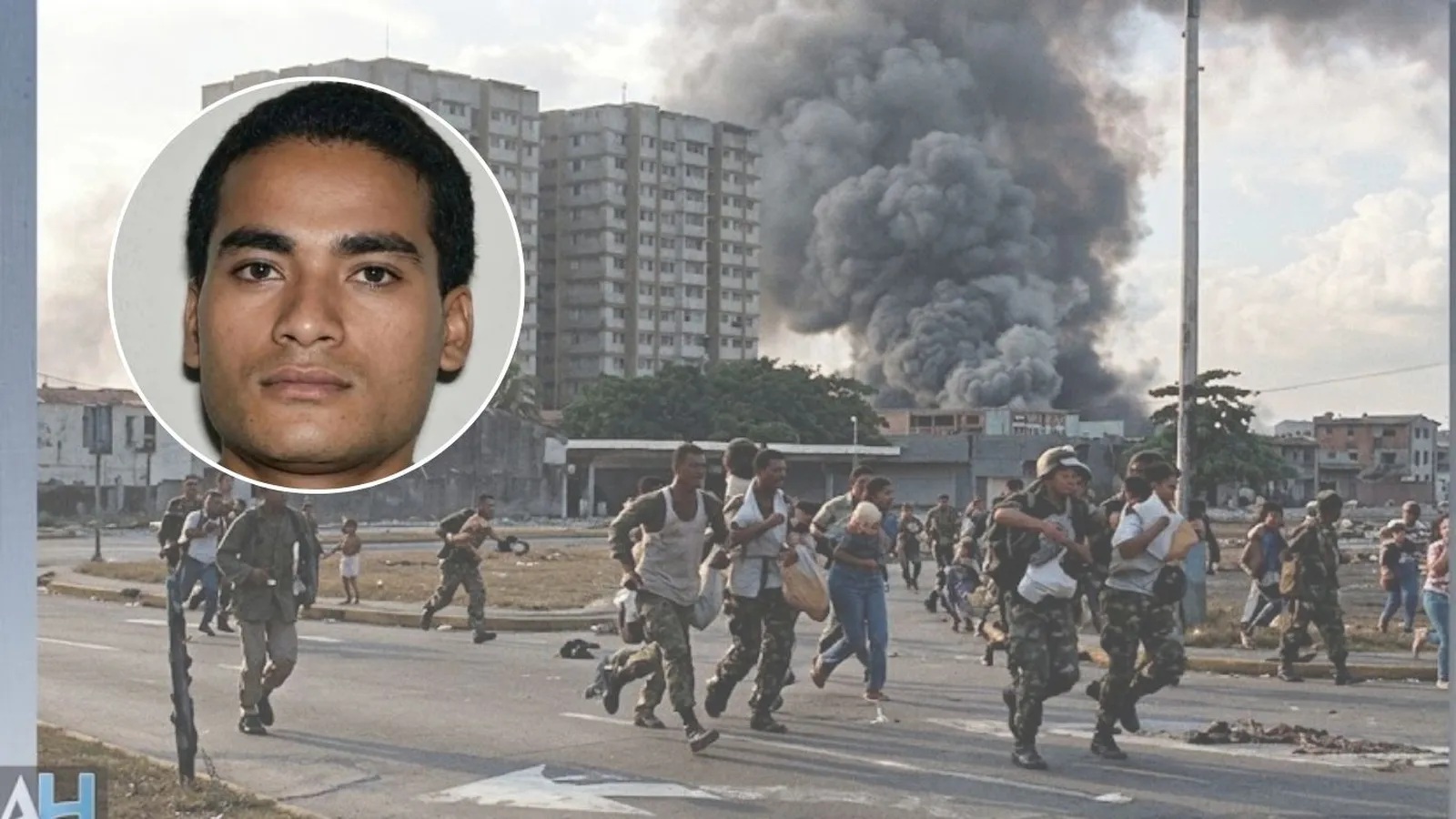
Panama City: The December 20 Commission announced a new development in the investigations to determine the identity of the victims of 1989. This is the scientific identification of the remains of Roberto Adolfo Aparicio Oliva, who died at the age of 21 during the United States military invasion of Panama on December 20, 1989. According to the report, obtaining their identification represented a significant scientific challenge due to the state of carbonization of the remains, a condition that considerably hinders the recovery of genetic material.
Through the Guatemalan Forensic Anthropology Foundation (FAFG), DNA was extracted and a genetic profile was obtained, which was later compared by the Institute of Legal Medicine and Forensic Sciences (Imelcf) with the reference samples provided by relatives of the victims. This result was achieved within the framework of the investigation being carried out by the Public Prosecutor’s Office with the scientific assistance of the Imelcf.
Who was Roberto Adolfo Aparicio Oliva?
According to the December 20 Commission, Aparicio Oliva was the son of Félix Adolfo Aparicio Pérez and Lidia Maritza Oliva Gómez. He lived in San Miguelito, in the Cerro Batea sector. He was posthumously promoted from agent to the rank of second corporal by Decree No. 228 of May 31, 1990. He belonged to Battalion 2000, based in Chepo, but was serving at the Central Headquarters of the Defense Forces, where he was part of the reconnaissance section. Days after the start of the invasion, his family received information about his death in the El Chorrillo sector, but they were unable to locate his remains.
Since then, his family searched tirelessly for him in hospitals, cemeteries, and through exhumation proceedings. Later, they received information that he had been buried in a mass grave at the Jardín de Paz Cemetery. After more than 36 years of uncertainty, his identification provides an answer to his family and his remains can receive a dignified burial with his identity fully established.

The number of innocent victims killed during the U.S. invasion of Panama, known as Operation Just Cause in 1989, is disputed, with estimates ranging from 202 civilians according to U.S. military figures to as high as 3,000 according to human rights organizations. The exact number remains unclear due to varying reports and the lack of comprehensive records.