
The legacy: How the Specialty Coffee Revolution Began in Panama.
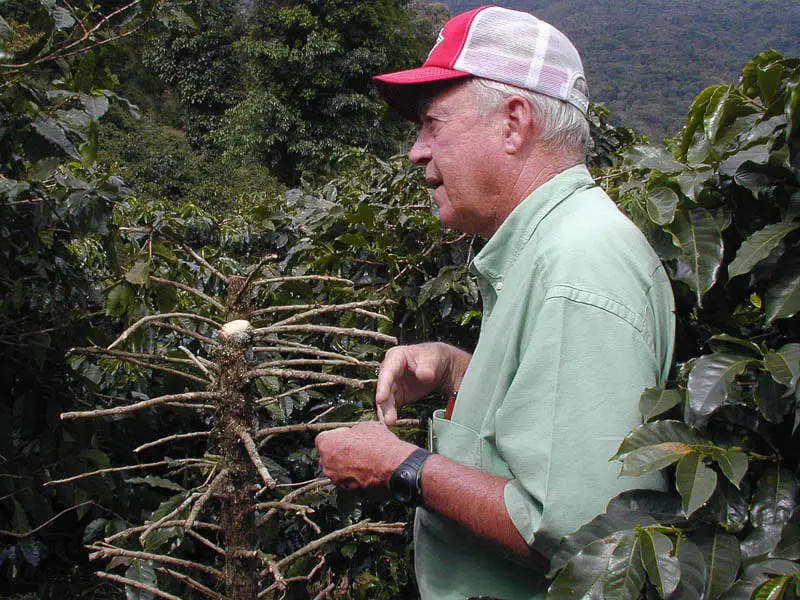
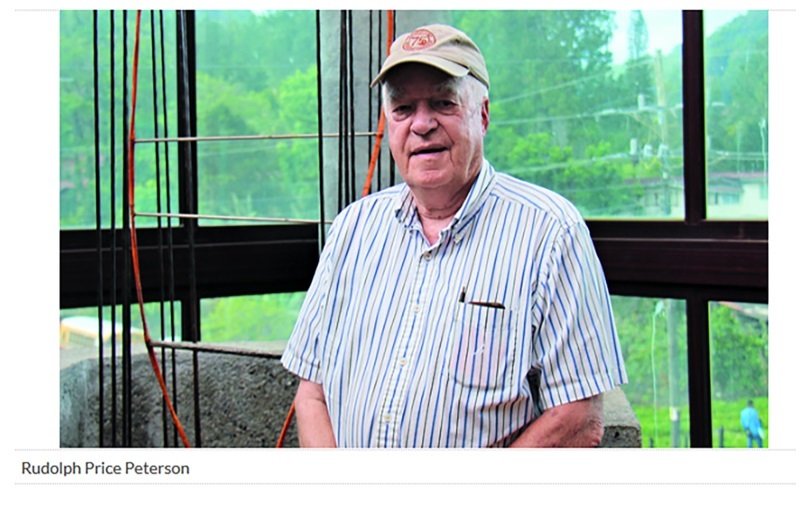
Pictured below is Price Peterson, producer and founder of Hacienda La Esmeralda.
By: Price Peterson.
In 2004 everything changed, although we didn’t know it. My son Daniel was the first to taste the first Geisha harvest from Hacienda La Esmeralda. The specialty coffee movement was born in the United States between the 1960s and 1970s.

It was driven by pioneers such as Alfred Peet, Erna Knutsen, George Howell, Donald Schoenholt, and the founders of Starbucks. They sought coffees that tasted better than the commercial coffees of that era. My wife and I, owners of Hacienda La Esmeralda, began attending SCAA (Specialty Coffee Association of America) exhibitions in 1988.
There we met people who talked about floral aromas, citric acidity, and attributes we didn’t know coffee had. “We came from a world where the highest possible volume per hectare was produced at the lowest cost.” The differences in quality were small, but something was beginning. At the same time, in Panama we were learning to live in a free market. Under the ICO (International Coffee Organization) quota system, the price remained between $1.20 and $1.50 per pound. That was enough to cover expenses and make a small profit. In 1989 the member countries failed to reach an agreement, the United States withdrew its support and the quotas were suspended.
The price plummeted and in the following years it reached about 50 cents a pound. “Necessity is the mother of invention.” That’s how the Specialty Coffee Association of Panama was born. It was formally established in 1996. “We were seven producers with the same vision: to differentiate our coffee by its quality.” The roasters told us we had that quality, but we still didn’t understand it. Renowned roasters, such as George Howell, came to help us understand what they were looking for.

In January 1997, we held the first Best of Panama (BOP). It was a simple cupping, without an auction. The prize was being able to say, “I have the best coffee in Panama.” In 2002, in the midst of one of the worst coffee crises, we held the first BOP auction. While the New York Stock Exchange was paying $0.56 per pound, BOP coffee reached $2.25. In 2004 everything changed, although we didn’t know it. My son Daniel was the first to taste the first Geisha harvest from Hacienda La Esmeralda.

“It was so different from conventional coffee that we almost didn’t present it to the competition. Nobody had ever talked about jasmine aroma or peach flavor in Panamanian coffee.” He won the BOP with ease and broke his first auction record: $21.00 per pound. The stock market remained at $0.81, below the cost of production in Panama. Coffee is a very family-oriented industry . In 2005, my daughter Rachel joined Hacienda La Esmeralda to help us sell this new and unusual coffee.
Moving from a commercial producer to a producer of a high-value experience takes time. Rachel has played a key role in raising awareness of our coffee and Panamanian coffee. She first experienced the product through her own taste. Then she shared the message with consumers. This transformation is renewed every year. It’s a dynamic market, and a lot of teamwork is required to make every coffee experience enjoyable.
Price Peterson, coffee producer and founder of Hacienda La Esmeralda.