
More Consequences From the Oct 9 Earthquake in Panama.
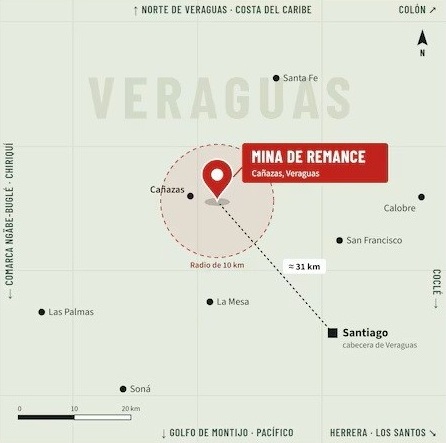
The Remance Mine (Mina El Remance) is an abandoned epithermal gold mine located in the mountainous region of San Francisco de la Montaña, within the Veraguas Province, Panama. An epithermal gold mine extracts gold from mineral deposits that form in the shallow subsurface typically less than 1 kilometer deep from circulating hot, mineral-rich hydrothermal waters tied to volcanic activity. The mine is currently at the center of a major environmental alert. Following a powerful 7.5+ magnitude earthquake on October 9, 2026, a severe landslide occurred at the site, damaging one of its old tailing ponds. This has triggered an active spill, prompting the Ministry of Environment (MiAmbiente) to dispatch emergency water trucks to nearby communities like La Gorda and investigate toxic runoff. A typical tailings pond is pictured below.
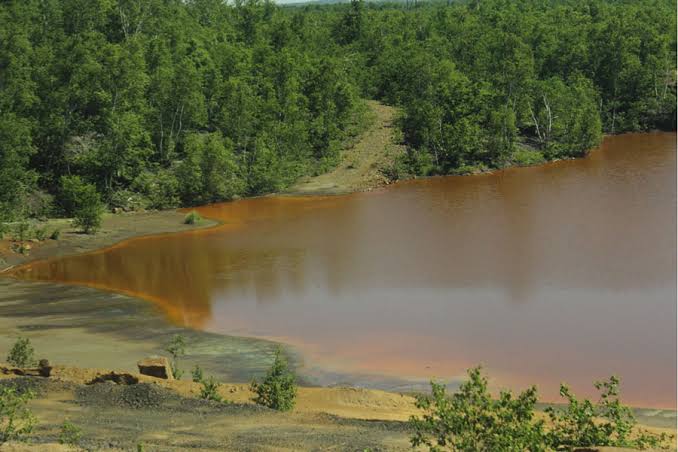
Gold veins in the Remance area were mined intermittently since the mid-18th century. The mine last operated at an industrial level between 1989/1990 and 1998/1999 by Minera Remance S.A., which extracted roughly 88,000 ounces of gold. When it closed, the abandoned mine did not have a proper environmental closure plan, leaving three massive toxic waste tailing ponds completely exposed to the elements. The earthquake caused a structural failure in the abandoned infrastructure. Authorities are highly concerned because scientific studies previously conducted by the University of Panama (UTP) and SENACYT had already warned that these specific tailings contained high concentrations of arsenic, cyanide, and copper.
The Remance Mine (Mina El Remance) is an abandoned epithermal gold mine. Environmental authorities have warned residents in downriver communities—including La Gorda, Calabacito, Remance, Los Panamaes, and Los Hatillos—to avoid consuming water from local supply systems connected to the Santa María River basin until laboratory analyses from Divisa are completed. The investigations are examining an area of approximately 10 square kilometers, and will include samples of soil, stream sediments, water, tailings and plants, and including crops intended for human consumption.