
Costa Rica’s New Maximum-Security Mega-Prison Imitating Bukele’s in El Salvador.
Costa Rica President Laura Fernández pictured below said Costa Rica needed a prison “where public authority reigns.”
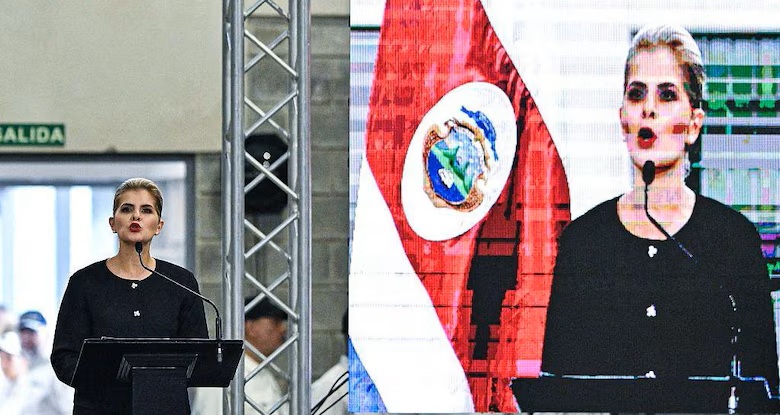
“Costa Rica needed a prison where public authority governs, not criminals.” Costa Rican President Laura Fernández inaugurated a maximum security prison on Wednesday, inspired by El Salvador’s mega-prison, a symbol of President Nayib Bukele’s anti-gang war and heavily criticized by human rights organizations. In the corridor of one of the modules, between rows of cells, Fernández presented the detention center as an example of his “tough on crime” against criminals, especially those related to drug trafficking. Costa Rican authorities attribute the surge in violence in this country, which for decades was one of the safest in Latin America, to this criminal activity.
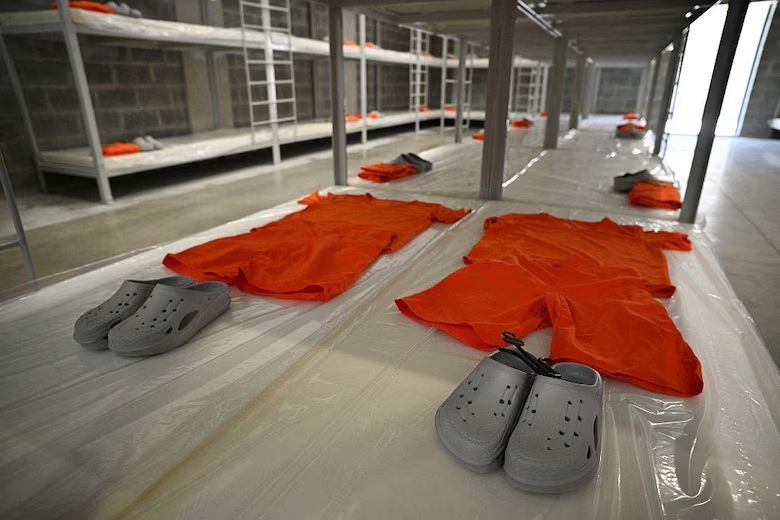
The Prisoners will Wear Orange Uniforms and Grey Crocs.
Costa Rica ended 2025 with 873 homicides, making it the third most violent year in its history, according to figures from the Judicial Investigation Agency (OIJ). “We are marking a turning point in Costa Rica in prison security and national security. We are going to take a hard line because ‘those who do wrong will pay’,” stressed the president, an enthusiast of Bukele’s security policy. The High Containment Center Against Organized Crime (CACCO), where the first inmates will be transferred at the end of the month, is located within the La Reforma penitentiary complex, in San Rafael de Alajuela, about 20 km northwest of the capital San José. The CACCO, which has five modules with 17 cells of 90 m² each, will house 5,100 prisoners. According to authorities, each cell has a capacity for 60 inmates. As previously announced, these individuals will only have access to one hour of sunlight per day, will not be allowed to possess personal belongings, will wear orange uniforms, and will have a very restricted visitation regime. The complex occupies an area of approximately 91,000 square meters and cost ₡16.774 billion (about US$35 million), according to the Presidential House.
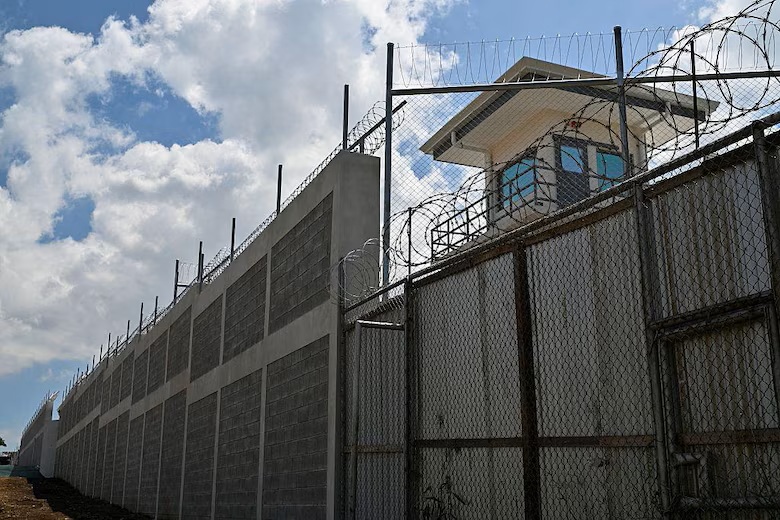
The CACCO will house 5,100 prisoners.
El Salvador as an Example of “Tough on Crime”.
The Central American country is not the first to look to El Salvador’s security policy, whose cornerstone is a controversial state of emergency that limits constitutional rights and has been in effect for more than four years. Ecuador did so too, and the new presidents of Peru and Colombia, and more and more Latin American governments, from Honduras to the Southern Cone, are joining the hardline strategy also endorsed by the United States. Panama is watching closely as they build improved prisons after the recent major jailbreak. Bukele had already been to the neighboring nation before, in November 2024, when he visited the country’s main prison, warning of “symptoms” of criminality similar to those El Salvador faced with gangs.
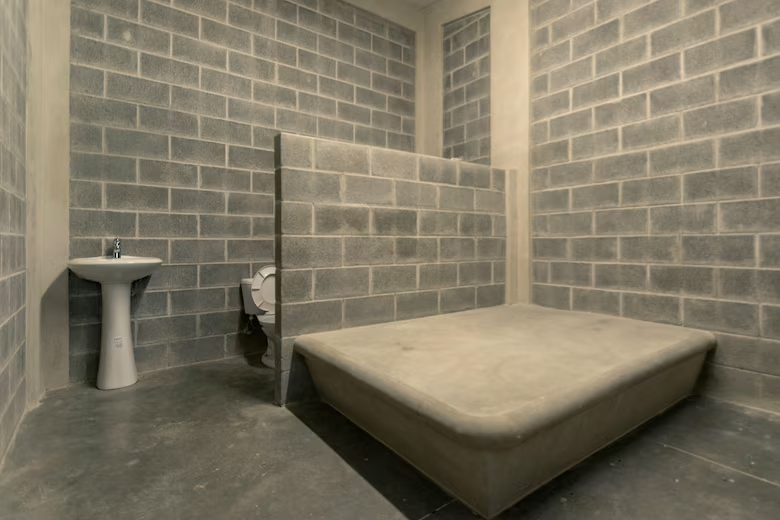
The mega-prison has five modules with 17 cells of 90 m².
And his then counterpart and current Minister of the Presidency and Finance, Rodrigo Chaves, visited Cecot in December. Just a month later, they laid the first stone of the CACCO together. For her part, Fernández, who succeeded Chaves as head of government in May, will visit the Cecot this Friday. “I want to learn everything I can from the prison model that brought peace back to a people plagued for decades by criminal violence,” said the president during the inauguration of CACCO, an event attended by the Salvadoran Ministers of Security and Defense, Gustavo Villatoro and René Merino. According to the latest survey by OPol Consultores, published in August, 96% of Costa Ricans believe that laws against organized crime should be strengthened.
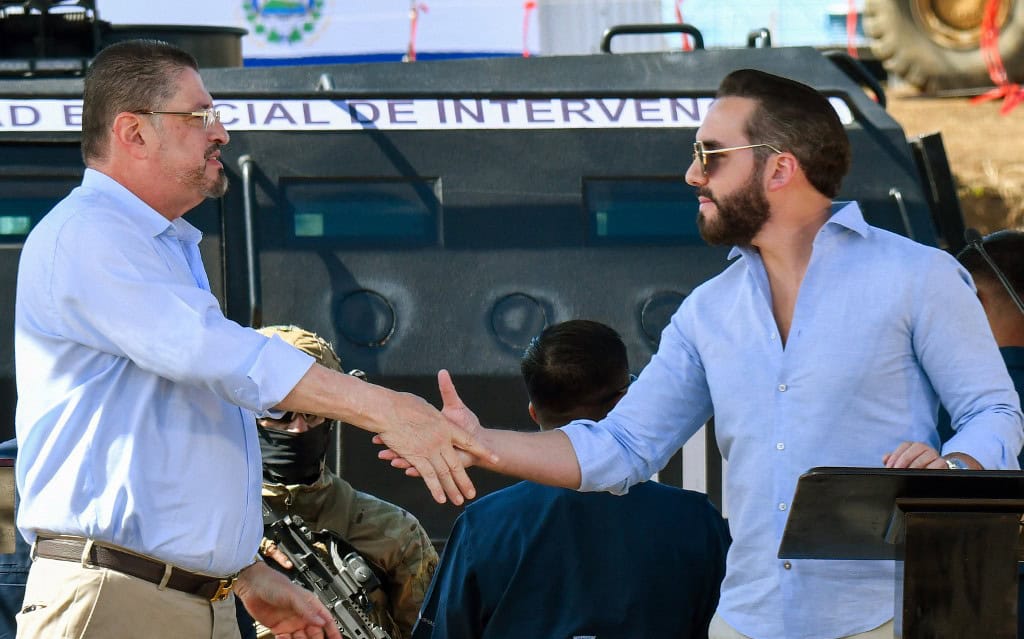
Nayib Bukele on the right participated in the laying of the first stone of the CACCO in January, alongside his then counterpart Rodrigo Chaves on the left.
Meanwhile, opponents and activists criticize Costa Rica, with its international reputation for respecting human rights, for imitating the Salvadoran security model, which, according to a group of UN experts, has resulted in crimes against humanity. In 2015, four years before the start of Bukele’s first government, the country recorded 103 homicides per 100,000 inhabitants, the highest rate in the world that year and the worst indicator ever recorded in the country. Under the state of emergency, El Salvador reduced levels of violence, but also became the country with the highest incarceration rate in the world. Today there are 1,659 prisoners for every 100,000 inhabitants, which is equivalent to 1.6% of the country’s population.
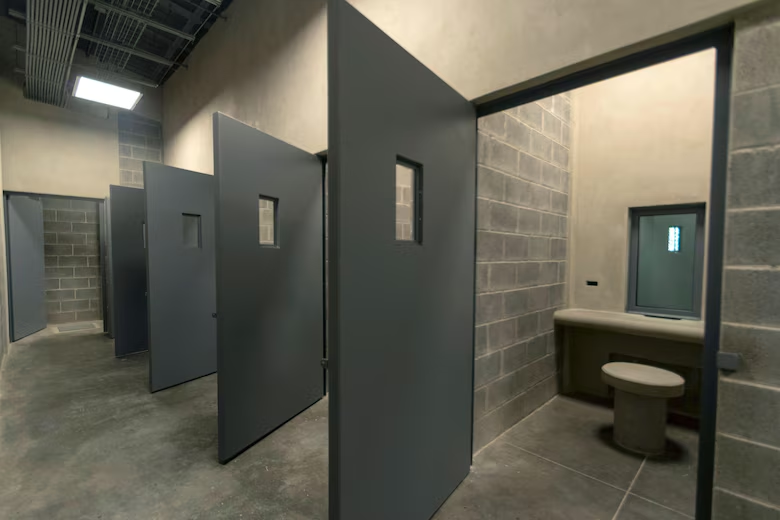
According to Authorities, Inmates at CACCO will Only be Allowed One Hour of Sunlight Per Day.
According to the Salvadoran humanitarian organization Legal Aid, a third are innocent and more than 500 have died in state custody. This Tuesday, during a press conference to announce foreign investment in the country, Bukele said that a commission would be evaluating “conditional release” for some of those detained under the exceptional regime, which could benefit “up to 50% of the prisoners”. In response to the questions, Fernández assured that she would respect human rights and, in an open confrontation with the judiciary, lashed out at judges and prosecutors who, according to her, are “soft” on criminals. “We will be tough, yes, because whoever commits the crime must pay for it. But, at the same time, we will honor the Costa Rican tradition of respecting fundamental human rights.”
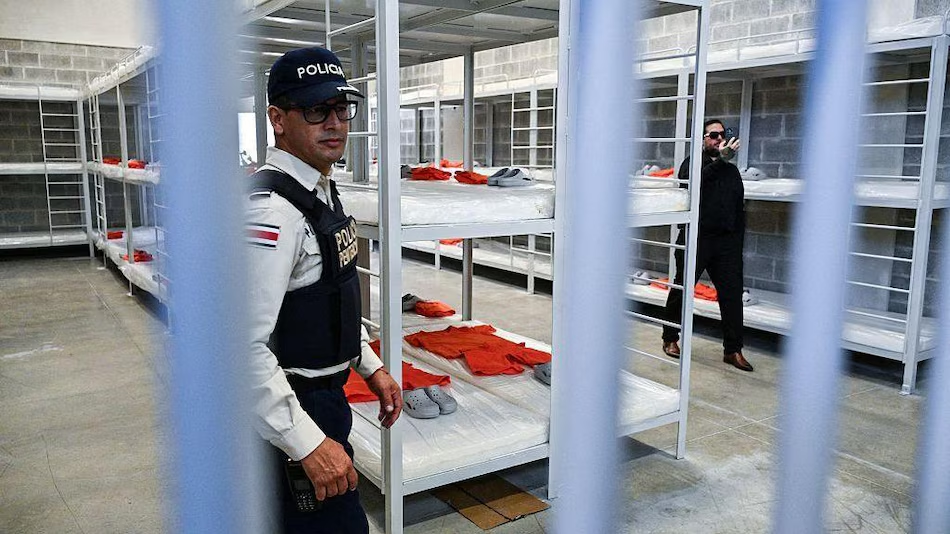
The High-Security Center Against Organized Crime (CACCO) is modeled after the Cecot in El Salvador.