Costa Rica and El Salvador have Larger Populations Yet Panama has a More Expensive Assembly.
Pictured below is the National Assembly, legislative plenary session. Panama has fewer inhabitants than Costa Rica and El Salvador, but it has 71 deputies and a legislative budget that could reach $214 million in 2026.
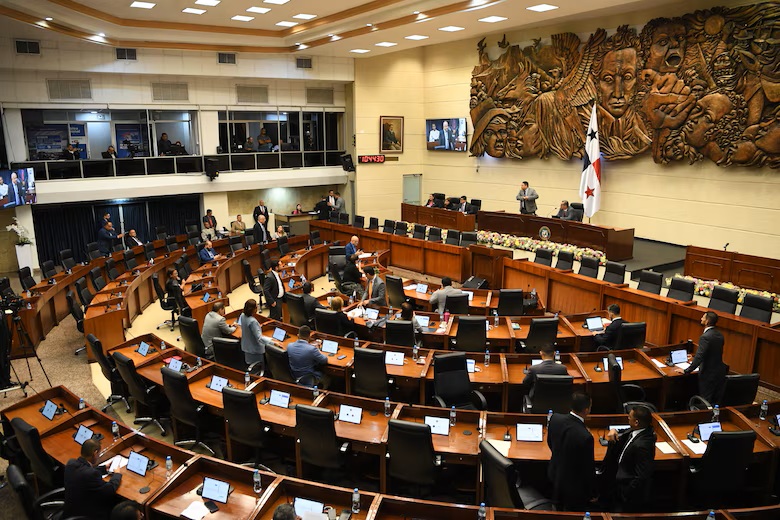
The National Assembly (AN) will close 2026 with a budget that could reach $214 million. That figure supports 71 deputies (with their alternates) who represent 4.2 million Panamanians. Costa Rica, with almost 5.2 million inhabitants, has had 57 legislators since 1961 and a budget of just $110 million that did not grow by a single colón compared to 2025. El Salvador, with 6 million inhabitants, reduced its Legislative Assembly from 84 to 60 members through a decree that reformed the Electoral Code, approved in 2023 with a waiver of procedure and applied since the 2024 elections.
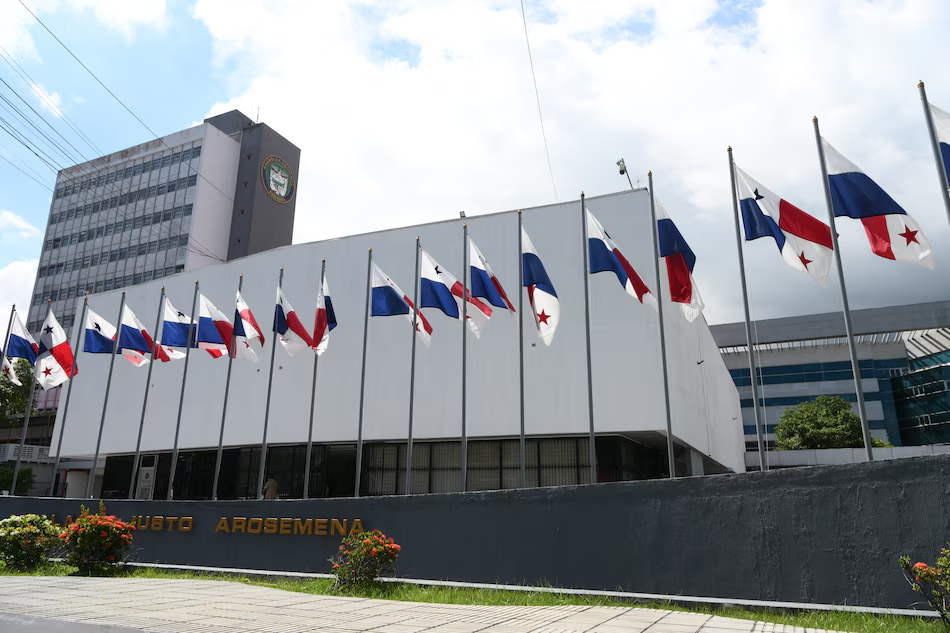
Justo Arosemena Palace, seat of the National Assembly.
The budget of the Salvadoran assembly, for 2026, is $46.9 million. This indicates that El Salvador, which has 43% more inhabitants than Panama, has a legislature that operates with 21.9% of the budget of Panama’s National Assembly. The reality of Panama can hardly be changed without a reform of the Constitution. The reduction of the Assembly is precisely one of the proposals that is beginning to gain traction amidst the promised original Constituent Assembly project of the government of José Raúl Mulino.
The Origin of the Figure.
The $214 million budget the Assembly is projected to have this year has a recurring story. The Ministry of Economy and Finance (MEF) authorized $98.7 million for the legislature in 2026. However, as of last July, this year’s revised budget had already reached $146.42 million. And these days, Speaker of the House Shirley Castañedas requested an additional $68 million, claiming she lacks the funds to cover payroll and other debts. While the Ministry of Economy and Finance (MEF) recommended $97 million for 2027, she submitted a budget of $176.6 million.
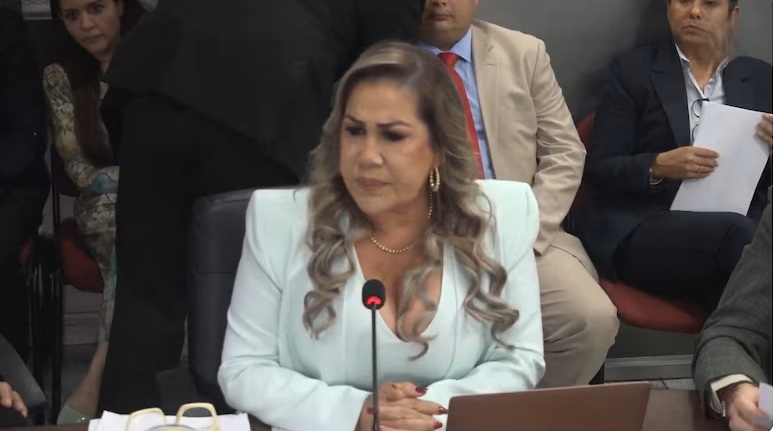
Shirley Castañedas, President of the National Assembly.
The contrast with the two Central American countries also includes other variables. Costa Rica changed the number of deputies through a reform to its Constitution in 1961. This is Law 2741, which has not been reformed since then, even though its population almost tripled during that period. According to the country’s Ministry of Finance budget report, the amount allocated for 2026 was 49,542.6 million colones, or about $110 million. Unlike Panama, this does not reflect growth. El Salvador did it in a more dramatic way. In June 2023, the Legislative Assembly, with a majority from Nuevas Ideas, the party of President Nayib Bukele, approved in a single session, with a waiver of procedural requirements, a decree that reformed the Electoral Code, an ordinary law, and Bukele signed it the following day (amid questions given that these reforms are considered to consolidate his power).

Nayib Bukele, president of El Salvador.
Opposition lawmakers argued at the time that the reform sought to “concentrate more power” and was unconstitutional.
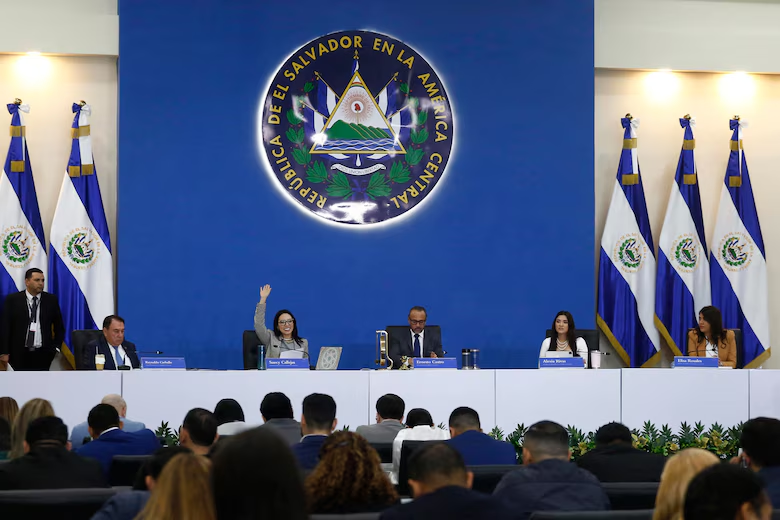
Photograph of a plenary session of the Legislative Assembly of El Salvador.
Fewer Members of Parliament?
Can the number of National Assembly deputies be reduced? How likely is it that this reduction will be decided by the Constituent Assembly promoted by the Mulino government? Miguel Antonio Bernal, coordinator of the Secretariat of the Presidency for the Reorganization of the State and Constitutional Affairs (Sepresac), has been in charge of that process for more than 20 months, as he told media. He describes it as a long-term project, not an election campaign. “Slowly but surely, we are getting broad sectors of the population to learn, in addition to their rights and duties recognized to date, also to become interested in the role that a new Constitution would play,” he said.
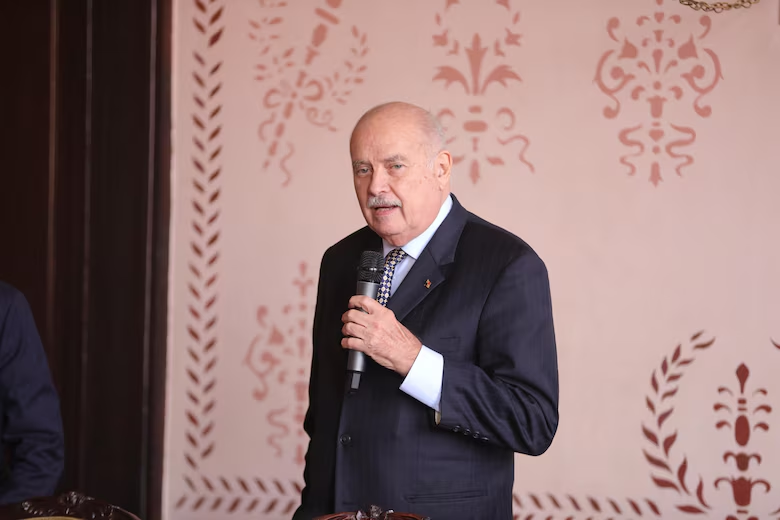
Miguel Antonio Bernal, coordinator of the Secretariat of the Presidency for State Reorganization and Constitutional Affairs.
Not everyone agrees. Bernal acknowledges resistance “from certain sectors, ranging from those who don’t want any changes to the imposed Constitution and defend it tooth and nail, to those who show an indifference that always occurs in all societies.” He also rejects the notion that the process is a personal vehicle for the president: “Here, they have tried to sell the idea that we want to impose a Constitution for Mulino, when Mulino is not the Constitution, nor is the Constitution Mulino’s.” For Bernal, the current Magna Carta is the one that lacks legitimacy of origin: “The most unconstitutional document that exists in this country is the Constitution itself, because it was imposed and overthrew a democratic government.”
According to Bernal, the demand to reduce the number of deputies appears repeatedly in the citizen consultations that Sepresac has conducted in the country. He cited a recent exercise at Albrook Mall, where they placed a notebook for attendees to write what they wanted in the new Constitution. “People were queuing up to write, and they were mainly writing ‘no to re-election,’ ‘no to corruption,’ and ‘a reduction in the number of representatives.’ But that’s what’s predominating at the national level,” he remarked.
In fact, he shares this position. “For 50 years I have been saying that this country cannot continue, neither with the method used to elect deputies, with these binomial and multi-member circuits that distort the principle of one man one vote, nor can we continue with an Assembly made up of this exorbitant number of deputies,” he stated. In his opinion, it is enough to change the method of election: “If the method is changed and we go to provincial and national deputies, the number immediately decreases without any major problem, which would be extremely positive for our society, I believe. That is my personal opinion.”
The Proposal to Lower it to 50.
The debate doesn’t stop at Sepresac. In a recent opinion piece published in news media, lawyer Álvaro Batista put forward a concrete proposal: to reduce the Assembly from 71 to 50 deputies, that is, to eliminate 21 seats. Batista noted that “the annual cost of maintaining this legislative structure exceeds $120 million” and compared the proportion of representatives per capita with that of other countries.
“The United States, with more than 330 million inhabitants, operates with 435 representatives in its Lower House”; “India, with more than 1.4 billion inhabitants, has 543 seats in the Lok Sabha”; “Colombia, with more than 50 million inhabitants, operates with 188 congressmen between the Senate and the House.” He concluded that Panama can function perfectly well with an Assembly of 50 deputies.
Neither Sepresac nor the proposed constitutional reform has yet established a definitive number of representatives for the future Assembly. The only certainty, for now, is the mechanism: any change to the size of the Panamanian legislature necessarily requires a constitutional amendment.