Tracing the Origin of Private Money is Proposed as New Rules in Electoral Reform in Panama.
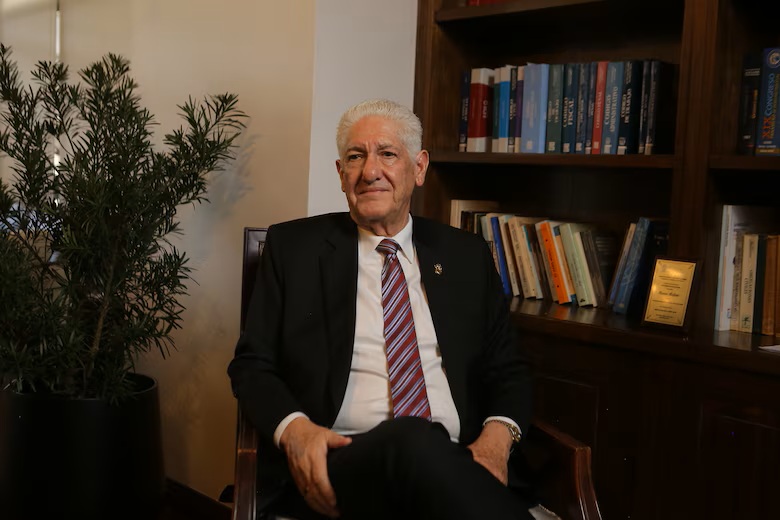
Pictured below is the presiding Magistrate of the Electoral Tribunal, Narciso Arellano. The package of reforms to the Electoral Code, which is already in the Government Commission of the National Assembly for discussion in the first debate, proposes key changes to the system of private financing of campaigns.
The package of reforms to the Electoral Code, which is already in the Government Commission of the National Assembly for discussion in the first debate, proposes key changes to the system of private financing of campaigns. The initiative, proposed by the Electoral Tribunal (TE), seeks to introduce new controls to more accurately determine the origin of the funds received by candidates and political parties. According to the project, all income from a private donation will require the simultaneous signing of a document designed by the Directorate of Political Financing Oversight of the TE, in which the origin of the funds must be detailed.
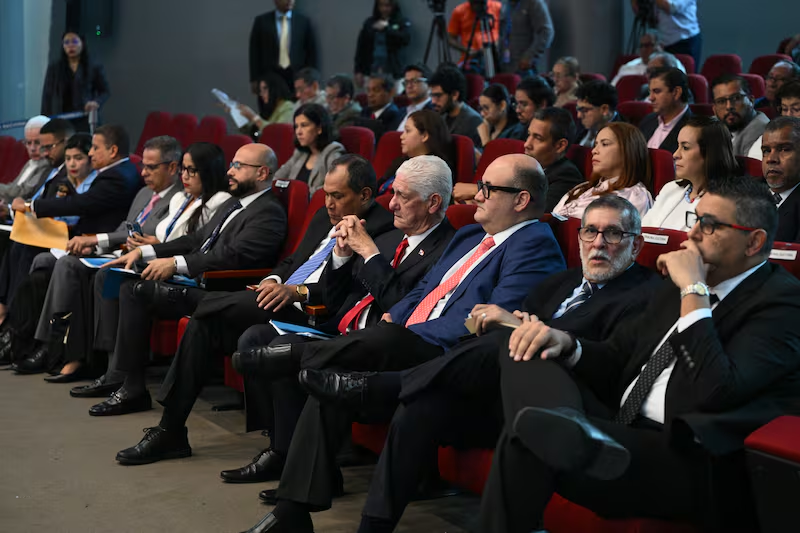
Pictured above are the Magistrates of the Electoral Tribunal, debating electoral reforms regarding private money donations that may be used to manipulate government policy.
This receipt must be submitted electronically to the Electoral Court at the time of making the deposit —for the traceability of the resources— and will form part of the subsequent income and expenses report. The judges incorporated this provision into the bill with the aim of strengthening oversight of political financing. According to Judge Narciso Arellano pictured below, preventing the entry of illicit funds is one of the “essential components of electoral integrity.”
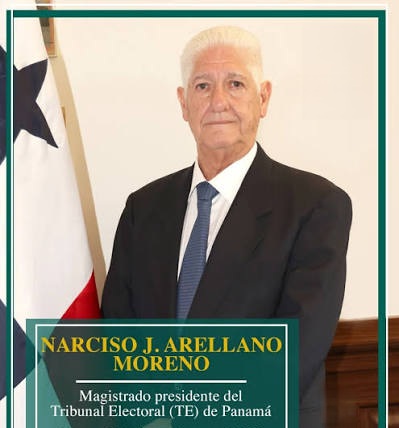
Presiding Magistrate of the Electoral Tribunal, Narciso Arellano.
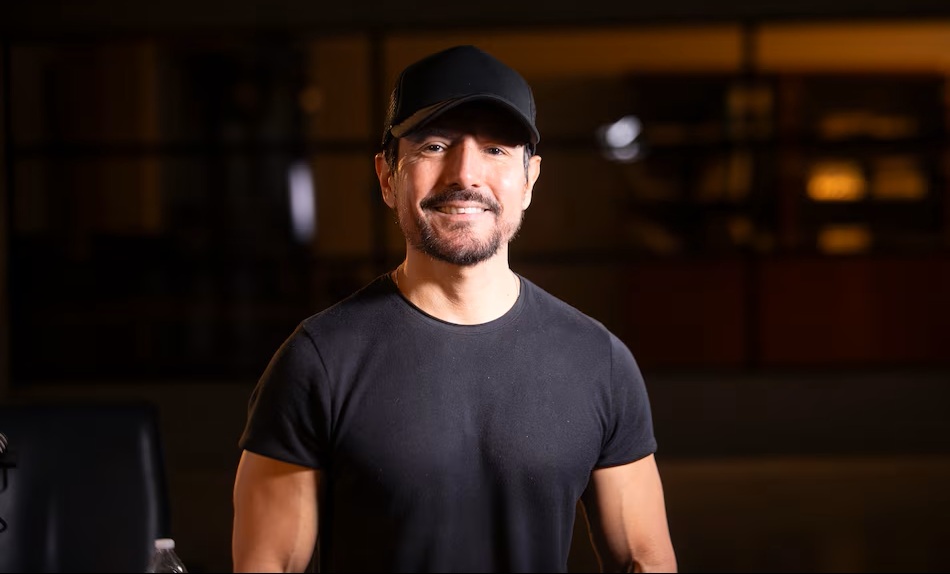
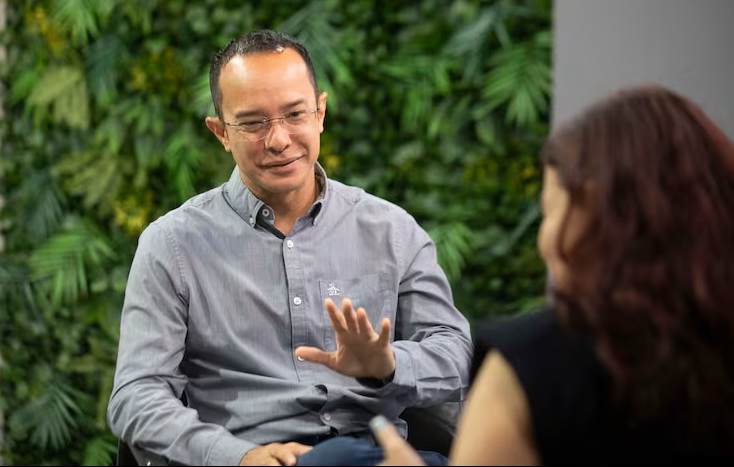
“Therefore, the project strengthens the mechanisms for simultaneous and concurrent oversight of political financing, ensuring that supervision is not limited to a subsequent review of electoral accounts, but allows the Electoral Tribunal to be aware of relevant operations in a timely manner,” Arellano said when presenting the project at the end of August. Former electoral prosecutor Boris Barrios pictured below, praised the proposal and considered it valid to strengthen controls to prevent the entry of money from money laundering or drug trafficking. “That’s what’s new to me,” he said. For lawyer Edwin Vargas, who was on the board of the National Commission for Electoral Reforms (CNRE) for the party Another Way Movement (Moca), the proposal is “a step forward in terms of prevention.”
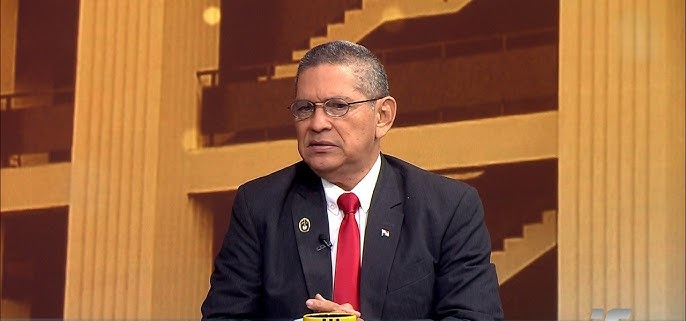
He recalled that during the discussion at the CNRE, Moca proposed the figure of the compliance officer whose purpose is to verify the origin of the funds, “so in principle we agree with this proposal” from the TE. The current Electoral Code only stipulates that parties and candidates must register, using a form, the contributions received, including the donor’s name and national identity card number or, in the case of a company, its Taxpayer Identification Number. Private funds received must be deposited into a single account at the National Bank of Panama or the Savings Bank called Caja de Ahorros.
Cash Will Have A Ceiling.
Another new feature of the project is the imposition of a limit on cash donations. Candidates will be allowed to receive up to $1,000 in cash from a single donor during their campaign. The proposed law goes further and establishes a global limit: the total amount of cash donations received cannot exceed 7% of the private funding cap established for the corresponding position. If implemented, the limit would allow a presidential candidate to receive up to $700,000 in cash during their campaign.
For a candidate for Congress, the maximum would be $21,000; for a mayoral candidate, $1,050; and for a district representative, $700. In the case of Parlacen, the limit would be $700, taking as a reference the $10,000 limit established in the current Electoral Code. According to the TE, these measures seek to “strengthen controls” over political financing and allow for more timely oversight of the resources that enter the campaigns.
The Dance of Millions.
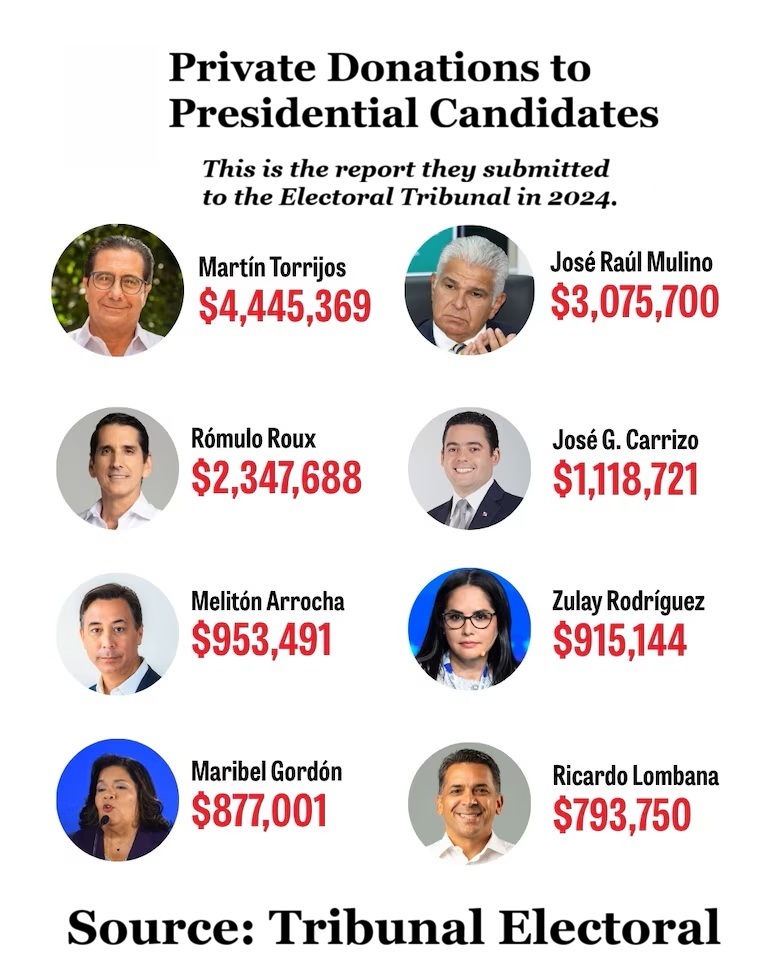
The volume of private funds circulating during an election amounts to tens of millions of dollars. According to the Electoral Tribunal’s 2024 Report to the Nation, candidates declared $29.2 million in expenses funded by private financing for the 2024 elections. In the 2019 elections, the figure had reached $34.9 million. This represents a decrease of about $5.8 million, or roughly 16.5%, between the two elections. Presidential campaigns alone reported private spending of $9.4 million in 2024, down from $13.2 million in 2019.
A different measurement, prepared by the La Ruta de la Plata platform, of the Foundation for the Development of Citizen Freedom, counted $21.3 million in private income reported by the candidates analyzed for the 2024 elections. Both figures are not directly comparable: the first corresponds to expenses declared to the TE, while the second collects income reported within the universe examined by the platform. Of that amount, $986,830 was in cash; $17,350,860 by check; $694,493 in kind; and $2,292,474 was classified as “own resources”.
The Deadlines.
The reform also establishes a new deadline for the submission of campaign income and expenditure reports by political parties. The report must be submitted as a sworn statement signed by the party’s legal representative and the certified public accountant within 45 calendar days following the general election. Currently, the code does not specify a deadline. Submissions after the established deadline will be penalized. The bill increases fines: the penalty for treasurers of presidential candidates would rise from $2,000 to $4,000, while for candidates for Congress it would increase from $1,000 to $2,000.
Following the 2024 general elections, a total of 923 former candidates for elected office, who were not proclaimed, did not submit—or did so late—their income and expenditure reports corresponding to the private financing they received to promote their candidacies. In the contest in which 6,876 candidates participated, there were 16 —now elected authorities— who were proclaimed, but who submitted their reports late, according to data from the TE. The discussion of the new draft electoral reforms is scheduled for this week in the Government Commission, chaired by PRD deputy Benicio Robinson.
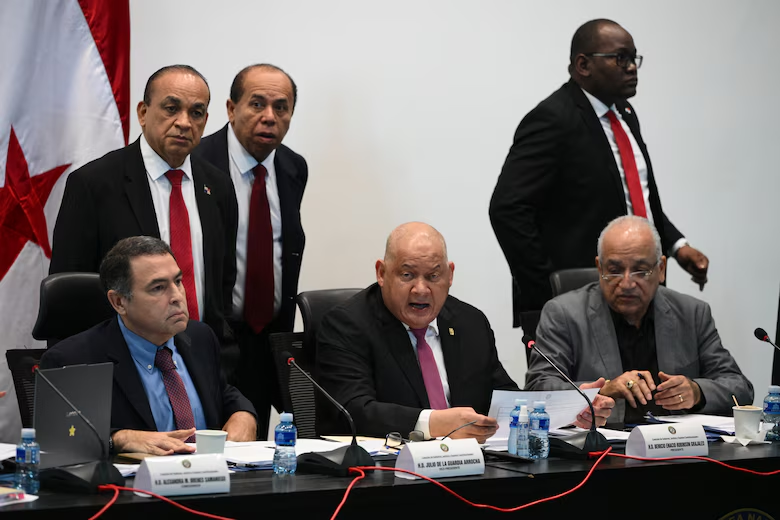
From left to right: Julio De la Guardia, of Democratic Change; Benicio Robinson, of the PRD; Luis E. Camacho, of RM. Standing: Alaín Cedeño, of RM; Osman Gómez, of Alianza; Raphael Buchanan, of the PRD. Members of the Government Commission.