Panama has Severe Drinkable Water Issues with 1200 Wastewater Treatment Plants Overwhelmed.
Minister Juan Carlos Navarro described the situation as a ‘true national crisis’ and warned that many of these facilities are upstream of water treatment plants.
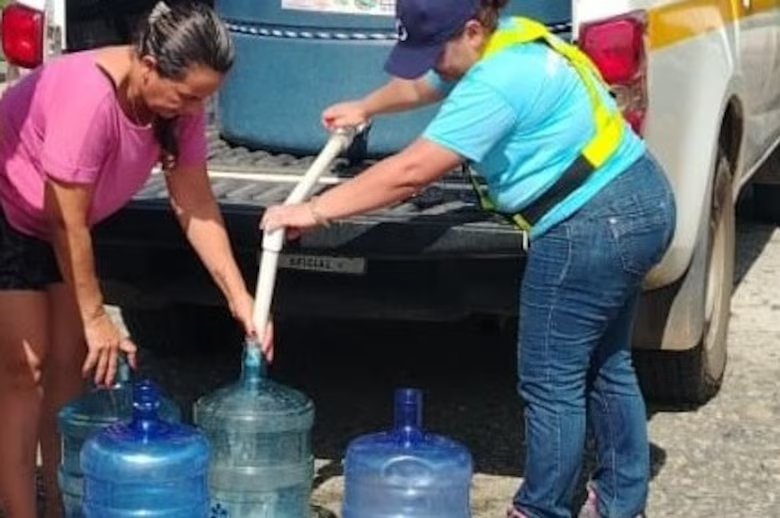
Panama faces critical drinking water shortages and pollution crises driven by severe droughts, aging infrastructure, and untreated wastewater runoff contaminating key river basins.
Current Water and Sanitation Challenges.
Juan Carlos Navarro pictured below, described the water issue as a “true national crisis”.

- River Contamination: Major waterways like the La Villa and Estibaná rivers have suffered from severe biological and industrial pollution, forcing the temporary shutdown or reduced capacity of vital water treatment plants.
- Infrastructure Strain: Rapid urban expansion has heavily strained existing sanitation and sewage networks, with large volumes of wastewater historically flowing into regional streams and coastal zones without adequate processing.
- Severe Leaks and Loss: The National Institute of Aqueducts and Sewers (IDAAN) estimates that up to 50% of treated drinking water is lost to leaks in the distribution network before ever reaching homes.
- Climate Stress: Prolonged dry spells linked to El Niño have dramatically lowered reservoir levels, forcing strict rationing, emergency well-digging, and reliance on water tanker trucks in hard-hit areas like the Azuero Peninsula.
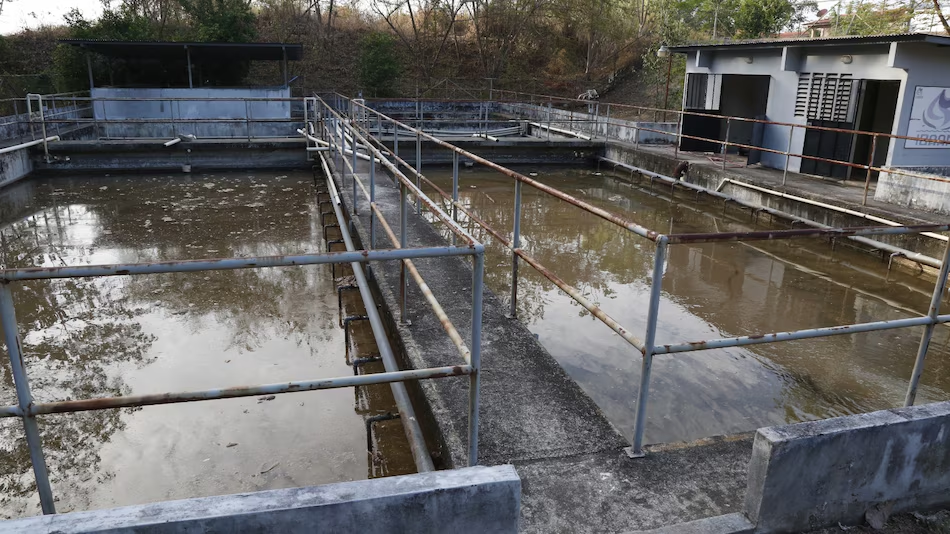
The Ministry of Environment (Miambiente) has identified 1,200 collapsed wastewater treatment plants across the country, a situation that the head of the institution, Juan Carlos Navarro, described as a “true national crisis”. Navarro revealed the figure this Tuesday, August 18, during the presentation of the Miambiente budget for 2027 before the Budget Committee of the National Assembly. Miambiente requested $134.6 million for 2027 but will only receive $89.8 million. “We are already in the process of facing this challenge, of organizing these 1,200 wastewater treatment plants that are overwhelmed nationwide,” he stated. However, he did not specify the total number of plants in the country. Caldera River: Two sources of wastewater pollution identified. Water from the La Villa river meets the parameters for purification, but tap water is not yet safe to drink.