Panama Reinforces Border Security after Attacks in Colombia.
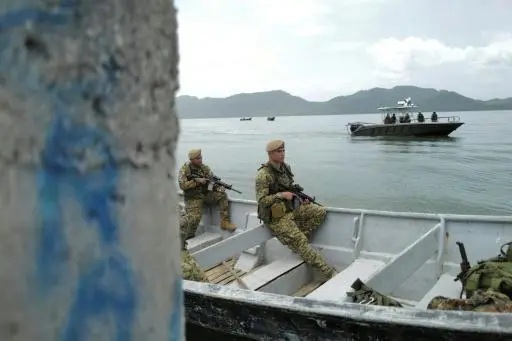
Panamanian police officers from the National Border Service patrol by boat in the town of La Palma, in the Darién province, on August 9, 2026.
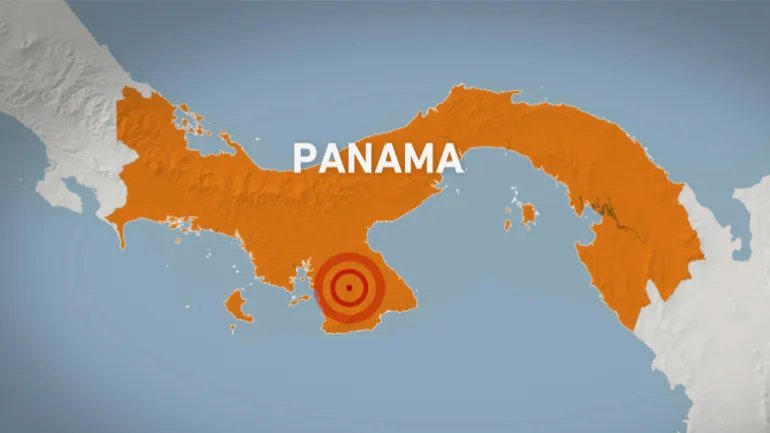
Panama reinforced its border with Colombia on Sunday following attacks that occurred during the first day of Colombian President Abelardo de la Espriella’s administration, the Panamanian government announced, which recently ruled out the incursion of Colombian irregular groups into its territory. On Saturday, two attacks carried out in different parts of Colombia left one police officer dead and several wounded, during the first hours in power of the far-right De la Espriella, who has promised to confront “narco-terrorism without respite”. Panama and Colombia share the Darien jungle border, 266 kilometers long, an inhospitable territory without land routes where Colombian irregular groups have historically operated.
Following the attacks, Panama’s Ministry of Security reported that agents from the National Border Service (Senafront) and the National Aeronaval Service (Senan) reinforced their presence on the border to “strengthen surveillance and territorial control”. “The operation seeks to reinforce the State’s presence in strategic areas for national security and enforce the rule of law against any threat that may jeopardize the safety and peace of the population,” the ministry said in a statement. The agents were deployed in military uniforms and armed with weapons of war. In addition, more than 15 vessels were mobilized in the Pacific and Atlantic. The goal is to “block all coasts” and “our borders” to “directly combat criminal groups,” Senafront Director General Larry Solís told AFP.
Some sectors in Panama had expressed their fear that irregular groups such as the Clan del Golfo or ELN rebels would enter Panama through the jungle in the event of a resurgence of hostilities during the De la Espriella government. However, Panamanian Security Minister Frank Ábrego ruled out that option a few days ago based on intelligence information that, according to him, is shared by Panamanian and Colombian authorities. “There is no truthful information whatsoever so we must try to avoid spreading fear,” Ábrego said last Monday when asked by reporters. The Panamanian government announced the measure while it is conducting military exercises with some twenty countries, including the United States, to defend the Panama Canal, whose closure is scheduled to be attended next Thursday by the head of the Pentagon, Pete Hegseth.