1430 Dead and More than 3200 Injured: Tragedy in Venezuela
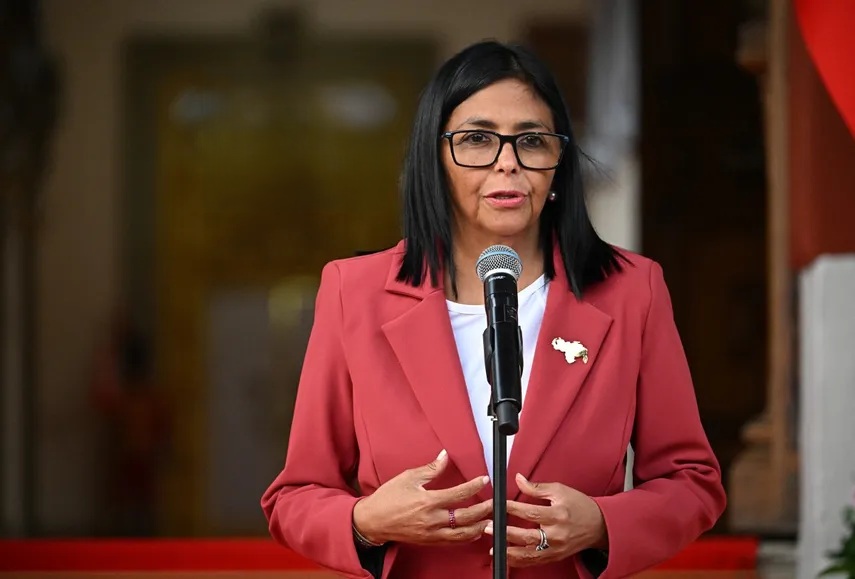
More than 1430 people have died and 3,200+ have been injured as a result of the earthquakes that struck Venezuela on Wednesday, according to preliminary data provided by authorities. Two powerful earthquakes struck Venezuela just seconds apart. The second quake, with a magnitude of 7.5, was one of the strongest recorded in the country in the last century. Venezuela’s interim president, Delcy Rodríguez, reported this Friday in a televised address that more than 200 aftershocks have been recorded since the initial earthquakes.
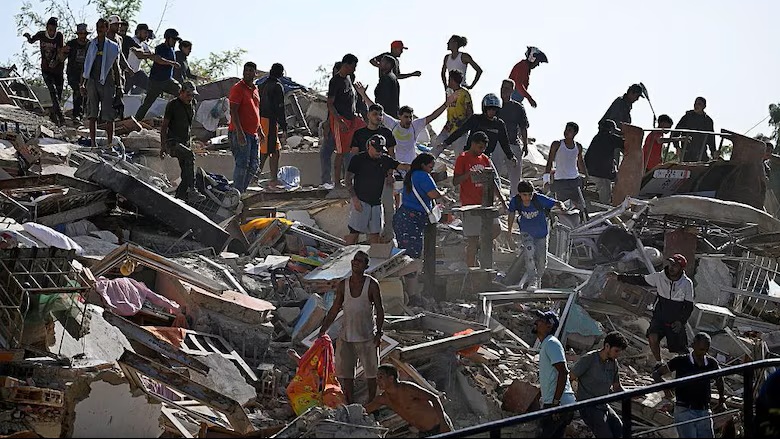
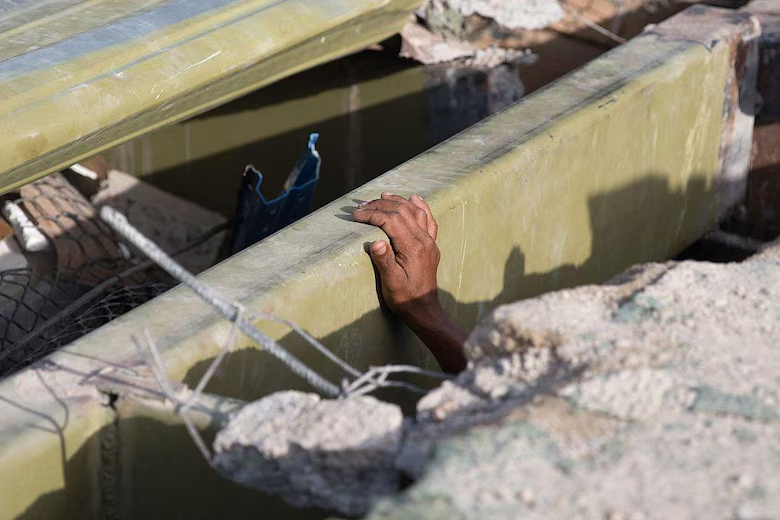
Hundreds of People Remain Trapped in the Rubble.
When the tremors struck, dozens of buildings collapsed and residents of Caracas and the neighboring state of La Guaira, the most affected areas, took to the streets in search of shelter. Rescue teams continue working to locate possible survivors trapped under the rubble. A state of emergency has been declared and airport, rail and transport services have been suspended. The injured are being treated in makeshift medical facilities, and a senior Venezuelan government official reported that hundreds of international rescuers have arrived in the country and more are on the way. The medical centers that are still operating are overwhelmed; healthcare staff have told the BBC that, even before the disaster, it was already difficult to care for patients. “All our hospitals lack supplies and medicines; we are not able to provide medical care to our population even on a normal day,” said Dr. Pedro Javier Fernández. “Now, with this tragedy, the emergency is even greater and more difficult to deal with than in other countries,” he added.
Rescue Teams Continue Working to Locate Possible Survivors.
The earthquakes occurred while Venezuela was celebrating a holiday, which meant that more people were at home than on a typical workday. Venezuelan Interior Minister Diosdado Cabello reported that the most affected areas in Caracas were the neighborhoods of Los Palos Grandes and Altamira. These sectors were also among the most affected in 1967, when the last major earthquake struck the Venezuelan capital, causing the death of 200 people and the destruction of buildings. The government reported that the aftershocks mainly affected the northern coast of the country, including the states of La Guaira, Aragua, Carabobo and Falcón. The tremors were also felt in Bogotá, Colombia, more than 1,000 km away from Caracas. Cabello announced that traffic to and from La Guaira would be restricted starting Friday night, due to concerns about congestion, chaos, and public health.
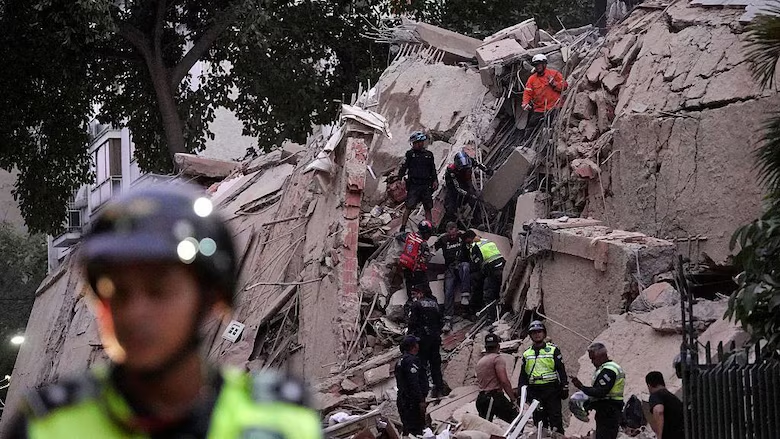
The Earthquakes have Caused Great Shock Both Inside and Outside of Venezuela.
The Death Toll is Rising
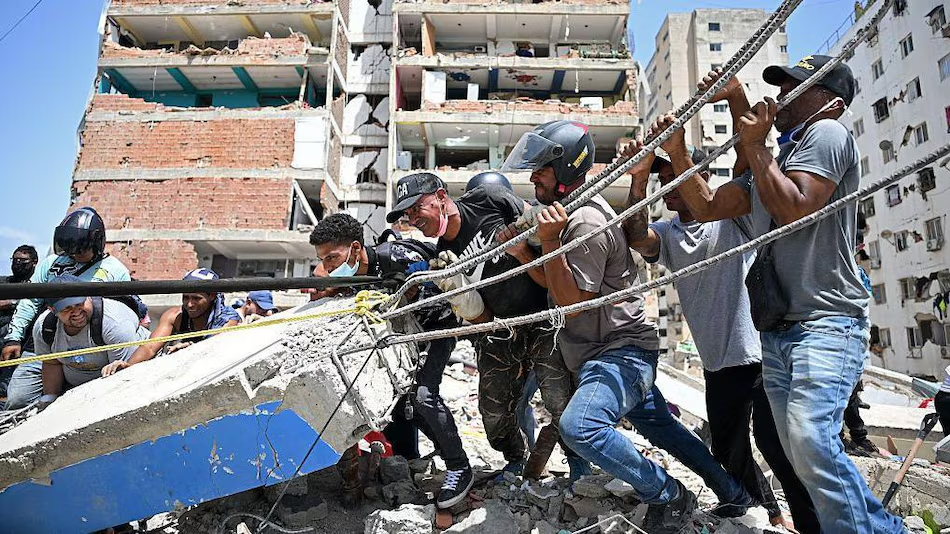
The number of dead and injured is increasing as the hours pass and as rescue teams reach some of the worst affected areas. So far, dozens of people have been rescued alive, which “brings us joy that they can hug their families and loved ones,” said the acting president, Delcy Rodríguez. There are citizens who have pulled people out of collapsed buildings with their bare hands, as the disruption of communications, damage to roads and lack of resources hampered the initial emergency response.
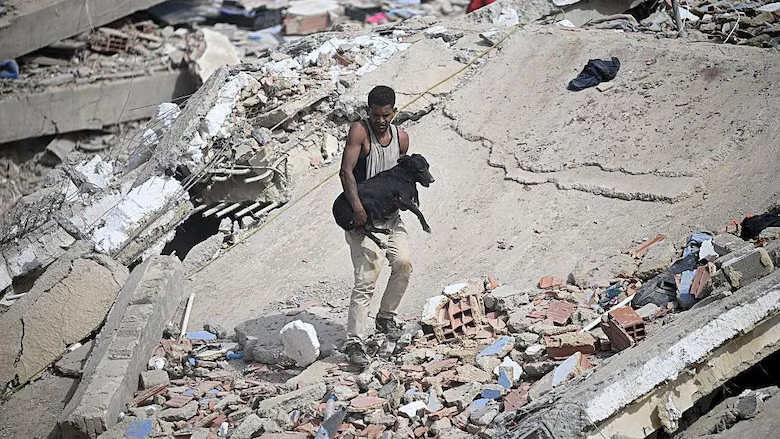
Many people and animals may still be trapped alive in the rubble.
It is feared that many people are still trapped under the rubble and the death toll is likely to rise further as rescue efforts continue. In the hours after the earthquakes, the USGS said there was a 44% chance that there could be up to 10,000 fatalities and a 30% chance that the figure could reach 100,000. However, these figures were calculated based on previous earthquakes with similar characteristics and other factors, such as the size and depth of each earthquake, so they are not exact predictions. Other factors influence potential injuries and deaths, including the quality of buildings and the time of day the earthquakes occurred. The area where the earthquakes occurred is particularly vulnerable, the U.S. Geological Survey noted. They indicated that many buildings there are constructed with unreinforced brick masonry and adobe blocks, and that the intensity of the earthquake implied a high probability of destruction of structures and fatalities.
The Damage Caused
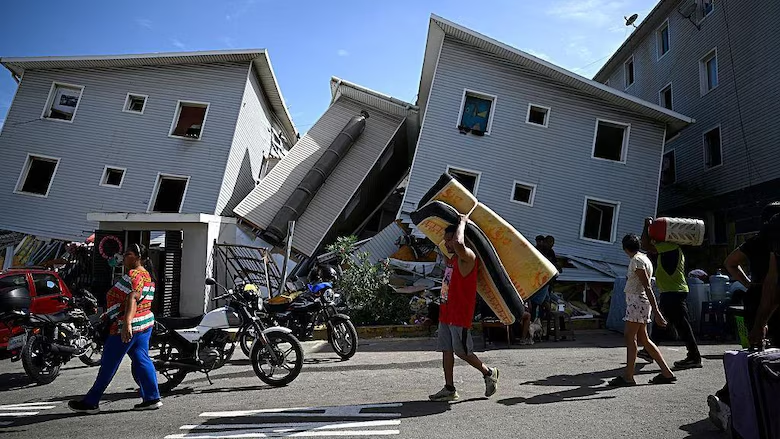
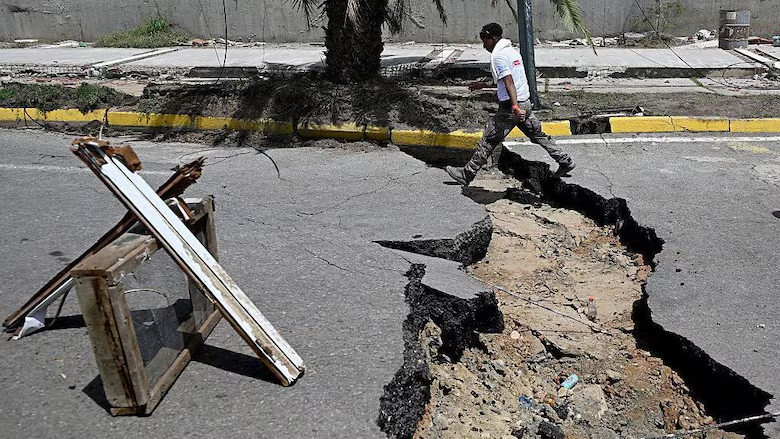
Jorge Rodríguez reported that hundreds of buildings have been damaged or destroyed, mainly in La Guaira. This figure includes 13 hospitals and 25 shopping centers, he added. The photographs and videos show debris scattered throughout the streets. In some recordings, people can be heard calling for help. The BBC has verified images of a 10-story hotel reduced to rubble in La Guaira, as well as another video capturing people screaming and fleeing as a multi-story building collapses in El Junquito, west of Caracas. Other verified images show destruction in areas farther from the capital. One video shows a multi-story building—apparently a hotel—completely collapsed in Tucacas, on the Venezuelan coast, about 250 km northwest of Caracas.
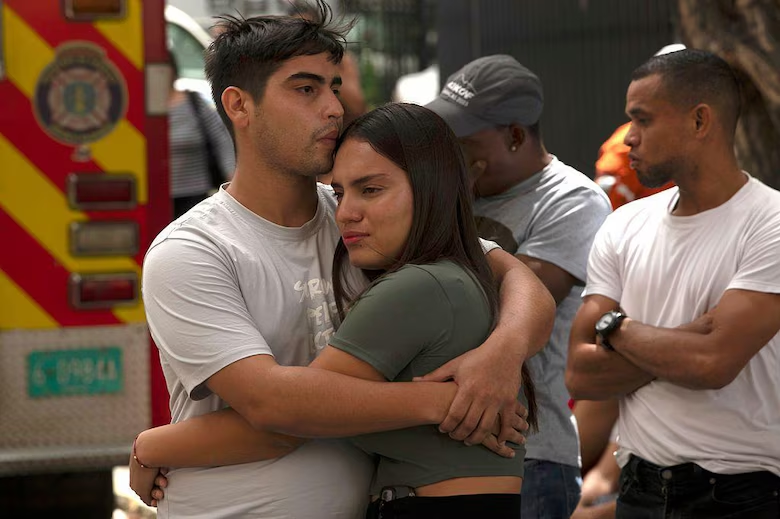
The Earthquakes Prompted Residents of the Capital to Take to the Streets.
Fuel supplies have been partially disrupted, and internet and electricity service outages have also been reported. Venezuela’s main international airport, Simón Bolívar International Airport in Maiquetía, located just outside Caracas, has also been closed due to earthquake damage. Subway and train services have also been suspended nationwide, and school classes are also on hold. Rodríguez’s declaration of a state of emergency allows for the use of additional resources and personnel for recovery efforts. Many Venezuelans have spent the last few nights on the streets. The country’s Interior Ministry urged people to leave damaged homes due to concerns about structural instability and the possibility of gas lines being affected.
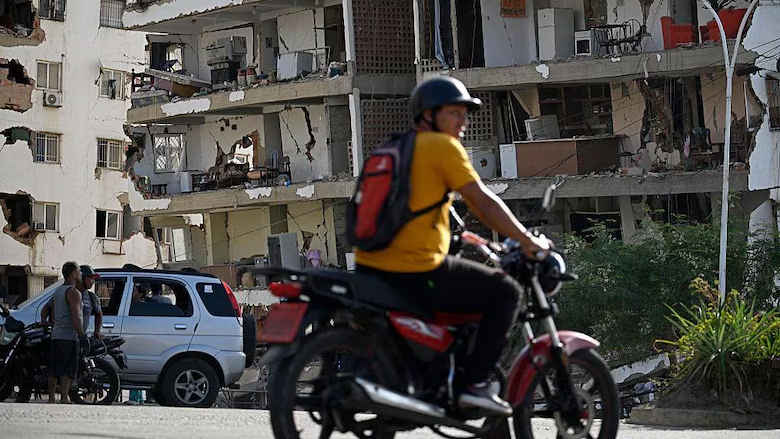
At Least 13 Hospitals have Been Destroyed by the Earthquakes.
The International Response
The United States has announced the deployment of warships and transport aircraft, as well as the mobilization of $150 million in aid. In a statement, the U.S. Southern Command said its forces will provide support “to search and rescue teams” and “U.S. interagency partners as they assess damage, locate the wounded and deliver critical lifesaving assistance.” Officials from the U.S. Southern Command, along with Venezuelan officials, inspected the airport’s conditions on Friday to determine its operational capabilities and coordinate the flow of aid entering the country. US President Donald Trump had previously said that Washington was “ready, willing and able” to help, and claimed to have instructed government agencies to “act quickly.” “We will be there for our great new friends,” Trump wrote on Truth Social. Early Thursday morning, Secretary of State Marco Rubio announced that the United States was “immediately” deploying search and rescue teams, medical resources, and humanitarian assistance.
Rodriguez thanked Trump through X, noting that his country would “never forget the helping hand” extended by the United States. On Friday, rescue teams from Argentina, Spain, Mexico, Colombia, Chile, Ecuador, El Salvador, the United States, the Dominican Republic, and Switzerland had arrived in Venezuela to rescue victims trapped in the rubble. Delcy Rodríguez said that rescuers from another dozen countries should join the effort in the next few hours. The UN aid chief said he was “fully mobilized” to support the people of Venezuela, including the rapid deployment of search and rescue teams and the strengthening of its humanitarian mission in the country. “The next few days will require a massive collective effort,” Tom Fletcher said in a statement. The EU activated its satellite surveillance system to help with recovery efforts and was prepared to “step up aid,” said its crisis management commissioner, Hadja Lahbib.
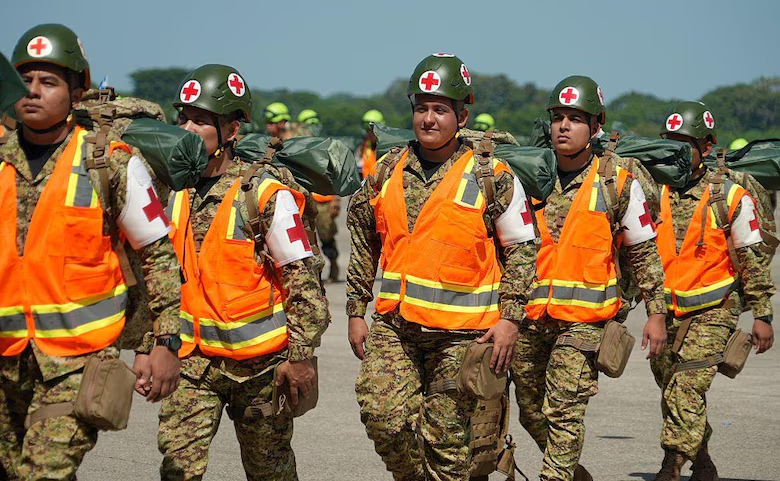
Dozens of Countries Have Sent Rescue Teams to Venezuela.
What Were the Earthquakes Like?
The two earthquakes occurred at around 6:04 p.m. local time on Wednesday. The first one had a magnitude of 7.2 and its epicenter was in the state of Yaracuy, west of Caracas, at a depth of 22 km, according to the United States Geological Survey (USGS). Less than a minute later, a stronger earthquake, of magnitude 7.5, shook a nearby area, at a depth of about 10 km. Although both epicenters were located outside the Venezuelan capital, they were felt strongly throughout the city, causing buildings to sway and some to collapse completely.
The Causes of Earthquakes
Venezuela is located on the boundary between the Caribbean and South American tectonic plates, which move over each other. The USGS says the sudden release of friction between these two plates likely caused the earthquakes. The second earthquake, with a magnitude of 7.5, was the strongest to hit Venezuela since 1900, according to the USGS. But another crucial factor is how far below the Earth’s surface it occurred. Earthquakes that occur closer to the surface tend to cause stronger and more concentrated tremors. The two earthquakes on Wednesday occurred less than 25 kilometers underground. “Shallow” earthquakes are defined as those that occur at a depth of 70 kilometers or less. The combination of such a large magnitude with its shallow depth explains to some extent why the damage has been so extensive.
According to the USGS, the earthquakes occurred in a “doublet” sequence, a phenomenon that occurs when two earthquakes of similar magnitude strike shortly after each other and in a similar location. This suggests that the first earthquake helped trigger the second, unlike a typical sequence in which a larger earthquake is followed by much smaller aftershocks. The occurrence of two earthquakes of such magnitude with such a short time difference is particularly unusual, although not unprecedented in this part of the world. Northern Venezuela suffered a double seismic event in September 2025, although the tremors were much weaker, with magnitudes of 6.2 and 6.3. The earthquakes in Türkiye and Syria in February 2023, which killed more than 50,000 people, also constituted a doublet sequence.
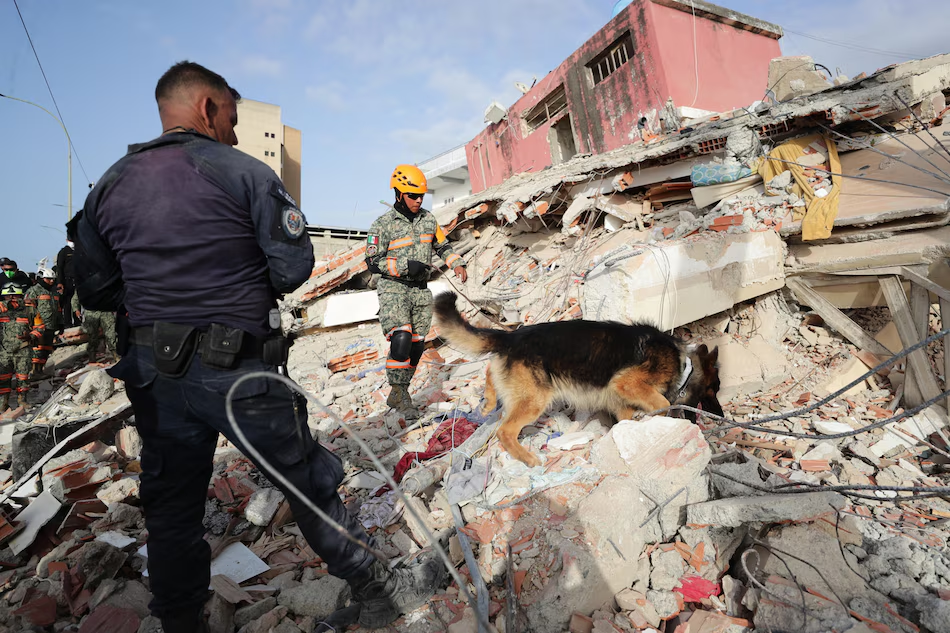
A Mexican Army rescuer and his dog work at a building damaged by an earthquake this Friday in La Guaira, Venezuela.
Death Toll from Earthquakes in Venezuela Rises to 1,430 People and 3,238 Injured
The death toll from the earthquakes that struck Venezuela on June 24 has risen to 1,430, while 3,238 injured people have received medical attention, according to an announcement made Saturday, June 27, by the president of the Venezuelan Parliament, Jorge Rodríguez. Rodríguez indicated through VTV that some 73,736 families have been assisted as part of the response deployed by the authorities to the damage caused by the two earthquakes and their subsequent aftershocks, which have mainly affected areas of Vargas state and other regions near Caracas.
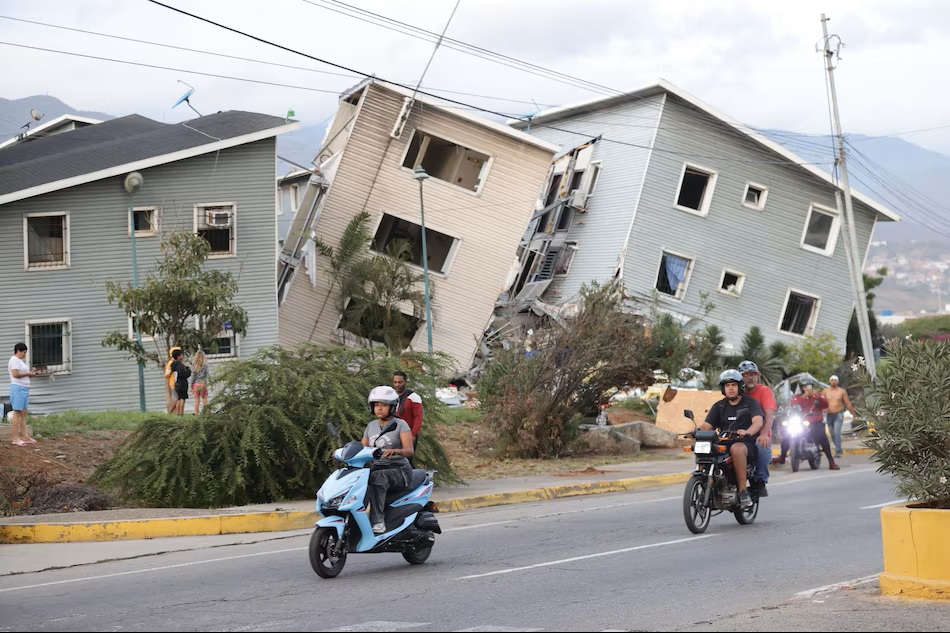
Since the beginning of the emergency, 430 aftershocks have been recorded, bringing the total number of seismic events recorded since the initial earthquakes to 432, according to the report presented by the official leader. The Speaker of Parliament also indicated that volunteer teams interested in supporting search and rescue efforts in Vargas state should register at the Poliedro de Caracas. This measure aims to organize the groups’ transportation to the affected areas and coordinate their participation in the emergency operations.
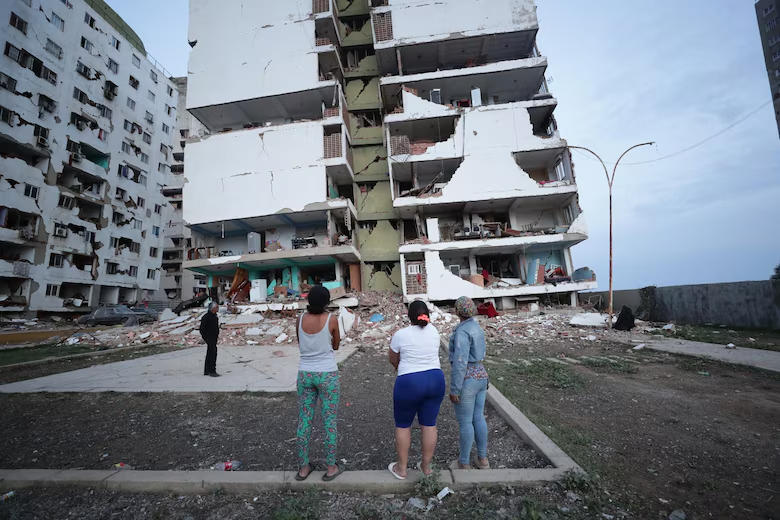
Rodríguez reported that the health response deployed after the earthquakes has provided more than 12,000 medical consultations in the affected areas, in addition to 7,500 triage assessments and more than 5,000 direct assistance services in hospitals. The official noted that health services remain active in the seven states impacted by the emergency. Regarding humanitarian aid, the Speaker of Parliament indicated that 7.2 million kilograms of food have been distributed, primarily in La Guaira state, the area he described as the hardest hit by the devastation. He added that 16,145 food bags and 220,434 hot meals have also been delivered to those affected.
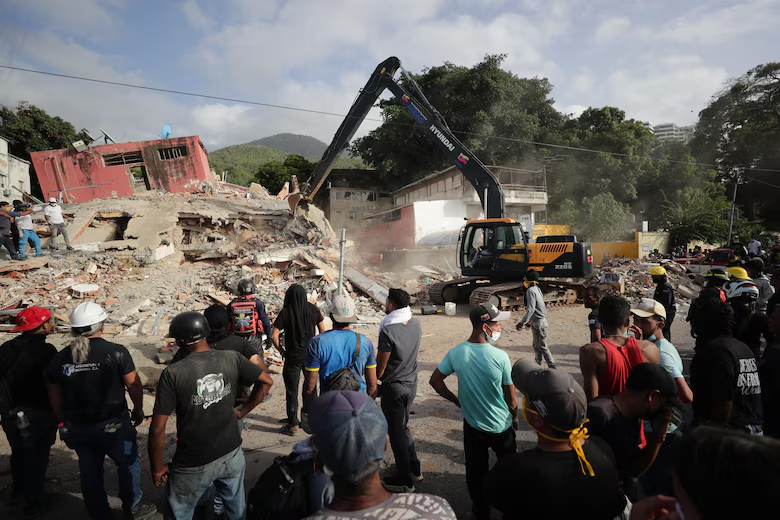
A backhoe works in an area affected by an earthquake this Friday in La Guaira, Venezuela.
The official tally includes direct assistance to 73,736 families, while 3,142 affected households remain in shelters set up across the seven affected states. Rodríguez explained that temporary shelters are also being established for those whose homes have been assessed as safe but who prefer not to return for fear of further aftershocks. Rodríguez asked citizens to direct donations of food, medicine, blankets, and mattresses to the collection centers set up in the La Carlota tent and at the Almacenadora Caracas warehouse in Catia. She explained that the measure aims to organize the distribution of supplies and avoid health risks, such as transporting meat or chicken without proper refrigeration.
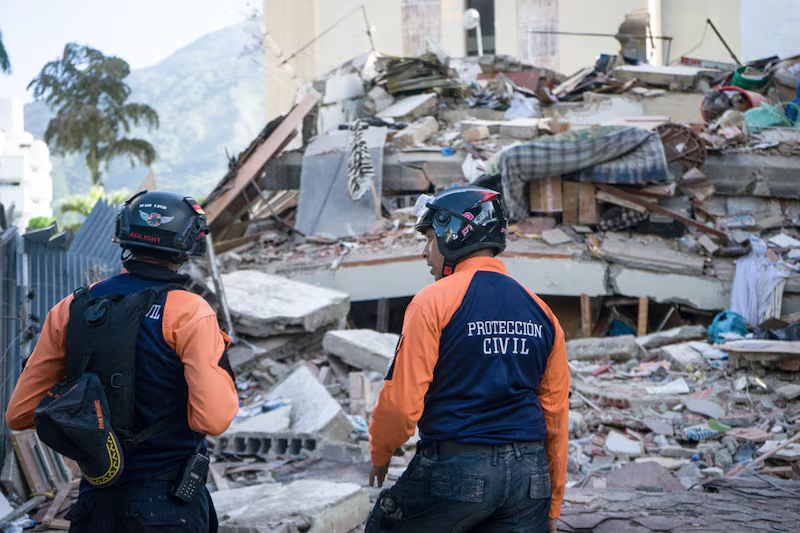
The official reported that 21 international delegations are participating in the emergency response with 2,242 rescuers, 96 canine units, 40 cargo vehicles, and 32 transport vehicles . According to the report, these missions have also contributed 103.7 tons of equipment and tools, in addition to three tons of medicine. In addition to this international support, more than 30,000 Venezuelans, including military personnel, police officers, rescue workers, doctors, paramedics, psychologists, and support staff, have been deployed in the disaster areas. Rodríguez specified that the teams that have arrived include doctors from Curaçao, rescue workers and healthcare personnel from Argentina and Qatar, canine units from Puerto Rico, and security personnel from Barbados.
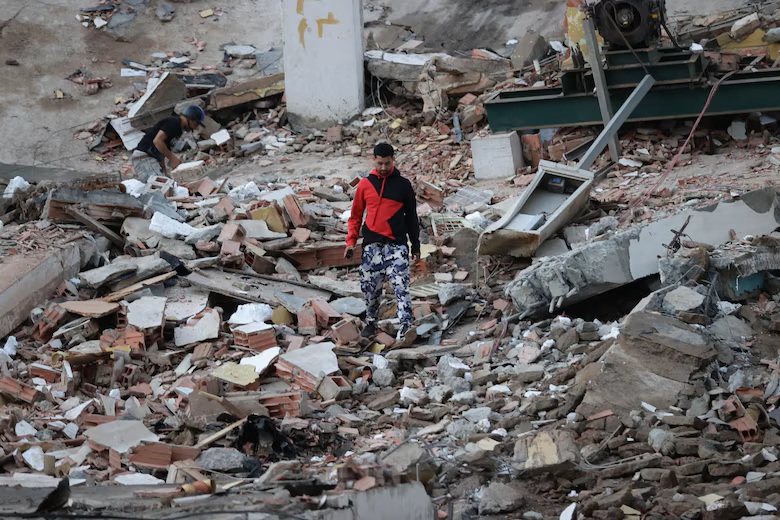
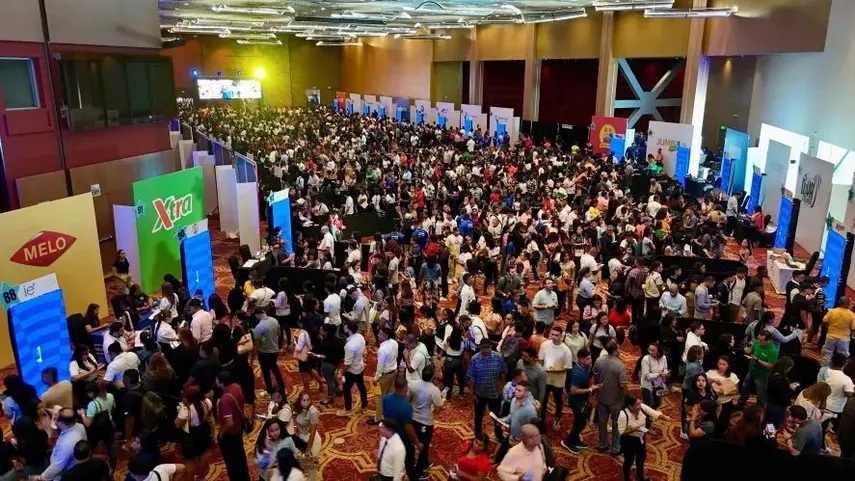
Regarding the volunteers, he noted that 2,697 people had registered by noon on June 27 at the Poliedro de Caracas, from where they will be organized into convoys to be transported to La Guaira. He emphasized that the arrival of the volunteers must be coordinated to avoid interfering with the search efforts under the rubble. Rodríguez also confirmed that the Caracas-La Guaira viaduct is operational and undergoes technical evaluations every 12 hours. He rejected reports of alleged structural damage and stated that, according to official inspections, the road remains “100% operational.”
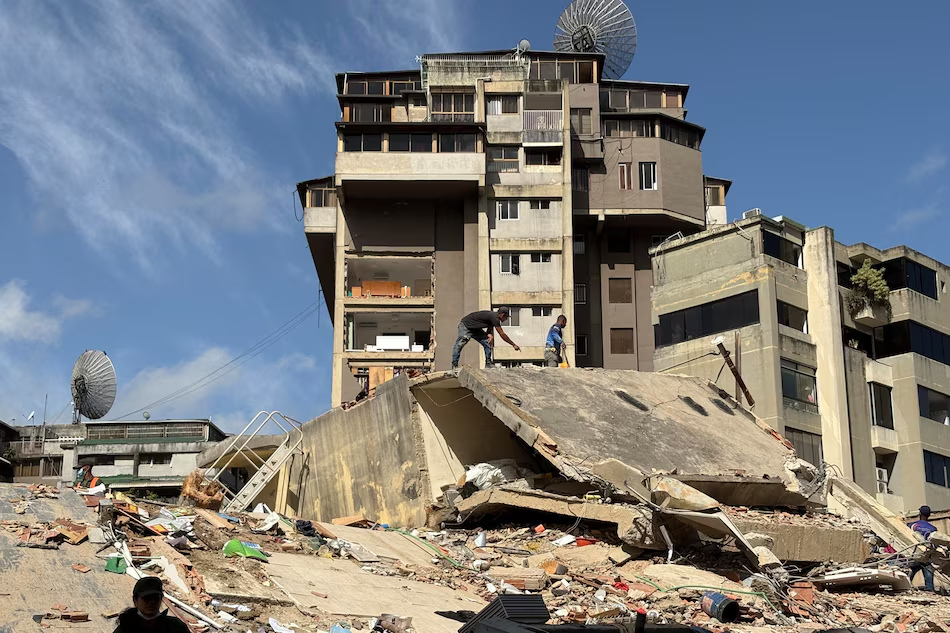
People above help remove rubble from buildings collapsed by the earthquakes.
Panamanian Escaped from the 11th Floor during the Earthquakes in Venezuela: “I Thought I Wasn’t Going to Make It’
José Vega Sacasa, a Panamanian who was in Maracay, Aragua state, for work reasons, recounted the moments of anguish he experienced when the two earthquakes occurred in Venezuela. The first earthquake lasted longer than expected, but it was the aftershock that heightened the fear inside the hotel where he was staying. “It was a horrible noise coming from underground,” described Vega Sacasa, who recalled that the lights began to flicker, some pipes burst, and the guests reacted with screams and scenes of “collective panic.”
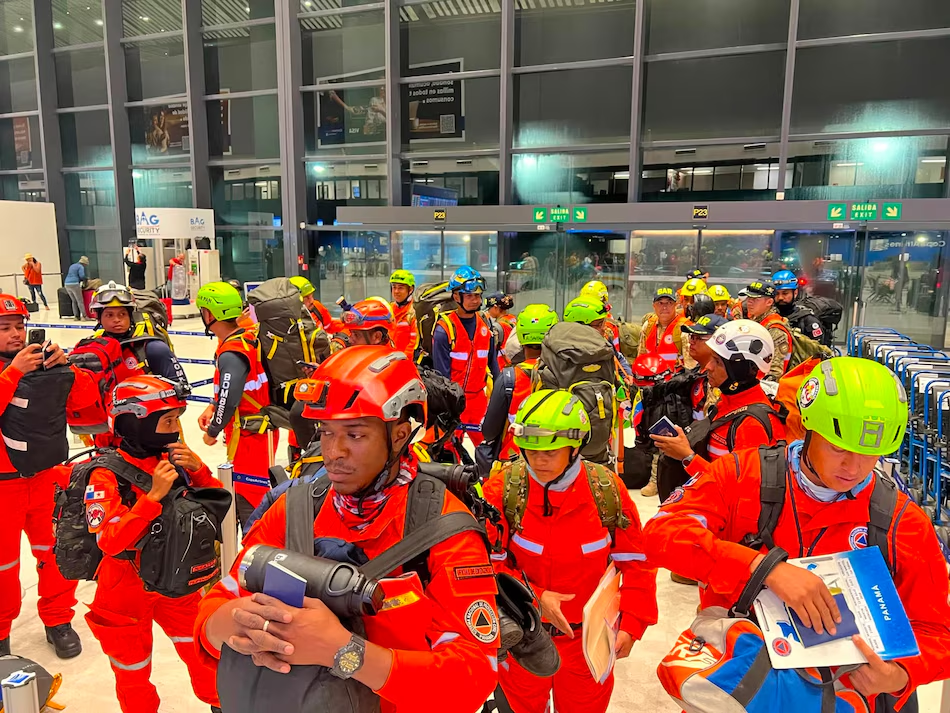
Panamanian rescuers depart for Venezuela: Second Team with 50 Rescuers and Aid to Venezuela Sent by Panama
Panama reinforced its humanitarian aid mission to Venezuela this Saturday, June 27, by sending a second team composed of 50 rescuers and two canine units, who will join the search efforts for missing persons after the earthquakes recorded in the South American country. These containers will be shipped by sea, while other donations will be arranged for air transport.
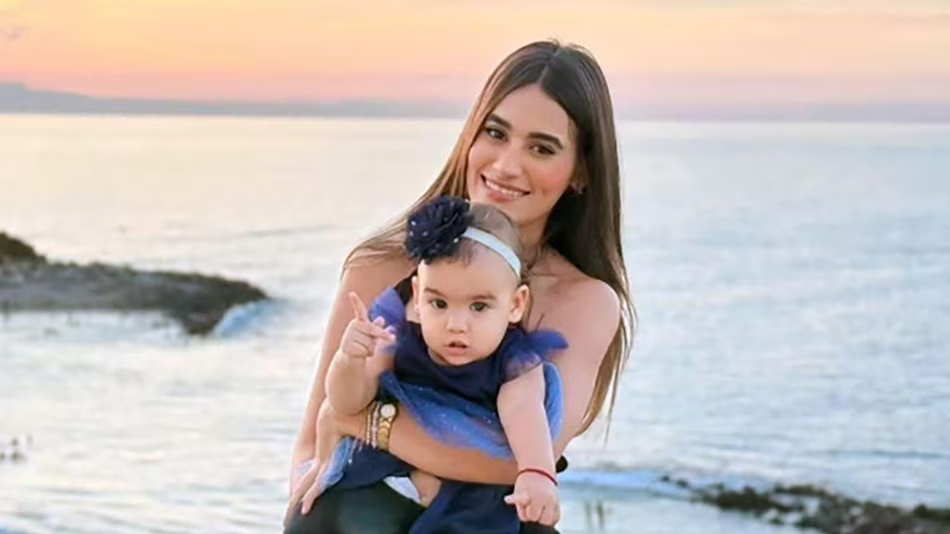
The Emotional Farewell to a Young Mother who Died Protecting her Daughter: ‘I’ll Tell Her How you Saved her’
A mother died while saving her daughter during the double earthquake that struck Venezuela last Wednesday. The victim’s name was Andrea and she was the wife of soccer player Héctor Bello. Bello wrote a touching message on his Instagram in memory of his “favorite heroine,” who, according to the text, saved his young daughter’s life during the earthquakes. “You will always be our favorite hero, Mom. I will make sure to remind our baby how wonderful you were, how much you loved her. I will tell her the story of how you saved her, my love, how you gave your own life for our daughter, that you were a brave woman, that even with your last breaths you never abandoned her, Mom,” Bello wrote.

Rescuers continue searching for survivors in the rubble after two earthquakes near the capital, Caracas, left hundreds dead and thousands injured. In his messages, Bello said that he traveled to Caracas, where his daughter was in the hospital. “My daughter and her aunt are doing well, but they will not be discharged today; they will remain in the hospital. Thank you so much for supporting me through this immense pain,” she posted on Friday. In another Instagram story, Bello wrote: “How do I explain to your daughter that you lost your life to save hers and I wasn’t there to do anything? How do I explain it? Give me strength now because I can’t take it anymore,” wrote Bello, 28, who is from Cumaná, a city in eastern Venezuela.
A local Venezuelan football press and media organization, Cumaná de Campeones, also reported the death. “We regret to inform you that the partner of the Cumaná footballer Héctor Bello “Kike” was found dead among the rubble after the earthquake that shook the country.” “His daughter did manage to survive the collapse of the building where the whole family lived.” More deaths caused by the earthquakes are being reported and victims are being identified, while many more remain missing after the disaster struck on Wednesday.
Two footballers are among the deceased, according to their clubs and the Venezuelan Football Federation (FVF). Caracas Fútbol Club reported that their under-18 player Razan Sijaa died along with members of his family at his home in La Guaira. “Their joy, dedication and camaraderie will accompany us every step of the way for the institution,” the club said in a social media post. The Venezuelan Football Federation (FVF) also reported the death of player Yimvert Berroterán. “A young man who proudly, committedly, and lovingly represented the colors of our country.”