Electing the President of Colombia in the Second Round Begins
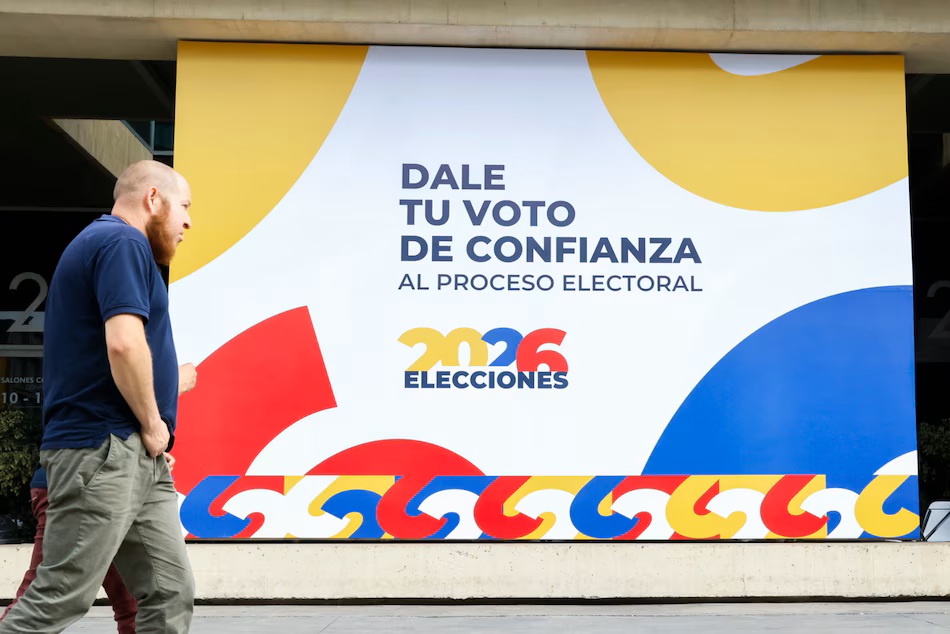
A person walks past a poster alluding to the 2026 presidential elections at the Corferias fairgrounds in Bogotá, Colombia. More than 41 million Colombians are eligible to vote in this second round election process that will choose the next president of that country.
More than 41 million Colombians are eligible to vote in the second round election process that will choose the next president of that country between the far-right Abelardo de la Espriella and the left-wing official candidate, Iván Cepeda. According to the electoral data, more than 23 million citizens voted in the May 31st process, equivalent to 57.88% of the total electorate. Authorities urged people to vote freely. Polling stations will be open until 4:00 pm. Upon casting his vote, the current president of Colombia, Gustavo Petro, revealed who he chose to vote for.
“No surprises; so far, things are going smoothly,” he said as he left the polling station. He asserted that he could hand over the government as early as Sunday, June 21, once the winner is designated. “The president of Colombia will not stay in office for even a second longer than the mandate given to him by the people,” he affirmed, responding to those who thought he would perpetuate himself in power.
He maintained that during his term no media outlets have been shut down, there has been no political persecution, and there are no political prisoners. “There has been a great deal of democracy, despite the difficulties,” he said. “We are handing over a bright and vibrant democracy,” he said. Likewise, the current president reviewed the fight against drug trafficking during his administration.
Open Process
The opening ceremony of the elections, held in Bolívar Square in downtown Bogotá, was attended by Colombian President Gustavo Petro; the National Registrar (the entity that organizes the elections), Hernán Penagos; the Mayor of Bogotá, Carlos Fernando Galán; and other authorities. The authorities attending the event agreed to call for “electoral peace” in the country and for the results to be respected, given the cloud of doubt that Petro has cast over these elections. “Today the call is to the citizens, to go out and vote with enthusiasm, to reaffirm their democratic principles,” said Penagos, adding that Colombians must be “able to resolve political differences peacefully.” During his speech before opening the process, Petro asked Colombians to “go out and vote however they can, overcoming any obstacle, geographical or logistical difficulty,” and hinted that the result he will accept is the one scrutinized by the judges of the republic, and not the preliminary count of the elections.
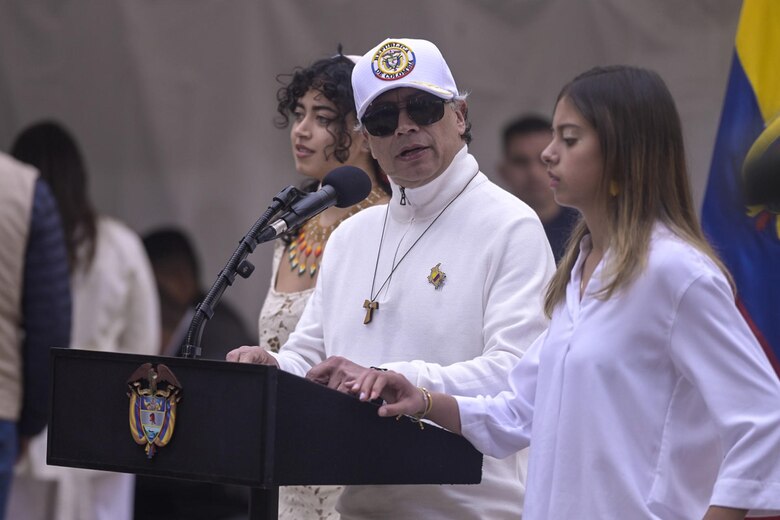
Colombian President Gustavo Petro speaks after voting in the second round of the presidential elections this Sunday, which will choose who will govern Colombia from 2026 to 2030, in Bogotá, Colombia.
“I will obey the judges as the law and the Constitution dictate. Everything before the judges’ decision is valid as information, but what is binding is the judge’s decision,” the president stated. Polls show lawyer De la Espriella, founder of the Defenders of the Homeland movement, who received the most votes in the first round and has the support of US President Donald Trump, ahead of Cepeda, senator of the Historical Pact party, the same as Petro. The Ministry of Defense mobilized 408,000 members of the Military and Police Forces to guarantee the security of the elections and prevent interference from illegal armed groups, mainly in some rural areas where there are reports of threats to voters and the civilian population in general.
For these elections, 41.4 million Colombians are eligible to vote at 122,016 polling stations distributed across 13,742 voting centers throughout the country.
By Voting for the Last Time as President, Petro Guarantees the Transfer of Power in Colombia
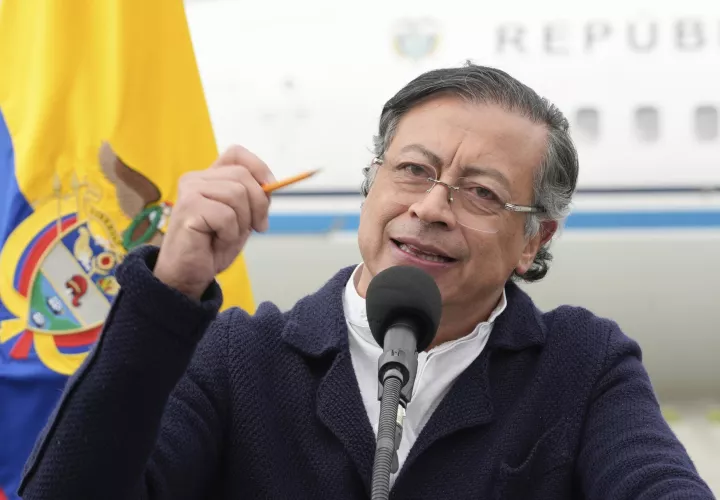
Defying electoral rules, Colombian President Gustavo Petro again displayed his ballot to the cameras after voting in Sunday’s runoff election, just as he did in the first round at the end of May. His vote was marked for the leftist candidate, Iván Cepeda, of the Historical Pact. The Colombian president assured that he will not remain in power for even a second longer, thus guaranteeing a swift transfer of power to whoever is elected this Sunday. President Petro, dressed in white from head to toe, cast his vote at the polling station set up in the National Capitol in downtown Bogotá, where he arrived accompanied by his daughters Sofia and Antonella, and his Minister of Foreign Affairs, Rosa Yolanda Villavicencio, after attending the opening of the elections in Bolivar Square.
“The first thing that must be validated today is that the president of Colombia does not go a second beyond the mandate given to him by his people; I obey my people,” Petro said regarding the transfer of power that will take place on August 7, according to news agencies. The president recalled that during his four years in office, there was speculation that he would not relinquish power and talk of “dictatorships,” which he categorically refuted. “What a strange dictator is handing over his mandate, what a strange dictator is who hasn’t taken a single political prisoner, no one imprisoned for their conscience.
No one has been persecuted for their opinions, ways of thinking, ways of believing, religious or otherwise, cultural, ethnic, gender, or sexually explicit beliefs,” he stated. According to Petro, the assessment that time and history will make of his four years in government will be one of “much freedom and much democracy despite the difficulties.” “We handed over a brilliant, vibrant, multicolored democracy, as I call it, not one degree less and many more degrees of democracy than how I received it in a country that at that time was bloodied,” he stated.
Colombian President Gustavo Petro casts his vote in the second round of the presidential elections this Sunday, which will determine who will govern the country from 2026 to 2030, in Bogotá, Colombia.