Panama’s Bridge of the Americas will Restrict Vehicle Use Temporarily
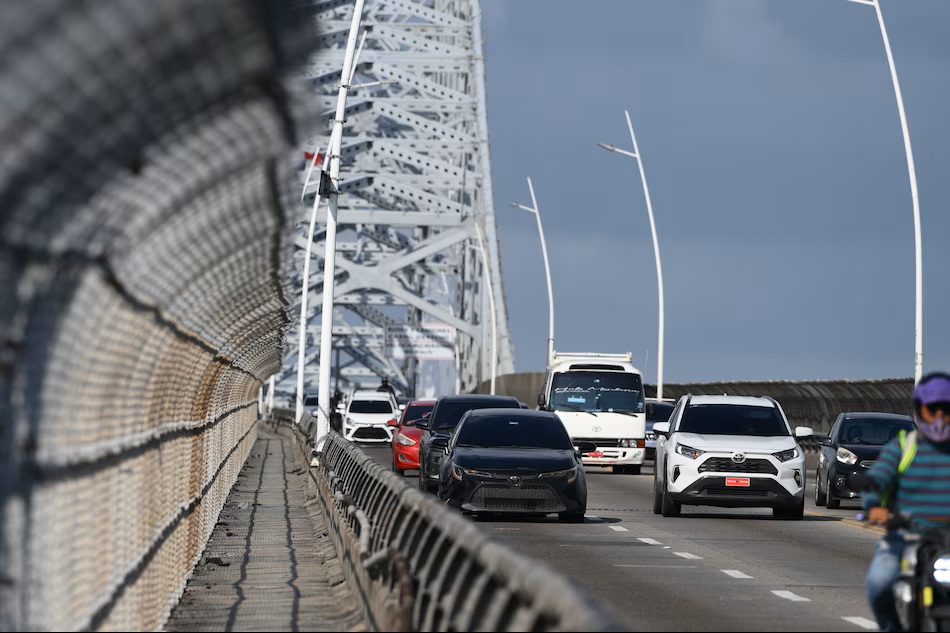
The Ministry of Public Works (MOP) recommended the reopening of the Bridge of the Americas, following the inspection carried out by the inter-institutional team, but with limitations for certain types of vehicles. Afterall, it is an old bridge that was built starting October 12, 1959 and completed in 1962.
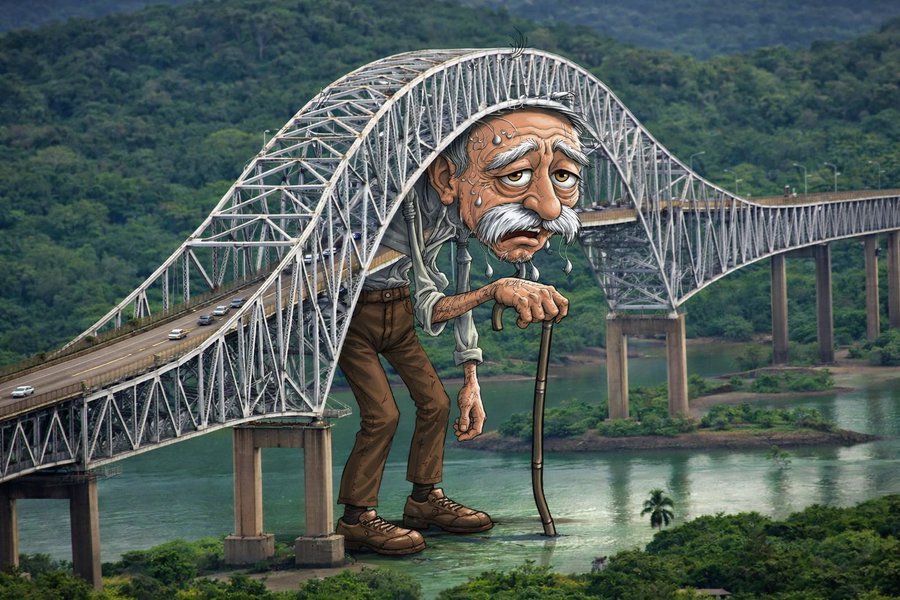
The passage of large buses and all types of trucks is now restricted, except for emergency vehicles.
Civil Engineer Details Key Studies after the Fire under the Bridge of the Americas
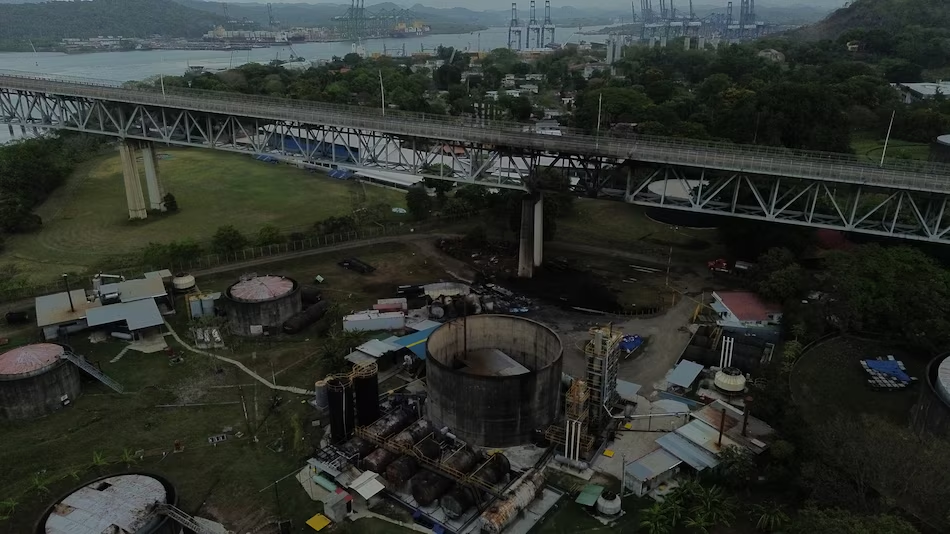
Following the fire that occurred above on April 6 under the Bridge of the Americas, structural engineering specialists emphasize the need for a detailed forensic evaluation to determine if the structure suffered damage from the high temperatures. Engineer Sion Atencio, a member of the College of Civil Engineers of the Panamanian Society of Engineers and Architects (SPIA), pointed out that the accident requires a rigorous analysis of the bridge’s conditions, built more than six decades ago with ASTM A7/A36 steel, a common material in constructions of that era.
Experts Complete Inspection of the Infrastructure of the Bridge of the Americas
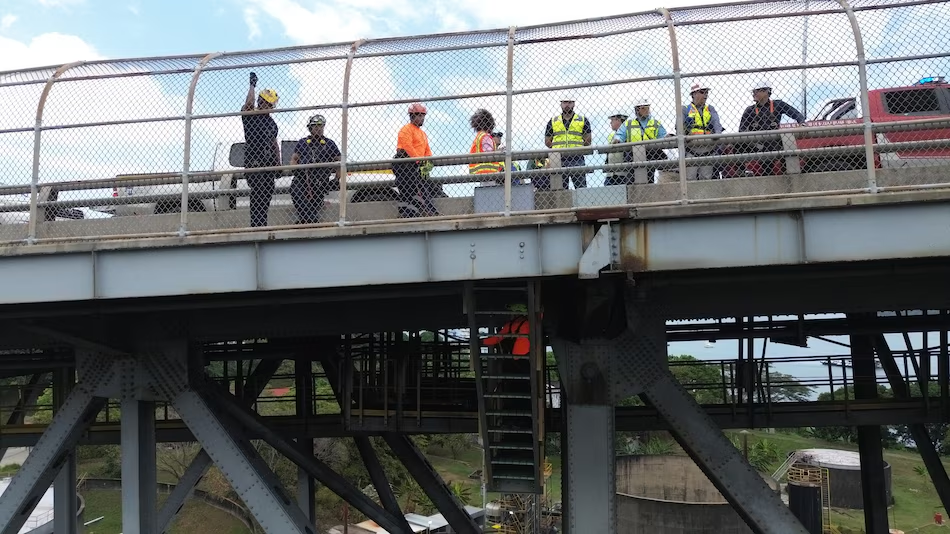
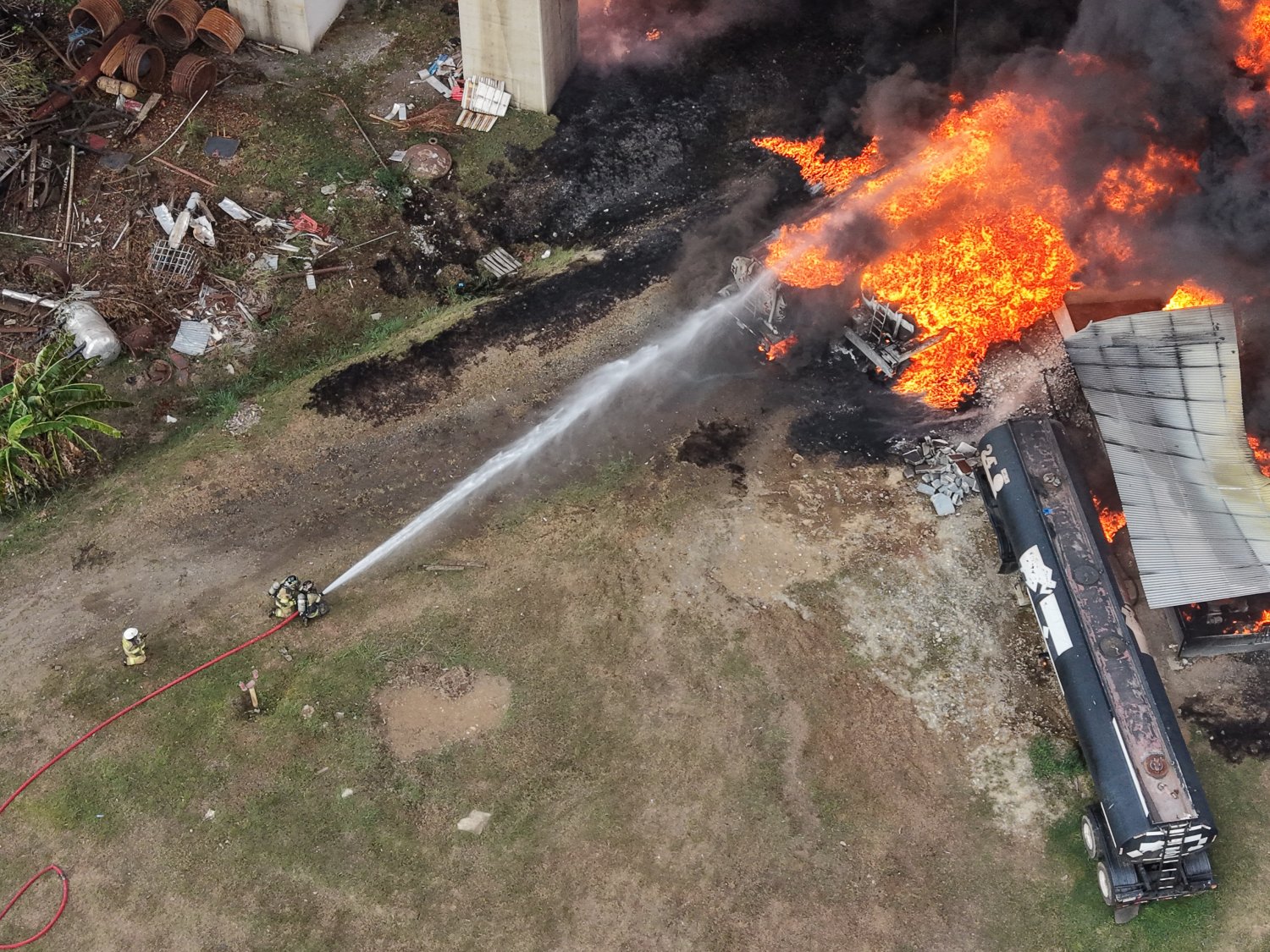
Specialized personnel are inspecting the underside of the bridge to assess the damage following the fire. The fire involving three tanker trucks forced the complete closure of the Bridge of the Americas, while technical teams assess whether the structure suffered damage that compromises its safety.
AMP Suspends Concession to the POTSA Company after the Fire under the Bridge of the Americas
Media Credit: Markus Eisenlohr©
www.familie-eisenlohr.de
The general director of the Panama Maritime Authority (AMP), Luis Roquebert, announced the suspension of the concession of the port area affected by a fire that occurred this Monday, April 6, which forced the closure of the Bridge of the Americas. Following the incident, Roquebert indicated that the concession would be suspended as a measure to guarantee a thorough and effective investigation. He emphasized that the agency maintains a zero-tolerance policy toward security incidents.
The Bridge of the Americas
(Spanish: Puente de las Américas) has served as a critical link between North and South America since its completion in 1962. Spanning the Pacific entrance of the Panama Canal, it was the first permanent bridge to reconnect the two landmasses divided by the canal’s construction.
Early History & the Need for a Crossing
- A Divided Nation: After the canal opened in 1914, it physically split Panama in two. To travel across, residents and the military relied on slow ferry services, such as the Presidente Amador and President Washington, or limited-capacity swing bridges at the Miraflores Locks.
- The Eisenhower Treaty: While a permanent bridge was prioritized as early as 1923, it was not until the 1955 Remon–Eisenhower Treaty that the United States committed to funding and building the structure.
Construction and Inauguration (1959–1962)
- Groundbreaking: Construction began on October 12, 1959. The project was designed by the American firm Sverdrup & Parcel and cost approximately $20 million USD.
- Engineering Feat: The Bridge is a cantilever design featuring a tied arch, stretching 1,654 meters (5,425 feet) with a vertical clearance of 61.3 meters (201 feet) to allow large ships to pass underneath.
- Opening Ceremony: It officially opened on October 12, 1962. The event was marked by pro-Panamanian protests; activists removed memorial plaques to signal their desire for Panamanian sovereignty over the Canal Zone.
The Naming Controversy
The bridge’s name was a point of political friction:
- Thatcher Ferry Bridge: The U.S. officially named it after Maurice H. Thatcher, a former member of the Canal Commission who established the ferry service.
- Bridge of the Americas: Panama’s National Assembly passed a resolution ten days before the opening to name it Puente de las Américas, reflecting its role as a continental connector.
- Official Recognition: The U.S.-given name was used until 1979, when control of the bridge transitioned and the name “Bridge of the Americas” was officially recognized.
Modern Role and Legacy
- Pan-American Highway: For over 40 years, it was the only road link for the Pan-American Highway crossing the canal until the Centennial Bridge opened in 2004 to ease congestion.
- Sovereignty: The Bridge was fully handed over to Panama on December 31, 1999, alongside the canal itself.
- Height Constraints: Modern “Neo-Panamax” cruise ships, like the Oasis of the Seas, are too tall to fit under the bridge even at low tide, highlighting its age in a changing maritime era.