Daniel Lauchú is a Panamanian Emmy Award Winner at NASA and Part of the Historic Artemis II Broadcast
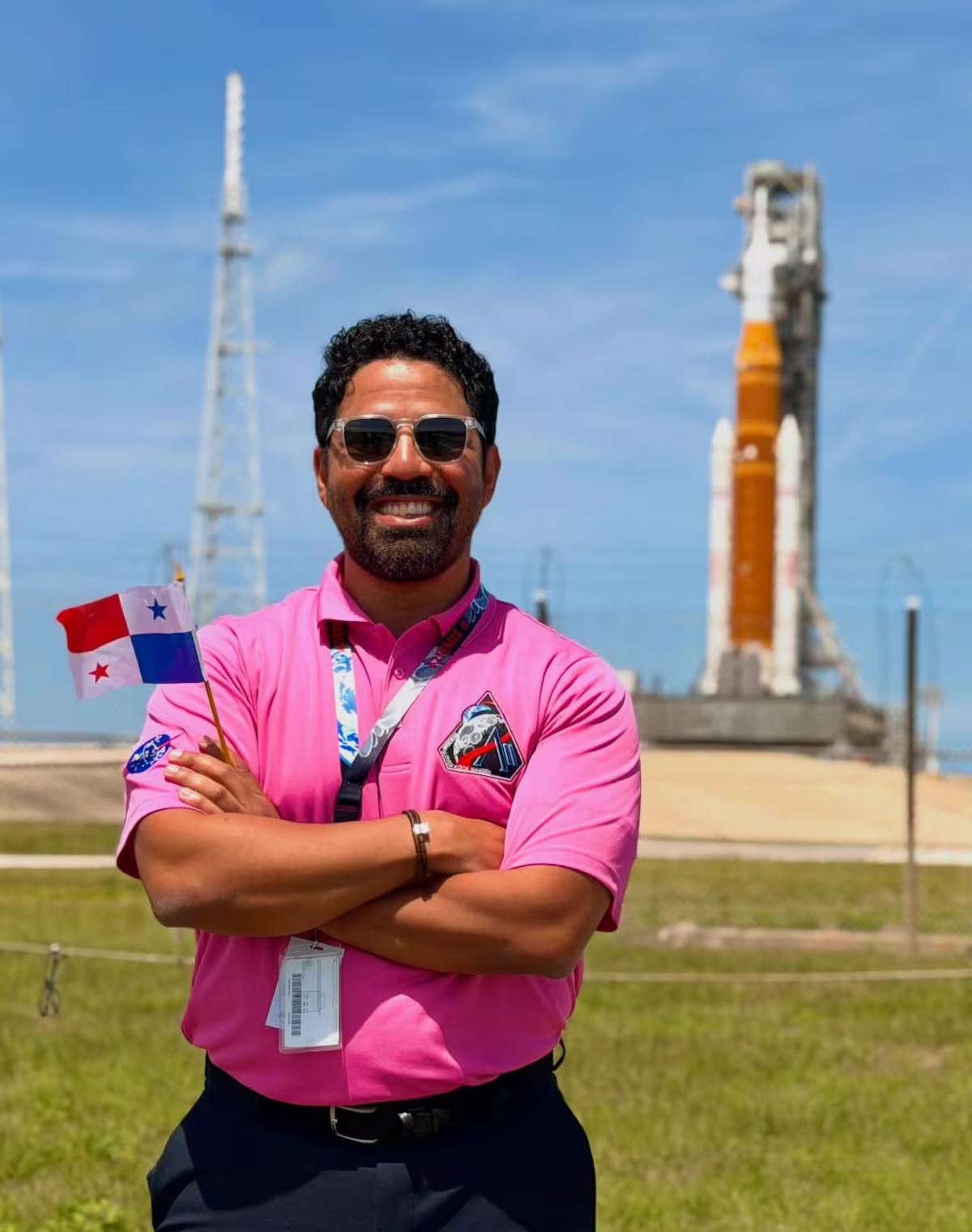
The son of parents from Colón, Daniel Lauchú pictured below is a director and producer of live broadcasts and a filmmaker for NASA. He is also an Emmy Award winner for his space broadcasts.
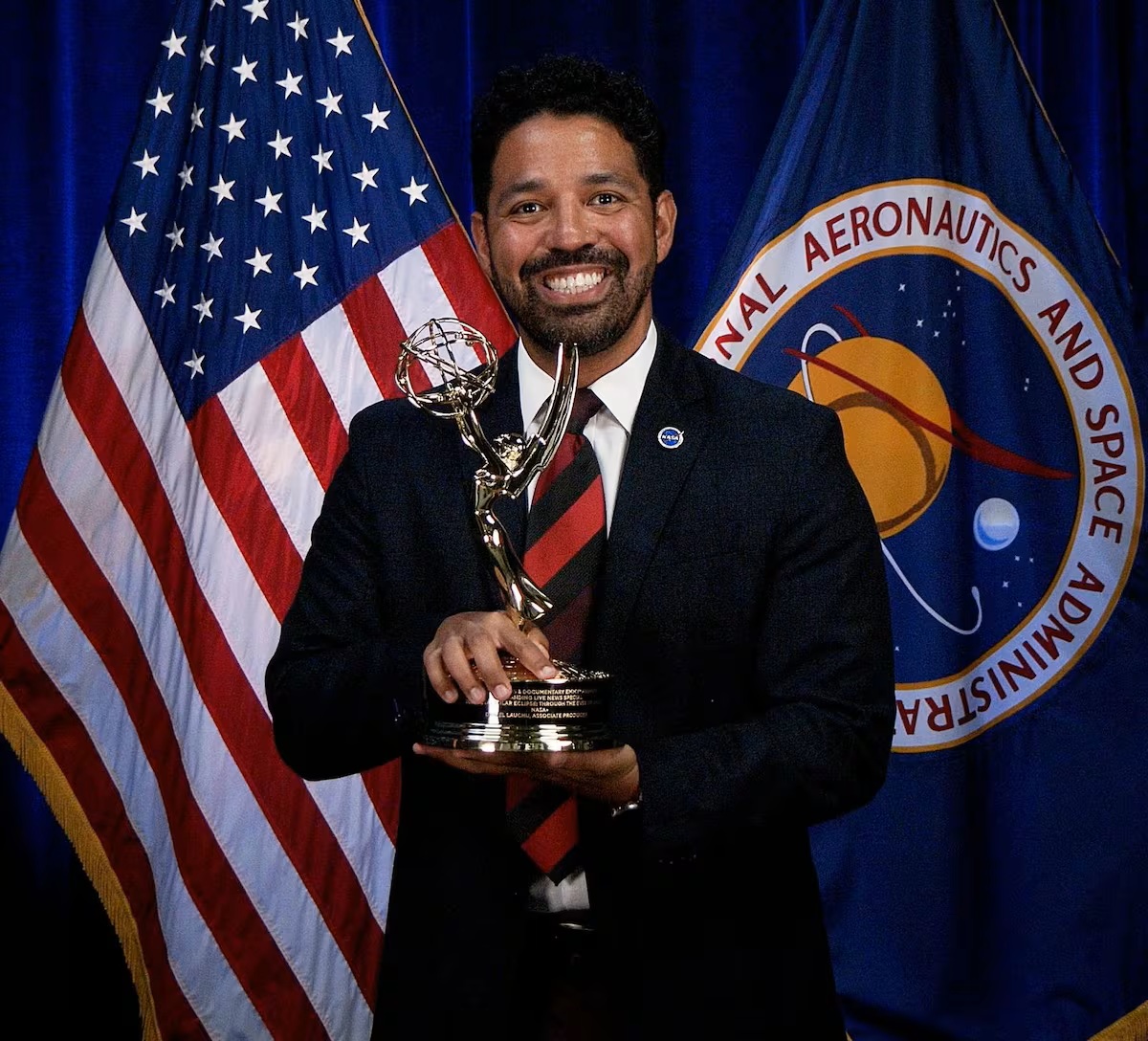
Daniel Lauchú, from Panama, is part of the team working on the transmission of the Artemis II mission, the first manned mission of NASA’s Artemis program that will take astronauts back to lunar orbit after more than five decades. Daniel, the son of parents from Colón, is a director and producer of live broadcasts and a filmmaker for NASA. He is also an Emmy Award winner for his space broadcasts. From Kennedy Space Center in Florida, Lauchú shared a pre-launch message in statements to Panamanian media outlets, where he explained his role in covering the mission.
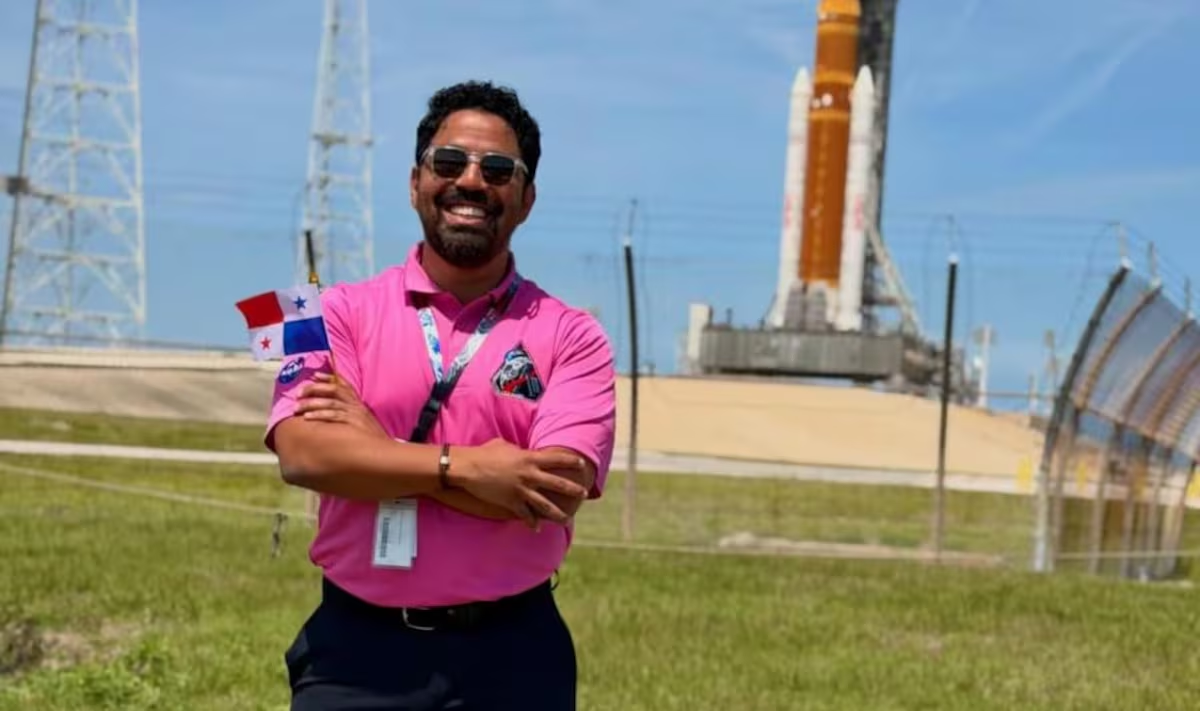
“Here from Cape Canaveral, just leaving the John F. Kennedy space station, where they were working on the transmission of the most important mission in NASA’s history : Artemis II ,” he said. In the same message, he explained the relevance of the mission: “And you might ask, why this is the most important mission in NASA’s history? Well, it’s the return of humans to lunar orbit.” The Panamanian also noted that participating in this project is a source of personal pride. “As a Panamanian and a native of Colón, I am filled with pride to be part of this mission and to carry this flag with me during the broadcast of this mission, which is so important for humanity,” he commented.
From Panama to NASA
Lauchú is a professional of Panamanian origin with parents from Colón. As he has recounted in interviews, his family moved to Panama City when he was five years old. “At the age of five, my family decided to move to the capital. After finishing the first cycle at the Instituto América, my family—my father, my brother, and my mother—decided to move to the United States, to the city of Alexandria, Virginia, near Washington, DC,” he recounted on the program Bright Minds. During that time, she faced the challenge of adapting to a new language and environment. “My parents have always instilled in me the importance of focusing on my goals. One of my main goals was to learn the language and get ahead,” she explained.
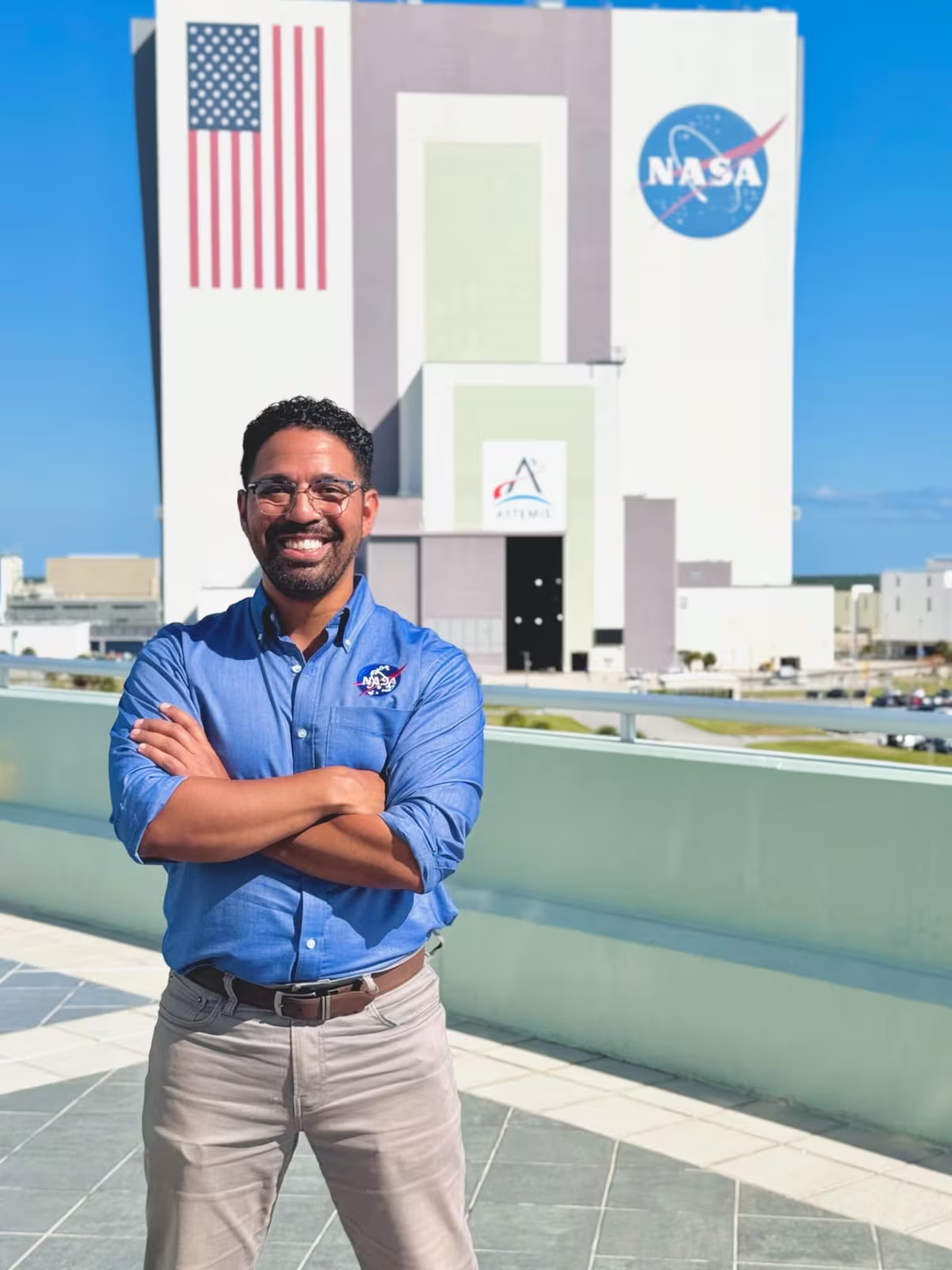
Before joining NASA, Lauchú developed a career in multimedia production at international networks such as CNN and Univision. He also worked in sports production, an experience that shaped his early professional years. “To get to NASA, I had a background in the world of sports. I was a producer at CNN. I covered several Panama games and specials about Mariano Rivera and Roberto Durán,” he said. According to her account, she initially thought her career would continue in that field “until I got to NASA and they said to me, ‘We like what you do, are you interested in coming with us?'” He currently serves as a senior multimedia director and producer at NASA in Washington, DC
Emmy Award for Science Broadcasting
In June 2025, Lauchú received an Emmy Award from the National Academy of Television Arts & Sciences for his work on the broadcast of the 2024 total solar eclipse. The project included technical coordination with astronauts aboard the International Space Station to show the phenomenon from space. “This broadcast went all over the world and I was in charge of talking to astronauts on the International Space Station and managing, with the cameras we have there, to show how the astronauts see the eclipse,” he explained.

The producer also described what that kind of real-time communication entails. “Sometimes you can’t contact your family by phone because there’s no signal, but you can communicate with astronauts in space. It still seems otherworldly to me,” he noted. In 2025, Lauchú was also named flag bearer of the Panamanian delegation at the Washington DC Hispanic Festival, considered one of the largest Hispanic cultural events in the United States.
The Artemis II Mission
The Artemis II mission will be the first crewed mission of the Artemis program. For approximately 10 days, four astronauts will travel aboard the Orion spacecraft, launched by the Space Launch System rocket. The goal is to conduct a flyby around the Moon to test life support systems and other technologies needed for future missions. This phase aims to pave the way for future operations on the lunar surface and the development of permanent infrastructure there. In that context, Lauchú is part of the team in charge of bringing the launch and mission broadcast to audiences around the world, from the production centers of the US space agency. The Artemis II launch, directed by the Panamanian, is being broadcast on NASA’s Spanish-language YouTube channel that started at 3:45 PM Panama time. Those who wish to watch it in English can find it on NASA’s YouTube channel.
The Artemis II Mission Reaches Earth Orbit and Begins its Journey to the Moon
The team consists of Commander Reid Wiseman, Specialist Christina Koch and Pilot Victor Glover, all three from NASA, as well as Jeremy Hansen, from the Canadian Space Agency (CSA), who woke up around 9:25 local time (13:25 GMT). “I love you guys,” Glover said in his latest statements to the press.
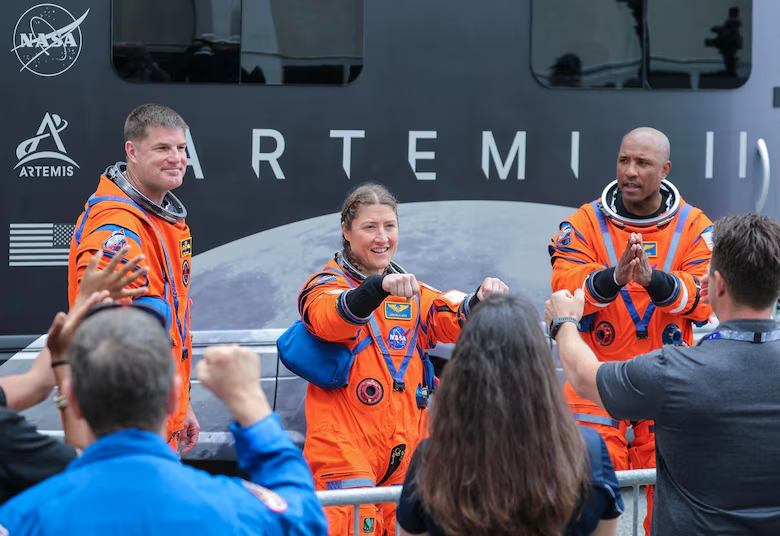
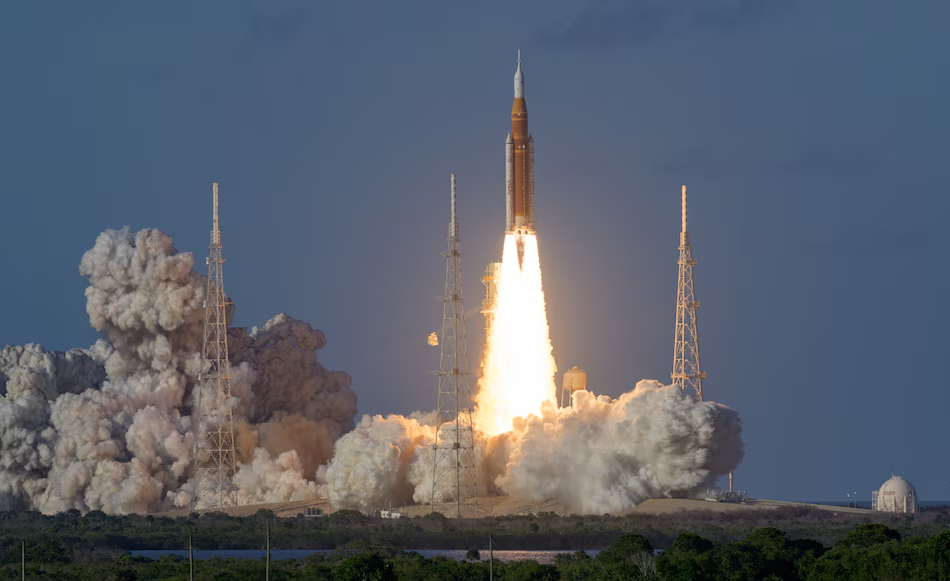
The Artemis II mission reached Earth orbit on Wednesday about 10 minutes after taking off from Florida to begin its 10-day journey around the Moon, which is happening for the first time in more than 50 years. The four astronauts of Artemis II arrived at the launch pad of the rocket that took off from Florida to begin the 10-day mission that will take them around the Moon. The crew arrived at Launch Complex 39 at 2:14 p.m. local time (6:14 p.m. GMT), four hours before the estimated liftoff after performing the spacewalk at the Kennedy Space Center in Cape Canaveral, which “every NASA astronaut has done since the Apollo 7 mission in 1968,” the U.S. space agency reported.
Before boarding the Orion spacecraft, which took them into deep space, they made their final stop in the White Room, “a clean and controlled environment” where the technical team verifies that all systems are ready for launch, the US agency explained in its live broadcast. The astronauts waved to the media one last time before embarking on their journey, already wearing their special bright orange suits, custom-designed and with improvements to control their body temperature while providing greater protection and mobility. Before their journey to the platform, the astronauts played cards, a NASA tradition for commanders to “burn off all their bad luck,” the agency said.
Artemis II, which seeks to be a key step towards establishing a base on the Moon and the human exploration of Mars, is also historic because it includes for the first time in a lunar mission a woman (Koch), an African-American astronaut (Glover) and a Canadian (Hansen). The four crew members will become the first humans to reach lunar orbit since 1972, when the Apollo 17 mission left the natural satellite. Artemis II has a planned duration of 10 days, during which it will orbit the Moon and allow astronauts to view the far side of the satellite. It is also expected to be the manned mission that goes furthest from Earth, surpassing the more than 400,000 kilometers reached by Apollo 13.