Panama City to Chiriquí Railway: The Undeniable Tourism Potential
The railway will boost development hubs at the regional level in Central America; each of the stations will facilitate tourism to and from Panama, reconfiguring the travel patterns traditionally concentrated in Panama.
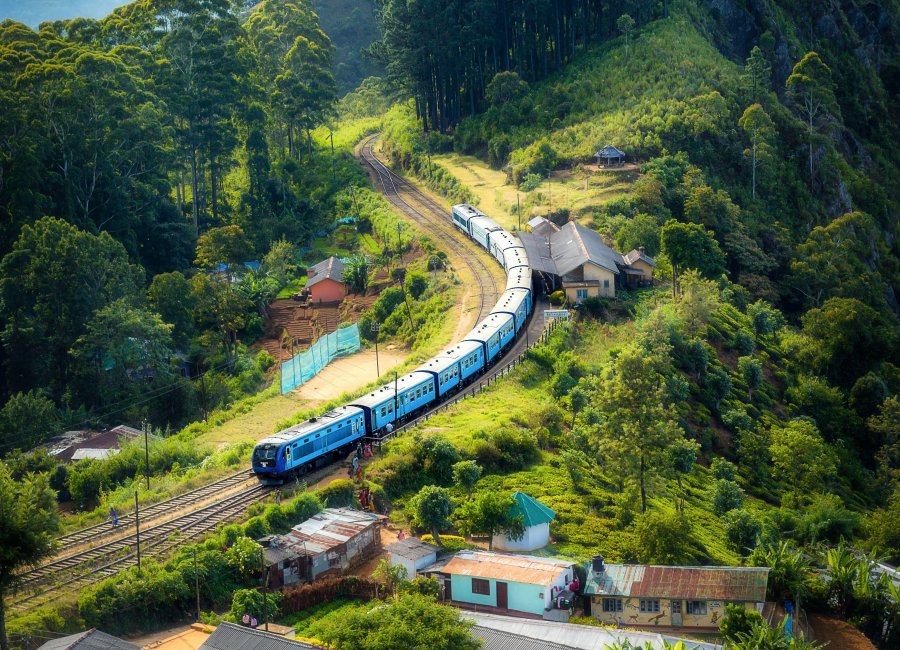
In the lead-up to the start of construction of the railway between Panama City and the Province of Chiriquí, positions for and against this ambitious project, which aims to interconnect a significant part of the national territory, have emerged on both sides. However, to make value judgments about a project of this magnitude, it is important to investigate what the political, social, and economic implications of the project are. This paper is presented as a preliminary approach, offering an answer to this question through a heuristic exercise using different sources and a prospective analysis of both the positive and negative aspects of this project. Historical model of the organization of the Panamanian economy.
In the history of Panama, the social and economic organization on which the current economic model is based is configured under the logic of the interaction between the terminal cities of Panama and Colón, causing unequal development in the social, political and economic aspects in other regions of the country; this dynamic is what some authors call the transit model (Castillero Calvo, 2014; Castro Herrera, 2018). Thus, a project of this nature starts from the consideration of perfecting and modernizing the transportation system in the country in a transcendental way, in addition to setting a turning point, around the hegemonic socio-economic organization model: transitism, integrating by the weight of the project itself populations, producers, merchants, logistics operators, tourism operators, among others.
Emergence of a Development Redistribution Model
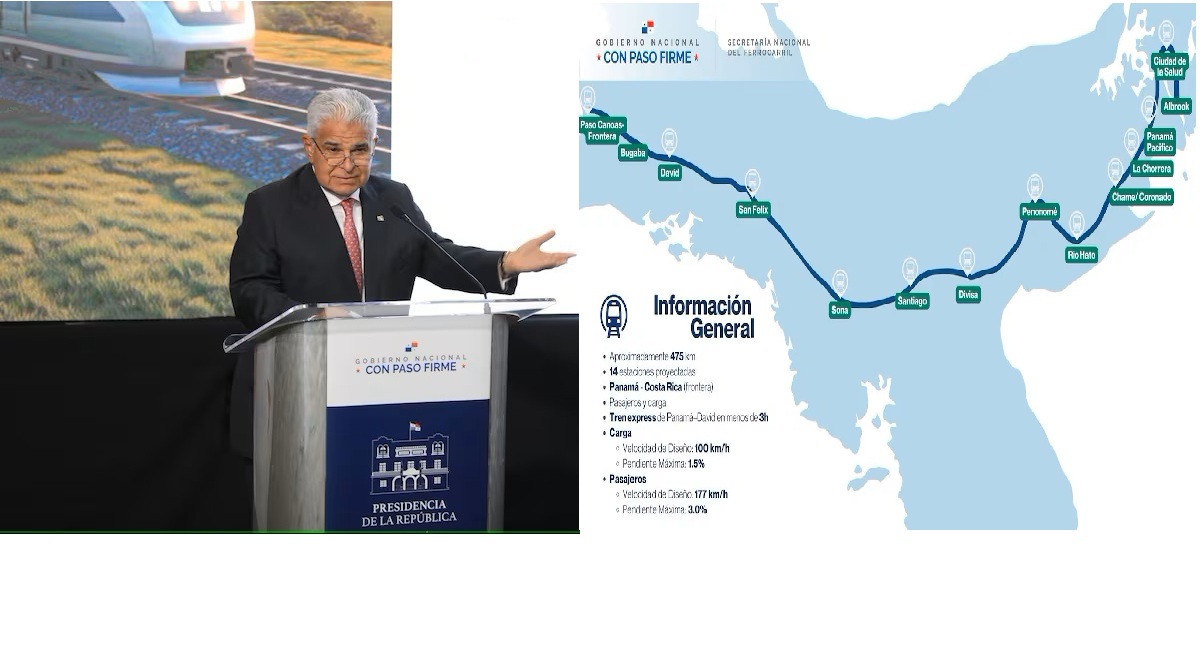
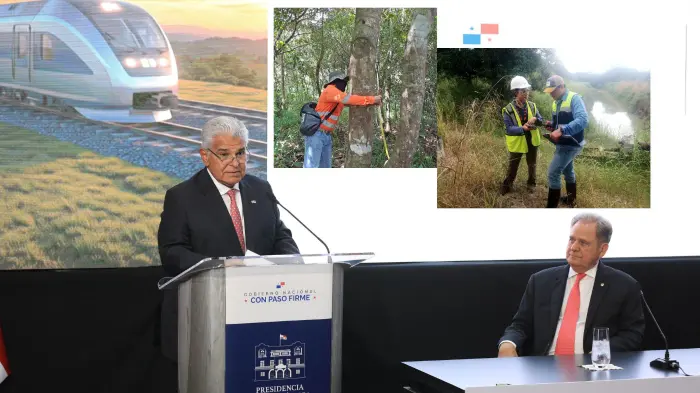
The National Railway Secretariat will be responsible for this project and will be tasked with planning, managing, and administering the design, construction, and operation of this ambitious undertaking. Currently, the project includes 14 stations planned along the Inter-American Highway line, with a projected length of 475 kilometers between Albrook Station and Paso Canoas, in the Province of Chiriquí, on the border between Panama and Costa Rica. The train project will be built in several phases. The geographical distribution of the different stations will allow for interconnection between various regions of the country and Panama City. The inclusion of the City of Health Station will facilitate the movement of people from all over the country seeking healthcare services.
Consideration could even be given to offering healthcare services internationally, which would allow people to come seeking surgery, tests, or treatment, thus laying the groundwork for the development of medical tourism in Panama. Located parallel to the City of Health, we find MERCA Panama, the Railway project, which includes the operation of a freight transport line, allowing farmers and producers from central and western provinces of the country to bring harvests of different products in less time, strengthening and adding value through new transport and supply structures at the local level.
Opportunities to Develop Key Sectors
In our view, the railway will boost regional development hubs in Central America. Each station will facilitate tourism to and from Panama, reshaping travel patterns traditionally concentrated in Panama. Furthermore, it will offer an ideal platform for integrating and modernizing the logistics system along the canal strip and the Tocumen Airport hub. The reduced travel time between Panama and Costa Rica will allow thousands of travelers from various Central American countries to visit Panama for shopping at different times of the year, a practice commonly known as shopping tourism.

It’s also worth noting that the Panama Railroad offers opportunities for visitors who resell clothing, appliances, and electronics. The railway will have a multidimensional impact in the short, medium, and long term. The establishment of development hubs around the train stations will foster commercial activity and increased passenger traffic locally, which will also contribute to reducing internal migration to Panama City. The Panamanian economy is currently growing thanks to increased transit and cargo traffic through the Canal, the commercial activity of the Colón Free Zone (CFZ), the contribution of the International Banking Center, and increased exports.
However, it is well known that a significant part of Panama’s economic growth and development does not necessarily translate into human development, impacting the emergence of vastly different social strata with respect to their social well-being and quality of life, which places us as a very unequal country in the distribution of its wealth (Gandaseguí h., 2020).
Skepticism and Distrust of the Initiative
Despite the various advantages mentioned, there are some voices against this project, and several reasons for its rejection are presented, among which we can mention:
Economists and businessmen question the feasibility of the project’s cost, which is valued at approximately 5 billion dollars;
Various political and citizen sectors are skeptical about the price of this work, this is directly related to trust in institutions (Nervache & Rogers, 2023);
Environmental groups and local communities have expressed their disagreement with the railway project; and some transport and land owners affected.
The reasons are varied. The trans-isthmian railway project involves actions in the area of public policy; a comprehensive prospective analysis of this megaproject is urgently needed, taking advantage of the current situation to strengthen various pillars of the Panamanian tourism system, the participation and involvement of key institutions and companies in the promotion of the country, and in the academic and technical training of tourism professionals. Strengthening oral communication skills in English, French, Mandarin, and other languages, as well as the staff involved in different areas of the national tourism system, will be essential to developing a solid and sustainable tourism dynamic in the medium and long term.
Tourism Potential of the Panama-Chiriquí Railway
Considerations regarding tourism development in Panama involve revisiting the aspirations presented in the Panama Tourism Master Plan projected for the years 2007-2020, developed by the Panama Tourism Authority (2007). The plan was extended during the pandemic period to the years 2021-2025. However, the development and coordination of national investment projects. Cultural and alternative tourism presents enormous and undeniable potential.

Local development will be based on the development of integration and institutional support in agricultural production, but also on the promotion of Panama’s tangible and intangible cultural heritage, the care and preservation of our natural heritage, coral reef systems, forests, beaches, and the conservation of watershed systems (Heckadon-Moreno, 1993). There are territories that must develop and articulate a cultural proposal that integrates the different local attractions and facilitates the creation of festivals and a structure that attract both national and foreign visitors.
The author is a Social Researcher at the Institute of Human Rights, Justice and Peace and a Professor at the San Miguelito Regional University Center of the University of Panama.
Social Thought (PESOC) is made up of a group of professionals in the Social Sciences who, through their contributions, seek to promote and satisfy needs in the knowledge of these disciplines. Its purpose is to present the population with topics of analysis on the main problems that afflict them, and to contribute to the strategies of solution programs.
A project of this nature stems from the consideration of fundamentally perfecting and modernizing the country’s transportation system, as well as establishing a turning point in the hegemonic socio-economic organizational model: transitism.