After Being Released, Opposition Leader Juan Pablo Guanipa says he will Fight for Elections in Venezuela
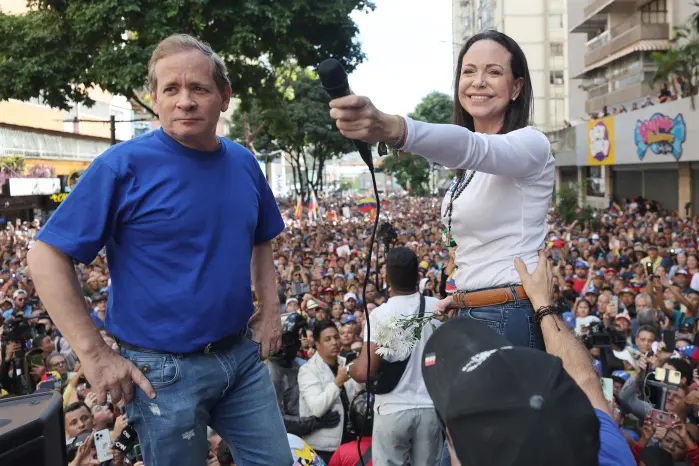
Opposition leader Juan Pablo Guanipa, a collaborator of Nobel Peace Prize laureate María Corina Machado, said Friday that he will fight for conditions to achieve political change in Venezuela through an electoral process, in his first statements to the press after being released following the approval of the Amnesty Law on Thursday. “It is up to us to fight to create the conditions so that we can have a democratic solution to the crisis,” he said while attending a mass at the Basilica of Our Lady of the Rosary of Chiquinquirá in Maracaibo, capital of Zulia state (northwest), where he was cheered by his followers with messages of support: ‘Guanipa, friend’.
Political Change, but Without Edmundo González
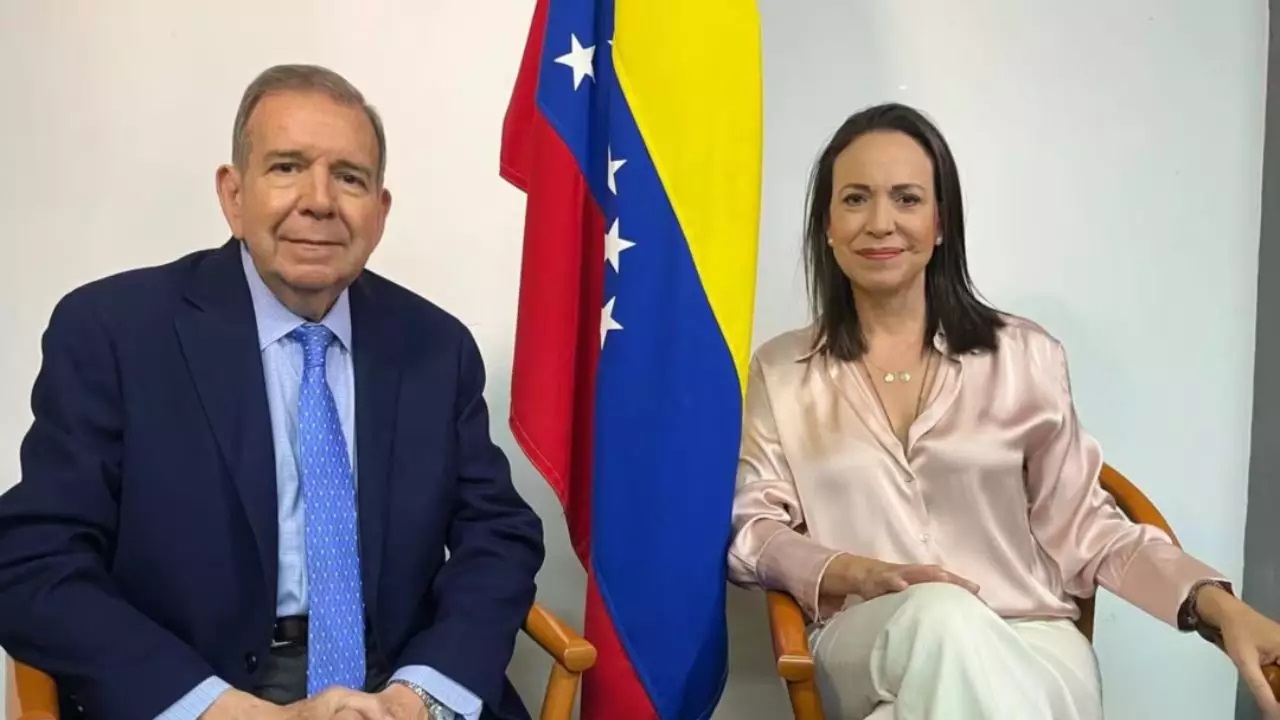
Although he argued that “the ideal would be to respect” the victory claimed by opposition leader Edmundo González Urrutia in the 2024 presidential elections, in which Nicolás Maduro was proclaimed the winner without the electoral records being published later, he indicated that it seems that “that is not going to be the case.” “Political realism, which also has to do with the presence of the United States in Venezuela, tells us that this is not going to be the case,” he said. Therefore, he continued, it is necessary to “lay the foundations” so that they serve as a “pressure mechanism to achieve political change” through an electoral process.
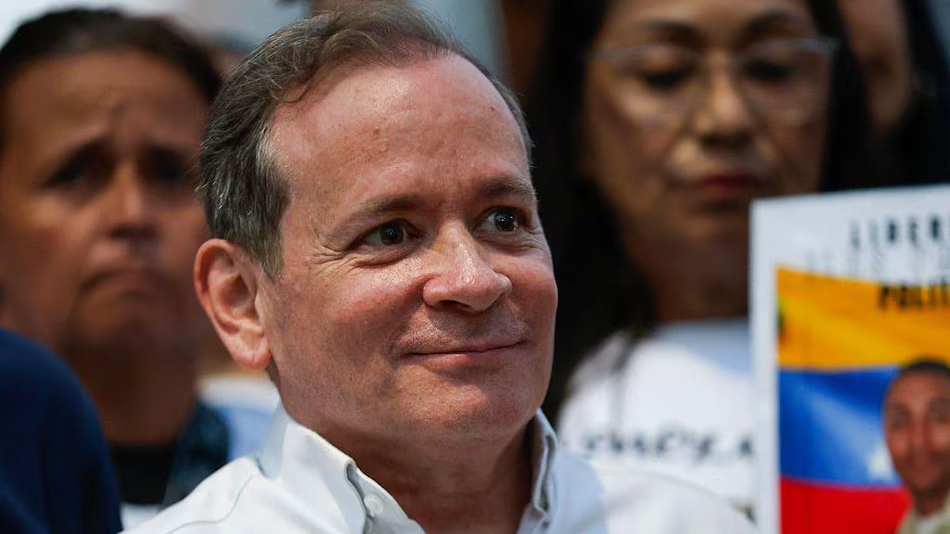
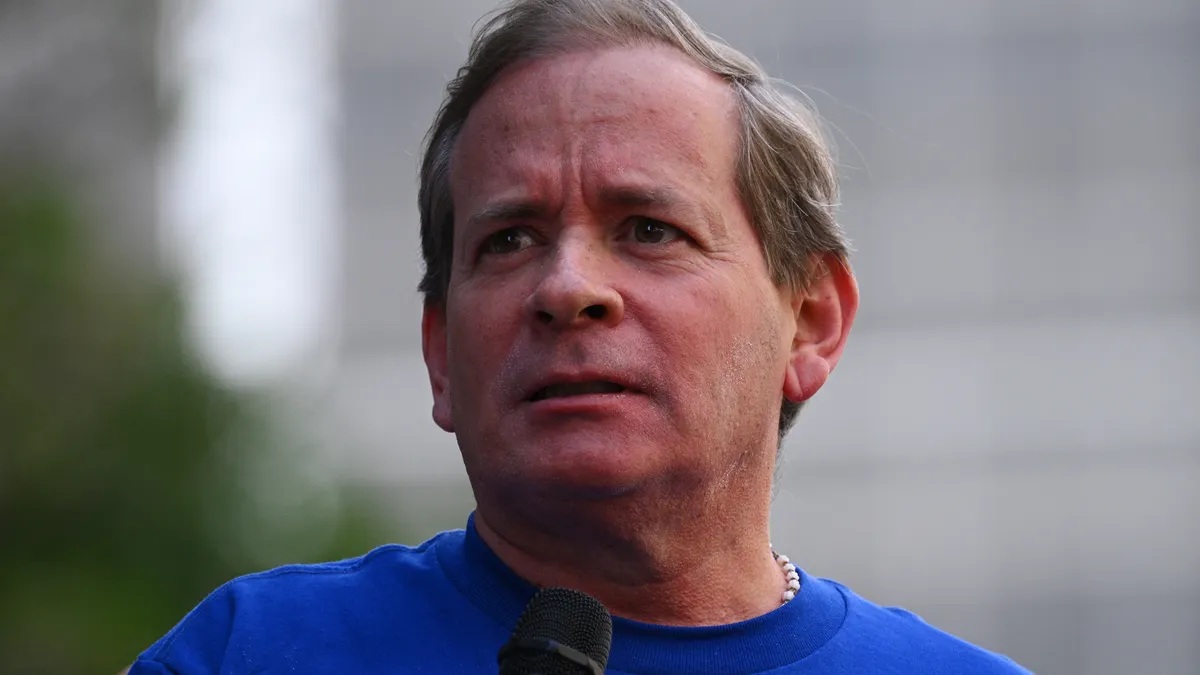
The former congressman also said that it is necessary to fight to ensure that political parties are “returned to their natural leaders,” since many of them were taken over by the Supreme Court of Justice (TSJ) to appoint new leadership. He also pointed out that new rectors should be appointed to the National Electoral Council (CNE), currently aligned with Chavismo, to make it “balanced”. The opposition leader, whose voice broke at the beginning of his statement, reiterated that the Amnesty Law is “exclusionary” and demanded the release of all political prisoners, as well as the return of exiles. The law “does not reflect the country’s desire to move forward, so they need to review that,” he added.
Guanipa was released after the approval of a historic Amnesty Law that, in theory, covers a period set between 1999 and 2026, but specifies 13 political junctures since 2002, which excludes arrests that occurred in at least 15 of the last 27 years, as well as cases related to military operations. He had been under house arrest for more than a week, after being released for a few hours and then arrested again after leading a caravan in support of political prisoners. Authorities had accused him of violating the conditions of his release, which his family rejected. The amnesty is part of the “new political moment” announced by the interim president, Delcy Rodríguez, who assumed office after the capture of Maduro by the United States last January. The NGO Foro Penal, which leads the defense of political prisoners, counts more than 600 detainees for these reasons, after more than 400 releases.
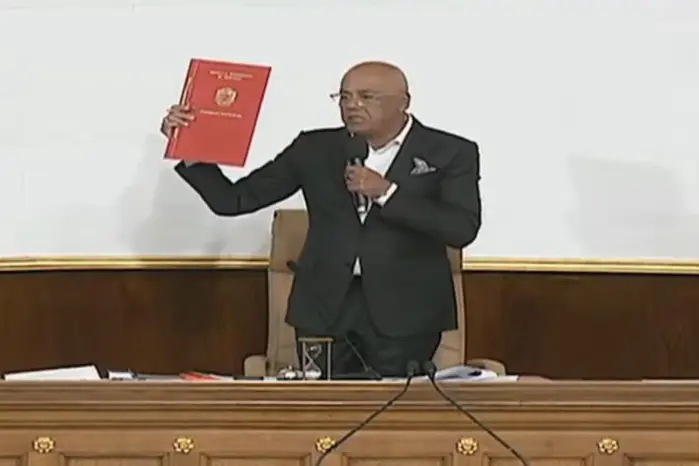
Jorge Rodríguez Confirms Possible Pardons for a Group Excluded from the Amnesty Law in Venezuela
The president of the National Assembly of Venezuela, Jorge Rodríguez, indicated on the afternoon of Saturday, February 21, that it is “within the possibilities” that Delcy Rodríguez will grant pardons to detainees who were excluded from the recently approved amnesty law. In statements made after an inquiry from Caracol Radio, Rodríguez indicated that the Executive, headed by Delcy Rodríguez, is evaluating different legal mechanisms to address the cases that were not contemplated in the regulations unanimously approved by the National Assembly.
The head of Parliament also stated that “in the coming hours, in the coming days” releases will continue to occur and declared that they will also be released from the detention center known as Zone 7, where relatives are demanding the release of political prisoners. Rodríguez indicated that he does not wish to establish specific timeframes —such as two or three hours— to avoid misinterpretations or accusations in case the processes do not materialize immediately. The head of Parliament also stated that releases would continue to occur ‘in the coming hours, in the coming days’.
Regarding the cases of military personnel, he explained that the law provides mechanisms for their care and that these files can be referred to the Special Monitoring Commission created to evaluate particular situations. He added that a special commission, which he did not specify would be from the judicial, legislative or executive branches, will monitor the more than 11,000 cases that received precautionary measures in recent years. According to Rodríguez, this body will be responsible for reviewing files and addressing pending legal situations, within the framework of the processes announced by the Venezuelan authorities.