Traveling to the United States without a Visa: Panama Begins the Formal Process to Apply for the Program
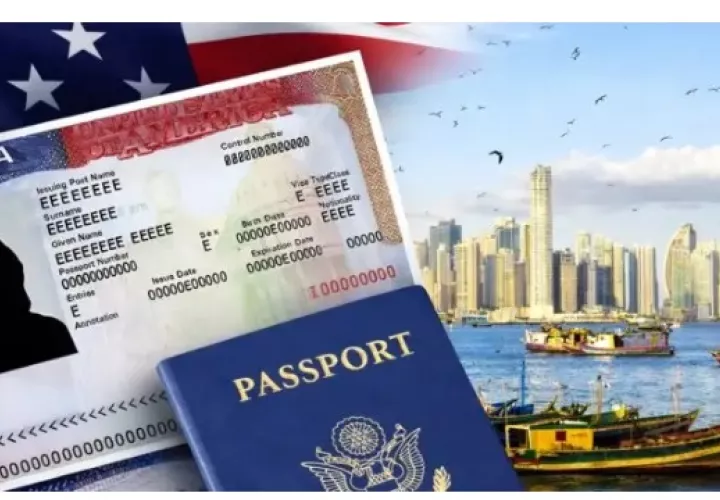
Panama formalized its application to the U.S. Visa Waiver Program by creating an inter-institutional working group to strengthen border security, information exchange, and academic, cultural, and business ties, the Foreign Ministry reported on Tuesday. “The eventual visa waiver should not be understood solely as an immigration facilitation, but as a tool to strengthen ties between our societies , promote academic, cultural and business exchanges , and deepen contact between our peoples, always under high standards of security and shared responsibility ,” said the acting Minister of Foreign Affairs, Carlos A. Hoyos.
The Visa Waiver Program, the senior official added, is, above all, “a trust-based mechanism that demands high standards in security, immigration management, document integrity, and information sharing,” Hoyos indicated, and also noted that the working group will allow ” the alignment of public policies, the identification of gaps, the avoidance of duplication, and the assurance of consistency between international commitments and their internal implementation.” Hoyos led the first binational meeting on Tuesday to establish an Inter-institutional Working Group for Visa Waiver, a step that marks the formal beginning of the process for the country to aspire to join the United States Visa Waiver Program.
The meeting was attended virtually by senior officials from the U.S. Department of Homeland Security, led by the team responsible for the Visa Waiver Program. The meeting aimed to define the technical, operational, and security requirements that each entity of the National Government must meet to advance in this process, under an approach of inter-institutional coordination, strengthening of border security, and improvement of information exchange. Work will be carried out in close cooperation with the United States Embassy in Panama and the Department of Homeland Security (DHS), an official statement noted.
The formation of the Working Group is “a strategic step of great importance for Panama, which seeks to consolidate a State vision based on inter-institutional coordination and shared responsibility with a historical and strategic partner such as the United States,” highlighted the acting Minister of Foreign Affairs of Panama. “This is,” he explained, “a key tool for aligning public policies, identifying gaps, avoiding duplication, and ensuring coherence between international commitments and their internal implementation.”
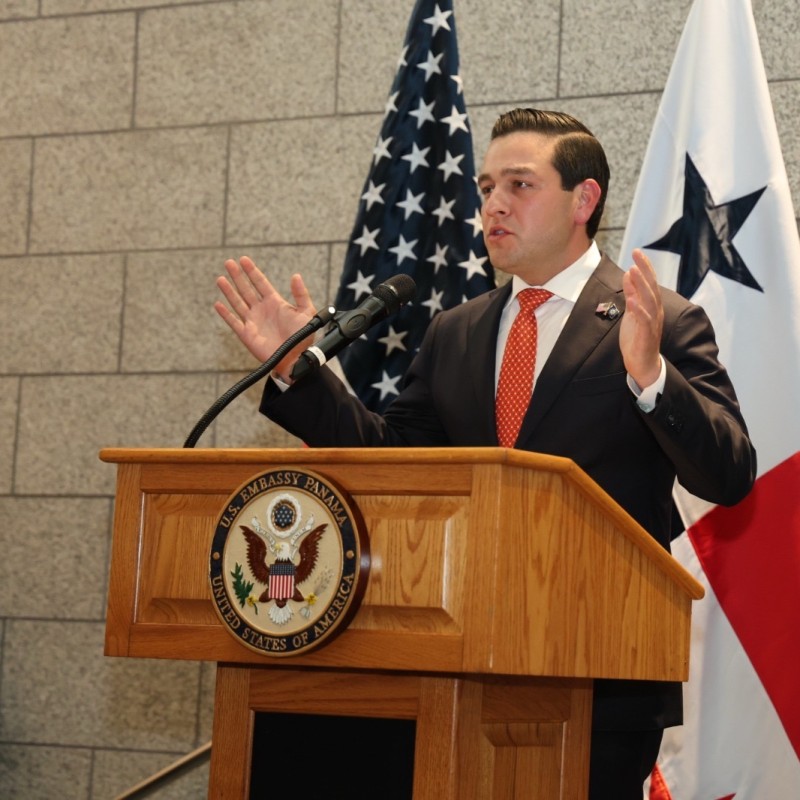
For his part, the United States ambassador to Panama pictured above, Kevin Cabrera, stated that his government “is working jointly with Panamanian authorities to share information and ensure that travel is efficient and safe.” Cabrera acknowledged that it is “a complex process, which will not be immediate, but we are moving forward in a coordinated manner to meet all the requirements established” by US legislation. The official statement highlighted that Panama’s President José Raúl Mulino submitted the formal application last month (January), underlining that the country already meets one of the program’s key requirements by maintaining a visa rejection rate of less than 4%, and expressed his expectation of achieving that goal during the current administration.