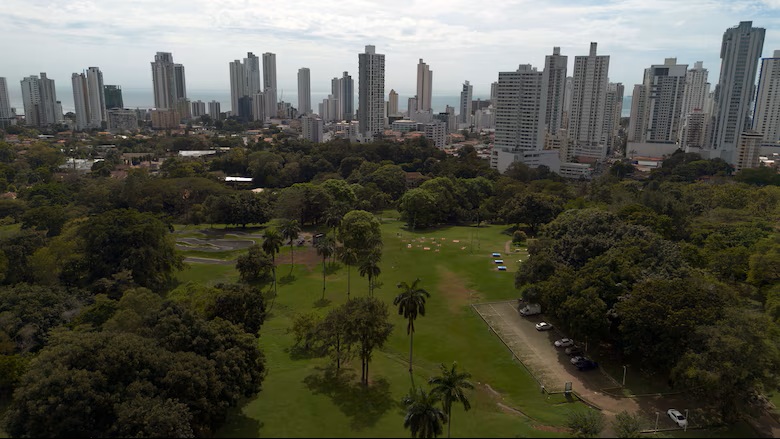
Mulino Announces Panama Canal Plan after Court Ruling on Panama Ports Company
President José Raúl Mulino indicated that the steps to follow had been planned for a year. He noted that Panamanian ports are a strategic asset and that efforts will be made to ensure an orderly process without improvisation.
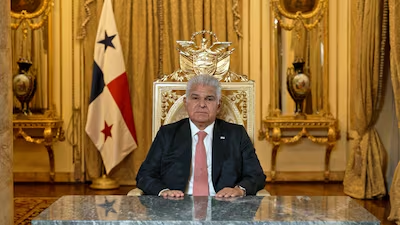
Following the Supreme Court ruling that declared the Panama Ports Company (PPC) contract unconstitutional, President José Raúl Mulino came out to address the nation and reassure the country. He noted that Panamanian ports are a strategic asset and that work will be done to ensure an orderly process without improvisation. Mulino explained that, until the ruling becomes final, PPC will continue operating normally and that a transition period will then begin, culminating in a new concession under conditions favorable to Panama. He also assured that there will be no layoffs and that workers’ rights will be protected. As part of this plan, Mulino appointed engineer Alberto Alemán Zubieta as coordinator of a technical team tasked with coordinating all port responsibilities and overseeing the transition.
He also instructed the Panama Maritime Authority to meet immediately with PPC to ensure cooperation and continuity during this phase. For its part, Panama Ports Company reacted to the ruling by calling it “lacking legal basis” and contrary to the current legal framework, although it assured that it will respect the transition process. This episode marks a new chapter in the concession of the Balboa and Cristóbal ports, which have been under PPC’s administration for nearly three decades. Now, the country is looking toward a reorganization that seeks to protect this strategic resource without affecting operations or employment.
Panama Ports Questions Court Ruling and Warns of Economic Impact
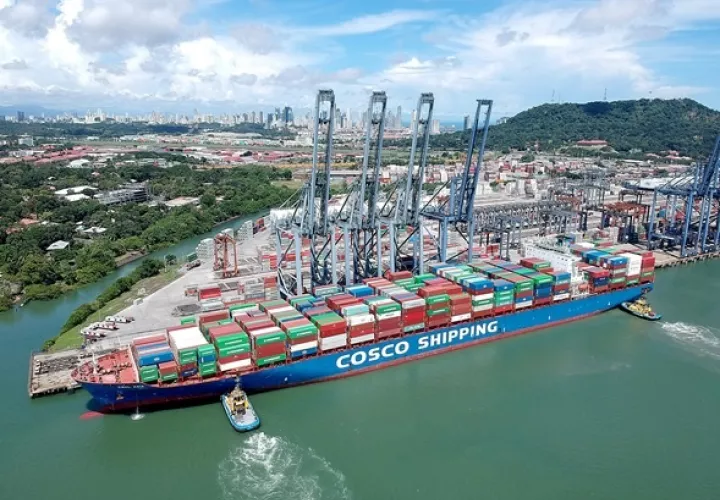
Panama Ports Company warned that the ruling declaring Law 5 unconstitutional affects legal certainty, investment and thousands of jobs in Panama. Panama Ports Company, SA (PPC) questioned the decision of the Judicial Branch that declared Law No. 5 of January 16, 1997, unconstitutional, warning that the ruling lacks legal basis, weakens legal certainty in Panama and puts at risk a port concession that has operated for almost three decades in Balboa and Cristóbal. In a statement released Wednesday, the company indicated that it has not been formally notified of the decision.
However, it maintained that the ruling is incompatible with the current legal framework and with the law that approved the contract governing its operations for the past 28 years. According to Panama Ports Company , this ruling represents the latest episode in what it describes as a campaign by the Panamanian State that has impacted the company and its foreign investment for more than a year, through a series of actions it considers unexpected against the concession. The company noted that, since the start of its operations, it has invested more than $1.8 billion in port infrastructure, security, technology, and human development.
These investments, it stated, have modernized the Panamanian port system and generated thousands of direct and indirect jobs. PPC maintained that this effort has been key to consolidating Panama as a world-class logistics and port center, attracting major international shipping lines and generating a positive impact on the national economy. The company also emphasized that the concession was awarded through a transparent international bidding process and that, since then, it has complied with all its contractual and legal obligations, including state audits , acting —according to the statement— with transparency and a willingness to collaborate.
The document warns that the judicial decision not only jeopardizes the PPC contract, but also affects the well-being of thousands of Panamanian families who depend directly or indirectly on port activity, in addition to impacting institutional stability, the rule of law, and confidence in the country. PPC emphasized that the ruling is diametrically opposed to previous Supreme Court decisions on similar contracts, which increases legal uncertainty in Panama. The company expressed its concern about the damage to Panama’s reputation as a reliable destination for foreign investment and as a competitive logistics hub at a global level.
Despite this scenario, PPC reiterated its commitment to Panama, its workers, and the communities of Balboa and Colón, and assured that it will continue to cooperate with the State, although it reserves the right to resort to international bodies. Finally, the company called for dialogue and coordination with the authorities to avoid the interruption of the concession and to protect the port services that, it asserts, have benefited the country and world trade.
Supreme Court Declares Panama Ports Contract Unconstitutional
Supreme Court annuls Law 5 and addenda to the port contract. The full Supreme Court declared Law 5 of 1997, its addenda, and the extension of the concession contract granted to Panama Ports Company unconstitutional. The Plenary of the Supreme Court of Justice declared unconstitutional Law No. 5 of January 16, 1997, along with its addenda and the extension act linked to the concession contract granted to the company Panama Ports Company, SA (PPC).
The decision was adopted during the ordinary session of January 29, 2026, after a process of analysis and deliberation of two claims of unconstitutionality filed against the regulations that gave legal support to the port contract, registered under entries No. 119313-2025 and 17547-2025. According to the official statement from the Judicial Branch, the magistrates concluded that the challenged laws and acts violate the Political Constitution, in compliance with the role that corresponds to the Court as guarantor of the constitutional order of the country.
The ruling is directly related to the concession contract signed between the Panamanian State and Panama Ports Company, through which the company was assigned the responsibility for the development, construction, operation, administration and management of the port terminals for containers, general cargo, bulk cargo, Ro-Ro and passengers in the ports of Balboa and Cristóbal. The resolution, signed at the Gil Ponce Courthouse, sets a high-impact legal and economic precedent by nullifying the legal framework that for more than two decades regulated port concessions in these strategic points of the country. So far, neither the Executive nor the concessionary company have issued official reactions following the decision adopted by the highest court of justice.
China Issues a Warning and will Take All Measures. This Will Not Go Unpunished!
The official reaction comes after the Court invalidated Law No. 5 of 1997 and other regulations that supported the concession for almost 30 years. The Chinese government stepped forward on Friday after Panama’s Supreme Court declared unconstitutional the concession contract operated by a subsidiary of Hong Kong’s CK Hutchison in the country’s ports.

At a press conference in Beijing, Foreign Ministry spokesman Guo Jiakun said that the affected company considers the Panamanian court’s decision to be contrary to the laws that approved the concession and that it reserves all its rights, including legal ones. “We will take all necessary measures to protect the legitimate interests of our companies,” he added. The official reaction comes after the Court invalidated Law No. 5 of 1997 and other regulations that supported the concession for almost 30 years.