The US Sets Sights on China in South America
The Venezuela strike is just the beginning of a larger campaign to root out foreign influence in the Western Hemisphere.
On January 15, the State Department released its “Agency Strategy Plan,” much of which mirrors the November National Security Strategy, but more deeply reveals the Donald Trump administration’s intentions for re-ordering US foreign policy. The new State Department plan bluntly elaborates the primacy of “vital chokepoints like the Panama Canal,” warning that the US “will no longer permit foreign adversaries to use commerce and investment as a stalking horse for control of the region’s critical infrastructure and strategic territory.” A Hong Kong-based company, CK Hutchison Holding, has been operating two Panama Canal ports since 1997.
After Beijing enacted a national security law in 2020 that criminalized any Hong Kong actions deemed as collusion with foreign forces, Washington has been concerned about free passage, as 40 percent of all annual US trade with Asia sails through the vital chokepoint. In the event of a crisis, the Chinese Communist Party could order the Hong Kong Company to deny US naval passage of destroyers, combat ships, and amphibious transport dock ships to support and reinforce Pacific Command fleet operations. Secretary of State Marco Rubio’s first overseas trip was to Panama City, where he met with President José Raúl Mulino to express the United States’ insistence that the Chinese Communist Party’s control over the ports must end.
Panama later announced it would end its participation in China’s predatory Belt and Road Initiative, embedded in twenty countries throughout South America. Hutchison then announced it would sell its stake in the two canal ports, along with dozens of other ports, for $23 billion to a BlackRock-led investment group. Hutchinson neglected to first inform Xi Jinping, and Beijing immediately condemned the deal, viewing it as a strategic setback to its South America operations. Beijing launched a regulatory review of the deal, and later demanded that China’s state-owned shipping giant COSCO become an equal partner and shareholder with BlackRock and other investors.
Panama’s government has since charged Hutchison with violating national interests, after an audit revealed $1.3 billion in lost government revenues and back taxes since the 1997 license. Panama’s Supreme Court may rule to revoke Hutchinson’s concession, after which the ports would revert to Panamanian control for re-tendering, possibly to new owners favored by Washington. If not, the White House could decide to directly challenge China’s presence at the strategic chokepoint as a critical threat to US plans to dominate the Western Hemisphere, ensure permanent maritime and naval access through the canal, and expel Chinese and other adversarial assets from Greenland to Cape Horn.
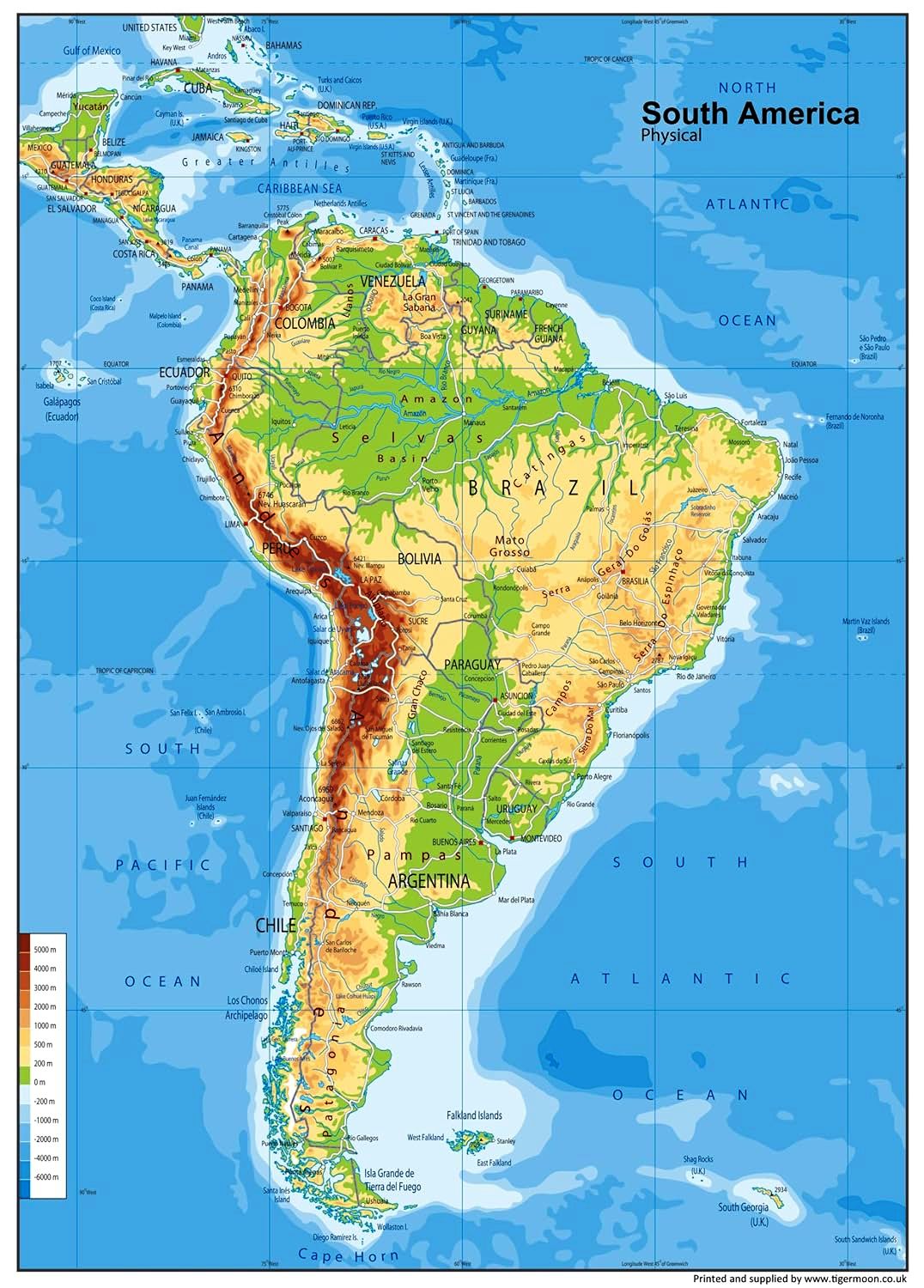
Beyond the Panama Canal await other issues of malign Chinese operations in Latin America. COSCO controls and operates a massive $3.5 billion deep-water megaport on Peru’s Pacific coast, offering the continent an alternative to the canal and potentially re-orienting Brazil’s $2 trillion economy towards greater dependence on China. Another Chinese company controls a major port in Kingston, Jamaica, near vital Caribbean shipping routes and 170 miles from the US naval station in Guantanamo Bay, Cuba. In December, a Chinese naval hospital ship docked there to provide medical services after Hurricane Melissa struck the Caribbean.
China’s “civil-military fusion” strategy means the hospital ship could also have collected military intelligence from a nearby US rapid response facility. China’s colossal illegal fishing operations in the Atlantic and Pacific Oceans give it significant control over US seafood, 80 percent of which is imported through Chinese-controlled supply chains. These activities have devastated valuable and essential fisheries for Argentina, Chile, Ecuador, and Peru, and generated serious economic and environmental challenges for many South American nations. The White House is concentrated on Venezuela and Greenland, and monitoring Chinese regime influence operations in Cuba, Nicaragua, Colombia, and potentially Mexico, where cartels ply Chinese precursor chemicals into fentanyl to kill tens of thousands of Americans annually.
The State Department’s Agency Strategic Plan states that the Trump administration reserves the right to “prevent [Chinese] control and roll it back where it has already occurred, and we will do so regardless of whether that control is exercised directly by competing powers or instead through purportedly private entities that operate under those states’ thumbs.” It adds that “we will not allow any foreign adversary to use force or establish a military base anywhere in the region, and will seek to reverse the expansion of all other forms of foreign military influence, including the spread of foreign security assistance, intelligence facilities, and facilities with dual-use possibilities.” Looking deeper into 2026 and beyond, the question remains: where will the Trump administration turn next in the Western Hemisphere?
About the Author: John Sitilides
John Sitilidesis principal at Trilogy Advisors LLC in Washington, DC, and is a senior fellow for National Security at the Foreign Policy Research Institute. Since 2006, Sitilides has been the Southern Europe regional coordinator at the Foreign Service Institute. He was the board chairman of the Woodrow Wilson Center Southeast Europe Project from 2005 to 2011. He has testified before Congress and is a frequent national security commentator on US and international media such as Bloomberg News, CNN, FOX News, CNN International, Newsmax and NewsNation, and has interviewed or cited in The Wall Street Journal, TheNew York Times, The Washington Post, The Washington Times, The National Interest, Politico, National Public Radio, Euromoney, Asia Times, and The South China Morning Post.