Odebrecht Case Trial: The Prosecution Presents Extraordinary Evidence and the Judge Announces a Recess From January 16 to 20
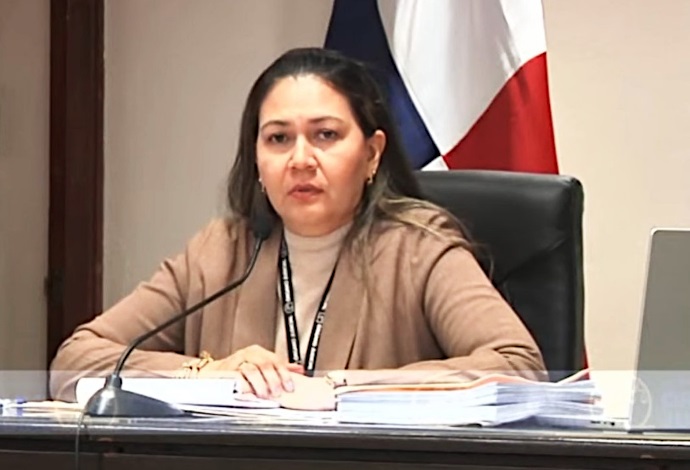
Wednesday, January 14, the third day of the Odebrecht case trial, was marked by the incorporation of extraordinary evidence by the Anti-Corruption Prosecutor’s Office, which forces the court to reorganize the pace of the process. Anti-corruption prosecutor Ruth Morcillo reported that the Public Prosecutor’s Office has new evidence from international legal assistance, mainly from Peru and the United States. Judge Baloisa Marquínez decreed a recess in the judicial proceedings from Friday, January 16, until Tuesday, January 20. The hearing will resume however this Thursday, January 15.
The decision was announced after the defense requested access to and analysis of the new material incorporated into the file, relying on article 2270 of the Judicial Code, which empowers the court to suspend a hearing only once and for a maximum period of five days, when the parties, for reasons independent of their will and duly accredited, do not have the evidence prepared. During the session, prosecutor Morcillo reported that all the evidence to be presented is digitized at the prosecutor’s office. Regarding the volume of evidence, the prosecution detailed that the first extraordinary piece of evidence corresponds to judicial assistance from Peru.
As explained in court, it is a box consisting of seven volumes, containing 2,500 pages. The Public Prosecutor’s Office also reported that it has judicial assistance from the United States, which represents the largest volume of evidence within the process, material divided into 22 volumes, with 10,939 pages. Marquínez explained that article 2270 of the Judicial Code is not applicable, considering that this rule refers to cases in which one of the parties has not prepared the previously admitted evidence, a situation that—clarified— does not correspond to the current stage of the process.
Accordingly, the court is in a phase in which the window has opened for the presentation of extraordinary evidence, that is, evidence that has not yet been admitted and that the Prosecutor’s Office is trying to formally introduce into the process. The judge stated that she understands the concern raised by the defense and ordered that, taking into account that the prosecution has the digitized evidence, interested lawyers must go to the secretariat with storage devices to obtain copies of the evidentiary material. She indicated that the prosecution would be allowed to begin presenting evidence during the session, while the court worked to optimize its time.
She then granted the parties Friday, Monday, and Tuesday to review the material, given that it consists of eight boxes containing a large number of pages. During that period, defense attorneys must examine the evidence and appear on Wednesday, January 21 at 8:30 am to substantiate their objections, if any. She clarified that if any defense attorney has doubts about the authenticity of a document, they can go to the Prosecutor’s Office beforehand to verify the original or the corresponding physical copy. However, she emphasized that Wednesday will not be a day for verifying physical documents but exclusively for substantiating objections.