Mexico City Announces a Campaign to Separate Garbage into Three Containers
Each classification must be deposited in the green (organic), grey (recyclable) and orange (non-recyclable) containers.
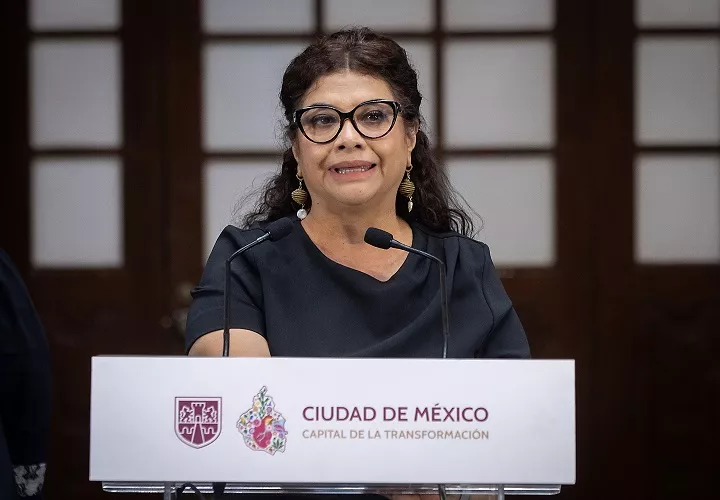
Starting January 1, 2026, waste in Mexico City must be separated into organic, recyclable and non-recyclable, as part of the new campaign presented this Monday by the head of government of the capital, Clara Brugada. Each classification must be deposited in the green (organic), gray (recyclable) and orange (non-recyclable) containers, as detailed by Brugada during a public event in the Azcapotzalco mayor’s office (internal demarcation in the north of the city). In addition, specific days were established for collection. Organic waste must be handed out on Tuesdays, Thursdays, and Saturdays, while recyclables and non-recyclables will be collected on Mondays, Wednesdays, Fridays, and Sundays, in separate bags.
Brugada highlighted that this is “one of the most important environmental campaigns in Mexico City,” which seeks to promote recycling. He explained that the goal is that, by 2030, at least half of the waste generated daily in the city can be transformed or reused , mainly through the production of compost and the recycling of inorganic materials with commercial value. During the event, she explained that Mexico City generates approximately 8,500 tons of waste per day, of which 56% is organic, 21% is recyclable, and another 21% is non-recyclable, such as diapers and sanitary waste. “Of all the garbage produced at home, 75% can be transformed or recovered. And that is our main objective,” Brugada emphasized.
He added that each person produces about one kilogram of waste per day, which puts the capital as the second state in the country with the highest waste generation. He emphasized the importance of separating waste at the source, that is, in homes, to maintain separation in collection trucks and transfer stations, in order to prevent waste from being mixed and losing its value. To that end, he announced the distribution of three containers per household and the start of a house-to-house campaign, which will begin in the Azcapotzalco district and extend to the rest of the city.
In addition, he shared a preview of the song that will accompany the garbage truck to explain the new separation strategy. “What goes green returns to nature; organic Tuesdays, Thursdays, and Saturdays,” the lyrics say. “What goes to the gray color, is recycled and returned; inorganic Sundays, Mondays, Wednesdays, and Fridays.” “Also going Sundays, Mondays, Wednesdays, and Fridays, towards the orange color, is what will not return,” the song continues. Finally, Brugada reported that her administration will invest in strengthening the infrastructure for waste management, including the delivery of 50 new garbage trucks and the expansion of composting plants, in addition to the construction of two new facilities for the treatment of organic waste.