
Panama’s Reverse Migration: 22,000 Migrants Return to Their Countries With Orders From the U.S. Border Czar
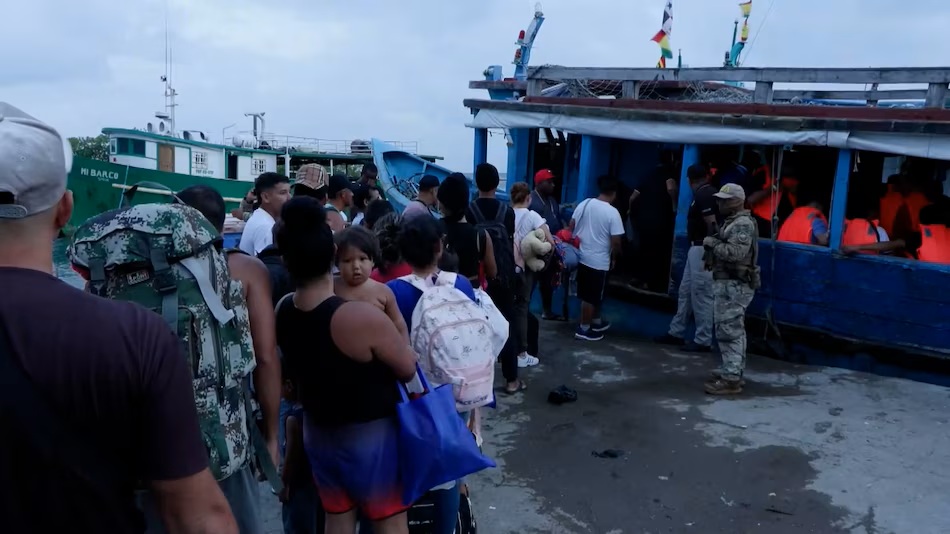
The collapse in migration traffic is attributed by authorities to the new measures promoted by the USA, as well as the actions taken by Mexico and the security operations with Colombia. Pictured above, Migrants in Miramar, Colón, boarding a boat bound for Puerto Obaldía, Darién.
Panama is currently home to a diverse population of migrants, primarily functioning as a major transit point for those traveling north toward the United States and Canada. Current migrant dynamics in Panama as of late 2025 include:
1. Transit and “Reverse” Flows
- The Darién Gap: This remote jungle on the border with Colombia remains a critical, albeit extremely dangerous, corridor. While crossings reached a record high of over 520,000 in 2023, they dropped drastically in early 2025 following regional policy shifts and stricter enforcement.
- Reverse Migration: A new phenomenon in 2025 involves migrants moving south from the U.S. and Central America back toward South America due to tightened U.S. asylum policies. Panama recorded over 2,200 such migrants in February 2025 alone.
2. Deportees and “Bridge” Status
- U.S. Deportation “Bridge”: Under 2025 agreements, the U.S. has deported hundreds of non-Panamanian nationals (including individuals from China, India, Iran, and Afghanistan) to Panama. These migrants often face legal limbo, staying in temporary shelters or hotels in Panama City while awaiting repatriation or resettlement elsewhere.
- Repatriation Flights: A U.S.-Panama Memorandum of Understanding (MOU) has funded dozens of deportation flights from Panama to countries like Colombia, Ecuador, and India to reduce illegal transit through the jungle.
3. Resident and Host Population
- Host Country: Panama is home to more than 205,000 displaced people, including over 6,000 recognized refugees and 34,000 asylum seekers.
- Nationalities: The majority of migrants are from Venezuela (accounting for roughly 68–69% of those in transit), followed by Colombians, Ecuadorians, Haitians, and a growing number of extra-continental migrants from Asia and Africa.
- Integration: Organizations like HIAS Panama and the Jesuit Migrant Service work to integrate these populations into Panamanian society through legal aid and livelihood support.
4. Professional and Retiree Immigrants
Beyond the humanitarian crisis, Panama’s stable economy and “Pensionado” visa continue to attract foreign workers, investors, and retirees, particularly from the U.S., Canada, and Europe.