When Products Daydream: Surreal Branding that Lets Objects Tell Their Own Stories
What if the morning coffee cup whispered of its missing sunlight? What if your running shoes wistfully internalized the marathon they once ran in a shower of silver rain? In today’s surreal marketing era, the things that we are selling are no longer mute backdrops — they are storytellers.
These tongue-in-cheek crests of surreal branding do not depend upon models, influencers, or slogans. Rather, it turns the microphone over to the product itself — and allows imagination to tell the story. With the assistance of technology such as Dreamina’s AI photo generator, creators are crafting entire campaigns that seem like lucid dreams spoken by inanimate objects. A bottle of perfume could drift through clouds designed like memories. A phone could buzz in a world constructed out of sound waves. A chair could remember the humans it once supported.
The turn is emotional and cinematic: brands find that when goods begin to dream, people begin to listen.
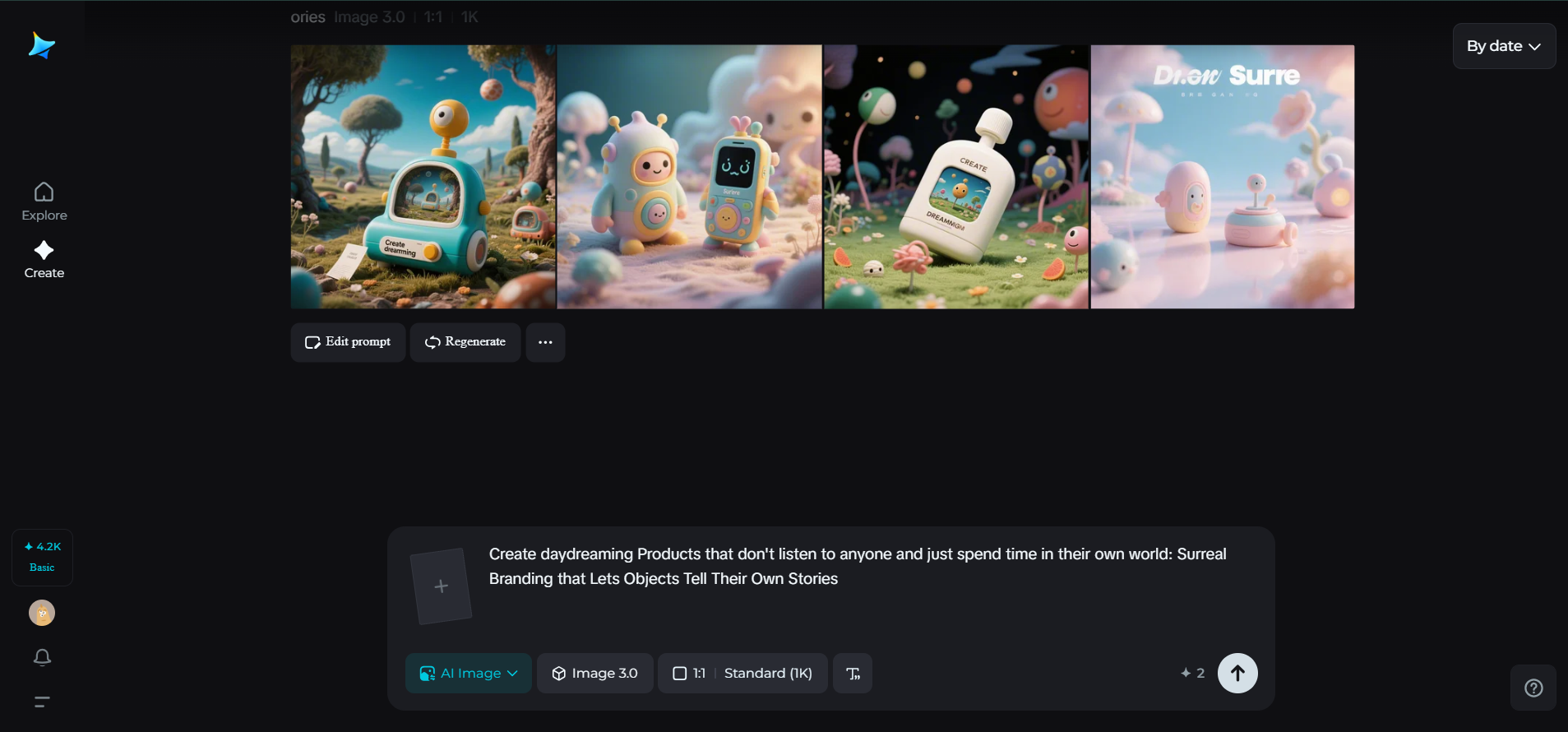
The weird poetry of objecthood
For decades, branding has concerned itself with how humans feel about goods. But surrealist design turns that camera around — wondering how goods feel about us. What does the fabric recall? What does the lamp desire?
This twist of narrative makes campaigns emotional theatre. It gives familiar things — the things we take for granted — a newfound life. The outcome is not merely visual play, but emotional pull.
Some of the ways surreal product storytelling can reshape brand images:
- Emotional depth – Products are no longer just commodities but poetic characters.
- Visual immersion – By combining realism with imagination, campaigns enter the world of dream logic — odd, humorous, or touching.
- Brand intimacy – The surreal point of view provokes curiosity. Viewers pause, decipher, and relate.
It’s no longer about selling something — it’s about imparting a consciousness to it.
Dream logic in advertising: where realism dissolves
Surreal branding lives for contradiction — where the mundane intersects with the impossible. A cloud as the sole of a sneaker. A soda can bursting into bloom. These visual contradictions call for emotion before logic.
With Dreamina, artists and brands are crafting this world in minutes. Every picture that’s generated can tell the whole micro-story: a product lost in thought, drifting, expanding, dissolving. It’s advertising that reads more like literature — but composed of light and color.
You know, when everyday things like cups start dreaming their little dreams, it doesn’t feel absurd at all. No, it pulls at that empathy inside you. Because really, deep down, every single person watching gets it. That quiet urge to count for something bigger. Even if you’re just a plain old cup sitting there.
Dreaming with Dreamina: how surreal product storytelling takes shape
Dreamina isn’t an image tool alone — it’s an imagination translator. It assists creators in bringing ethereal emotions into tangible visual scenes where products sigh, smile, and tell stories. This is how such dreamlike metamorphosis happens.
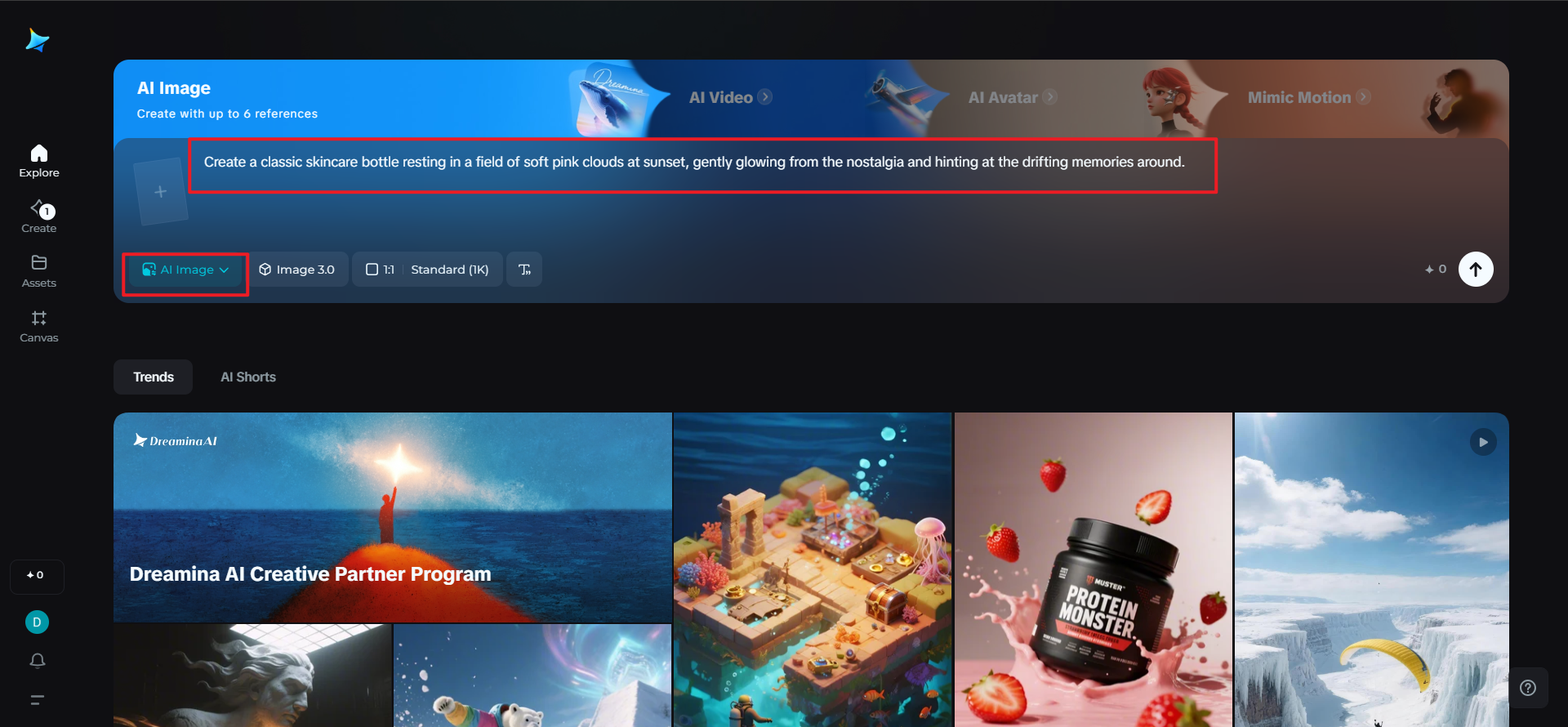
Step 1: Write a detailed text prompt
Begin by going to Dreamina and writing your story in words. Rather than enumerating physical characteristics, imagine a novelist capturing an atmosphere.
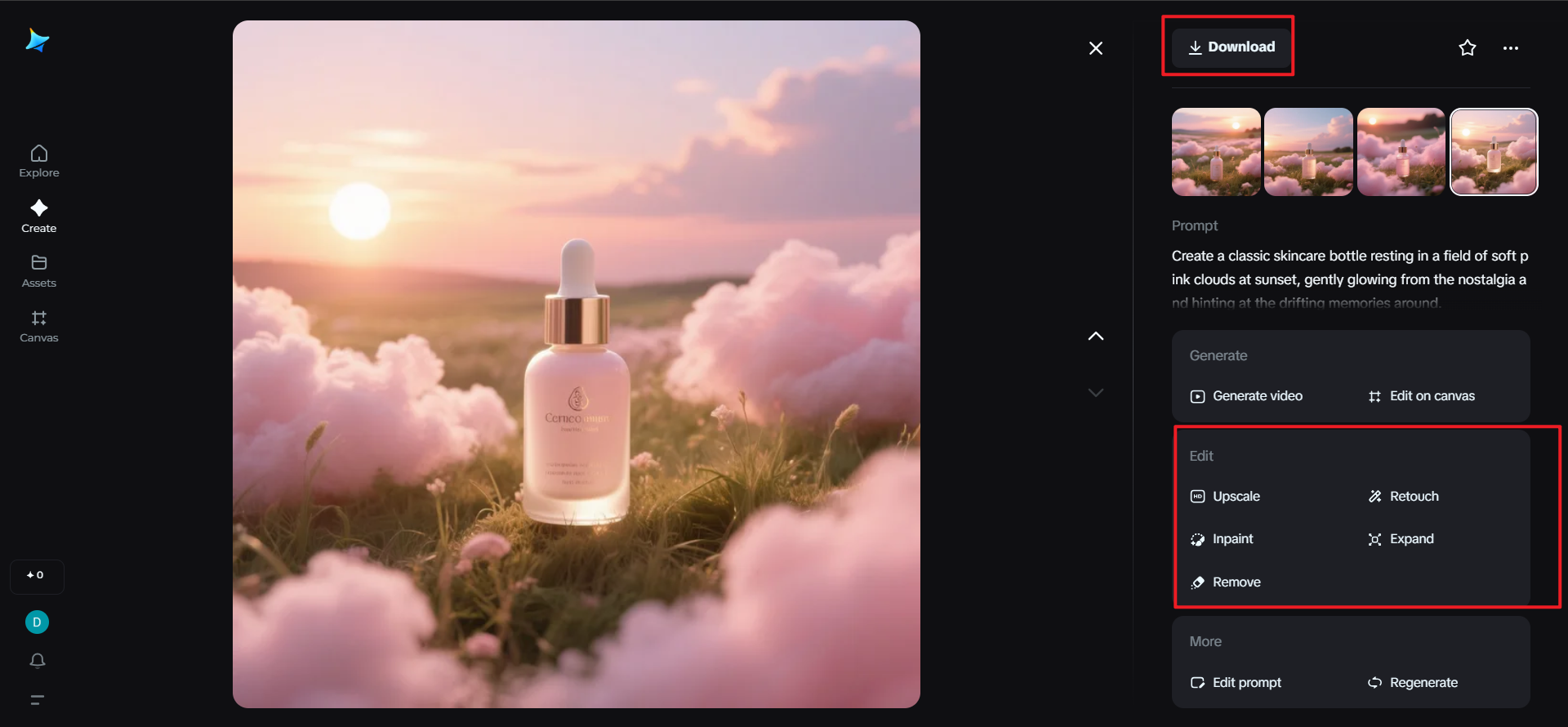
Such as: A classic skincare bottle resting in a field of soft pink clouds at sunset, gently glowing from nostalgia and hinting at the drifting memories around.
The more details you provide, the more emotion you can evoke. Dreamina knows how to capture tone, symbolism, and atmosphere — and translate those poetic details into surreal imagery, which feels alive.
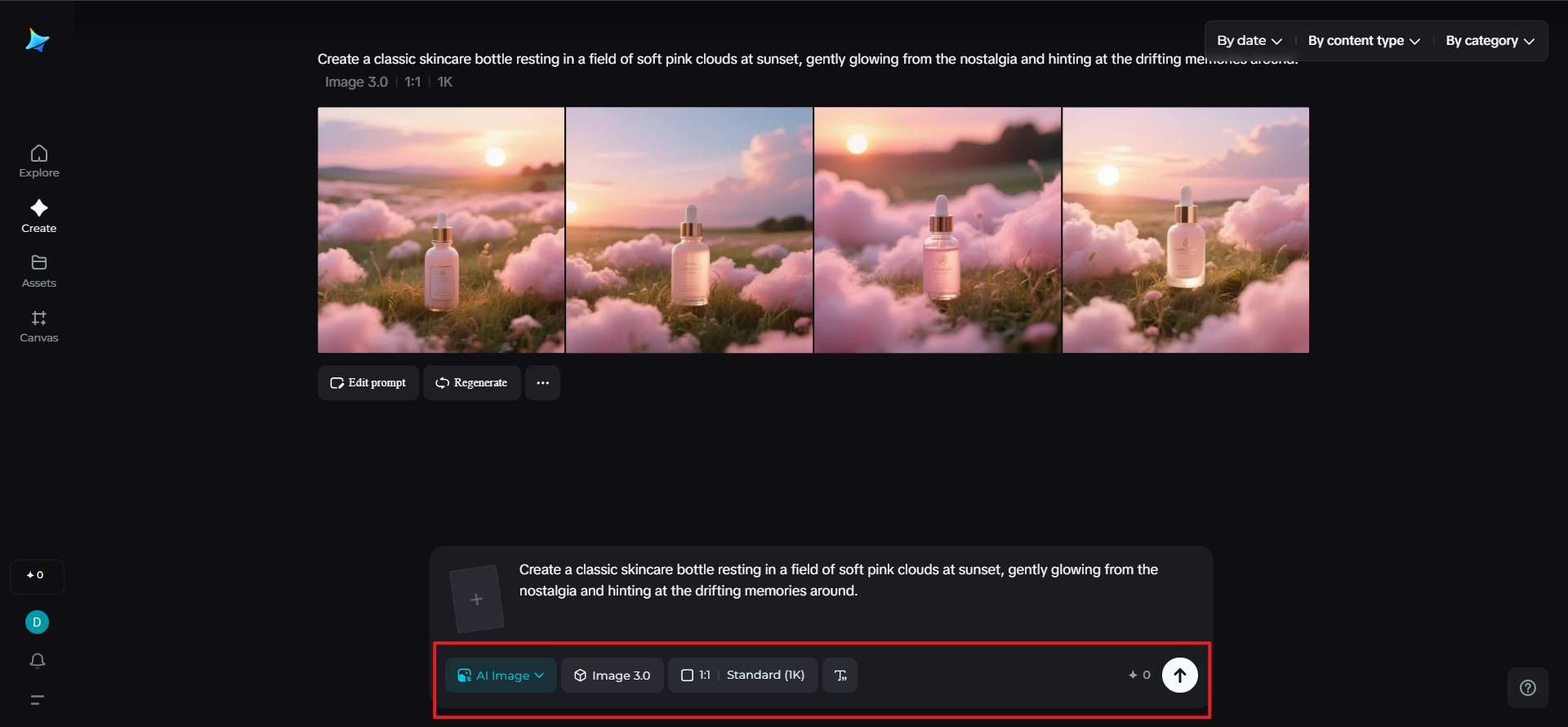
Step 2: Set parameters and generate
Once your prompt is satisfactory, tweak the model, aspect ratio, size, and resolution (1k or 2k) to your liking. For dreamy compositions, square or cinematic ratios are perfect. With your preferences set, click on Dreamina’s icon to generate. In an instant, your envisioned object materializes — not as a dull product photo, but as a dreaming, thinking being stuck in mid-reverie.
Step 3: Personalize and download
To make your scene more precise, utilize Dreamina’s AI features such as inpaint, expand, remove, and retouch. You could eliminate a distraction, spread the mist, or brighten it to soften or create a feeling. When your image is complete — as if the object’s narrative has finally uttered — click Download to save your dreamy image, ready for campaigns, posters, or social storytelling.
When objects become characters
Several brands are taking this concept even further by combining Dreamina with an AI logo generator — creating identities that match the tone of their sleeping products. Picture a brand where each logo iteration evolves to match the product’s mood — light and ethereal when it’s a fragrance, strong and tactile when it’s a shoe.
It’s not static branding anymore; it’s personality branding. The logo is integrated into the dream, mirroring the product’s own story.

Surreal storytelling as emotional marketing
Why is this so effective? Because surrealism circumvents reason and hits directly at emotion. When people view an image that is nonsensical but feels real — such as a coffee mug stretching toward a sunbeam — they recall it.
Here’s what surreal brand imagery accomplishes best:
- It triggers feelings rather than data.
- It stirs interest, inviting multiple readings.
- It dissolves advertising with art, extending the emotional shelf life of campaigns.
With Dreamina, brands are able to create these visual narratives quickly, experimenting with which dreams resonate most intensely before rolling out high-volume campaigns.
The emotional realism of the surreal
Surreal advertising does not chase pure chaos. It goes for clarity, but wrapped in metaphors that twist things a bit. Pull it off right, and it lands like some honest truth stuffed inside all that odd strangeness. Every one of those dreamy images hides a plain idea right below. The product just waits there, aching to click with you.
And that’s where Dreamina shines — by allowing creators subtle mastery over composition, tone, and atmosphere. Combined with its AI image editor, brands can fine-tune surreal images until they are crisp, intimate, and story-consistent. A chair could tilt toward its owner like a chum. A clock could warp not due to time, but remembrance.
Surreal transformed into sincere.
Where imagination turns into strategy
Contemporary audiences hunger for novelty — but not for new filters or colors. They hunger for new feelings. Surreal branding fulfills that desire by combining storytelling, art, and technology into one act of vision.
Dreamina imbues that creativity with accessible precision — allowing designers dream magnificently, yet render finely. Its interface isn’t work; it’s play. You write, tweak, hone, and voilà, your product is murmuring its own little verse.
Conclusion: hearing the objects that sell themselves
The future wave of marketing isn’t about yelling louder — it’s about hearing. Hearing the unsaid stories behind the things we use daily. The pen that recalls a love letter. The glass that pines for the caress of water. The sneaker that still wishes to run.
Dreamina brings the tales to life with poetic accuracy — translating imagination into design, and design into feeling. Thanks to technology such as the AI photo generator, brands are entering a surreal new realm where products aren’t bought; they’re heard.
Because sometimes the best campaigns aren’t those that tell, but those that let tell.