
From Puerto Rico to Panama: Bomba, Shared Heritage and a Vision for an Annual Cultural Festival
By Eric D. Wright and Griselle Colon
An encounter with master musicians Dimas Sánchez and Jesús Cepeda at Ciudad de las Artes explored the African traditions that connect the two countries—and the possibility of bringing their communities together through music, dance, masks, and food.
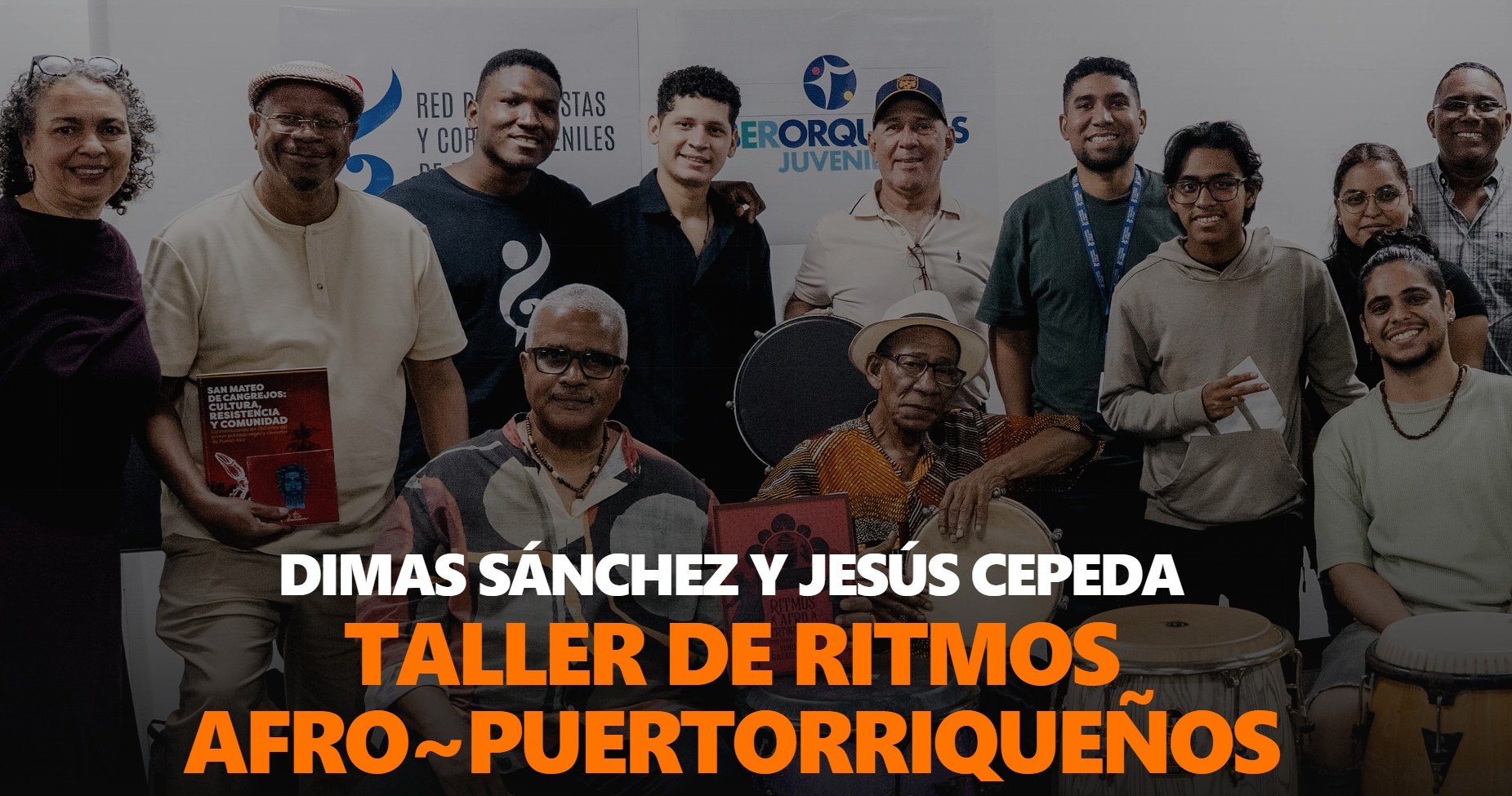
The sound of drums, improvised singing, and an enthusiastic audience brought the cultural connections between Puerto Rico and Panama to life at Ciudad de las Artes on October 21, 2026. Puerto Rican percussionists and educators Dimas Sánchez and Jesús Cepeda led a workshop that invited students and guests to explore the rhythms of bomba and the histories they carry.
The visit drew inspiration from the pilgrimages and processions honoring the Cristo Negro of Portobelo, a tradition closely associated with the celebrated Puerto Rican singer Ismael Rivera. For program host Griselle Colon of TXL Exports, that connection provides the foundation for a broader cultural exchange: an annual destination festival that brings Puerto Ricans to Panama to celebrate a shared African legacy.
The workshop, hosted at Ciudad de las Artes by Daniel Jiménez, offered an introduction to what that exchange could become. Through historical discussion, demonstrations, and participation, attendees encountered traditions that have survived across families, communities, and generations of musicians.
A Shared History Across the Caribbean
Historian and musician Eric D. Wright opened the program with an introduction to the musical heritage that connects descendants of the Kongo peoples in Puerto Rico and Panama. He discussed the relationships between Afro-Puerto Rican musical expression and the Congo traditions maintained in Portobelo and other communities in Colón province.
His introduction encouraged participants to consider the histories behind the rhythms: the forced displacement of African peoples, the preservation of cultural knowledge and the creation of new forms of expression in the Americas.
Puerto Rican bomba developed among enslaved Africans and their descendants as a means of expression, resistance and community. Its continuing practice connects contemporary performers with generations who used music and movement to sustain a sense of belonging.
In Panama, Congo traditions likewise preserve a history of resistance and freedom through music, dance, storytelling and ritual. UNESCO recognized the ritual and festive expressions of Congo culture on its Representative List of the Intangible Cultural Heritage of Humanity in 2018. These traditions remain living community practices, with knowledge transmitted through both participation and teaching.
The workshop placed these distinct traditions in conversation, inviting students to listen for connections while appreciating the particular histories of each country.
Learning from Two Generations of Experience
Sánchez and Cepeda began by introducing their book, Ritmos Afro Puertorriqueños / Afro Puerto Rican Rhythms. The publication documents rhythms that have often received limited attention, combining historical material with practical instruction and accompanying audio and video resources. Its approach reflects the musicians’ shared commitment to preserving knowledge by making it available to others.
Cepeda’s participation brought particular significance to the gathering. The son of Rafael Cepeda and Caridad Brenes, he belongs to a family whose contribution to Afro-Puerto Rican music spans generations. He learned within a household where bomba and plena were part of family and community life, developing his musicianship through observation, practice and progressively mastering different instruments.
For the students, learning from Cepeda meant encountering someone who carries both the techniques and the personal memories of that tradition. His stories gave the historical discussion a human dimension, connecting musical patterns with the people who have sustained them.
Sánchez brought a complementary perspective as a drummer, percussionist and educator whose work bridges Afro-Puerto Rican traditions and contemporary musical performance. His teaching includes workshops at universities, conservatories and cultural institutions, as well as demonstrations of how these rhythms can be applied to the drum set.
Together, the musicians moved between explanation and performance, giving participants opportunities to hear the rhythms, ask questions and try them.
History Becomes a Shared Performance
As the session progressed, Sánchez and Cepeda discussed the variety of rhythms within bomba, exploring African influences and the circulation of musical practices throughout the Caribbean.
Wright extended the discussion to New Orleans, examining connections with bamboula and second-line traditions. His contribution placed the Puerto Rico–Panama relationship within a wider conversation about African musical legacies across the Americas.
The demonstrations brought those discussions into focus. Using congas and other percussion instruments, Sánchez and Cepeda introduced various rhythmic patterns and demonstrated how they work in performance.
Cepeda led the audience into a lively call-and-response exchange, offering improvised vocal phrases that participants answered over the drums. The interaction made listening an active part of the lesson: attendees had to follow the pulse, recognize their entrance, and respond together.
Several percussion students were invited to join the musicians on congas. Their participation turned the workshop into a practical exchange, allowing them to experience the rhythms alongside the visiting artists.
Sánchez then demonstrated how Afro-Puerto Rican rhythmic patterns can be adapted to the drum set and incorporated into jazz and funk. The examples offered students a connection between traditional knowledge and their own development as contemporary musicians.
The session moved naturally between cultural history and musical technique, showing how each can deepen an understanding of the other.
Ismael Rivera and the Portobelo Connection
The closing discussion returned to one of the most recognizable links between Puerto Rico and Panama: Ismael Rivera and his devotion to the Cristo Negro of Portobelo.
Known affectionately as Maelo, Rivera developed a lasting relationship with Portobelo and its religious observance. His visits and his musical tribute helped carry awareness of the Cristo Negro beyond Panama, creating an enduring connection with audiences elsewhere in Latin America and the Caribbean.
That relationship helped inspire Sánchez and Cepeda’s visit. It also provided a meaningful point of departure for discussing how cultural connections can continue to grow through encounters between artists, students and communities.
For Colon, Rivera’s legacy offers a compelling invitation for Puerto Ricans to discover Panama through a history with which they already have a connection.
A Vision for an Annual Cultural Celebration
Colon’s vision is to develop a destination festival that brings together the cultural expressions linking the two countries. The percussion workshop would form one part of a broader celebration featuring mask workshops, bomba and plena dance, and culinary experiences representing Puerto Rico and Panama.
The mask component would create opportunities to explore Puerto Rico’s vejigante traditions alongside Panama’s diablos, with practitioners sharing the craftsmanship, stories and meanings associated with their work. Dance programming would introduce visitors to bomba and plena while creating space for exchange with Afro-Panamanian performers.
Culinary experiences would add another dimension, inviting participants to discover the ingredients, preparations and traditions that connect the countries’ African and Caribbean heritage.
Colon hopes the festival will encourage Puerto Ricans to travel to Panama annually, building a tourism experience around cultural participation and meaningful encounters with local artists and communities.
The ambition is to give visitors several ways to engage with that heritage: learning a rhythm, encountering a mask maker, experiencing a dance tradition or sharing a meal. Together, these activities could turn an annual visit into an ongoing relationship between the two countries.
The workshop at Ciudad de las Artes offered an early glimpse of that possibility. After the formal program ended, students stayed to discuss drumming techniques with Sánchez and listen to Cepeda’s stories. The conversations continued around the instruments—a fitting conclusion to a gathering devoted to keeping cultural knowledge alive through sharing.