
Scientists Return Panamanian Golden Frogs to Nature After Having Disappeared Due to a Deadly Fungus.
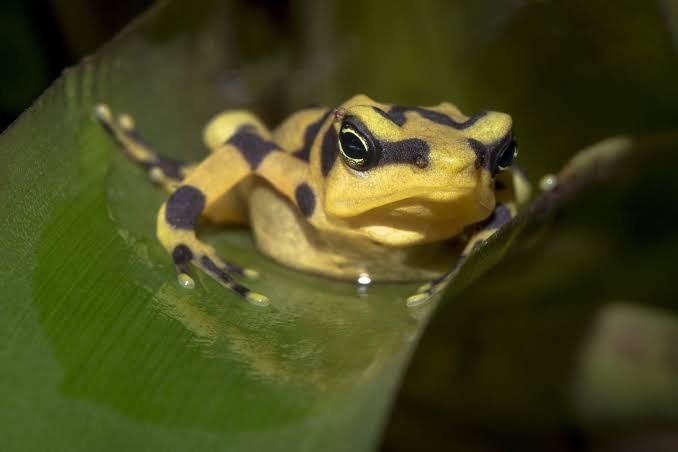
Smithsonian – The last known time that someone saw bright yellow frogs bespeckled with black dots in Panama’s wilderness was in 2009. These Panamanian golden frogs probably succumbed to a fungal disease called chytridiomycosis, which has decimated amphibian populations across the globe.
Now, researchers who have captive-bred the critically endangered golden frogs recently soft-released 100 of them into nature. The creatures stayed in special pens in late 2025 so that the scientists could assess how the deadly disease affects the animals—and how they might eventually adapt to it.
“This project was designed to see what would happen if we put these golden frogs back into a wild situation, just to kind of understand what are the disease dynamics, and how do these frogs regain their skin toxins,” Brian Gratwicke, a conservation biologist at the Smithsonian’s National Zoo and Conservation Biology Institute (NZCBI), tells Smithsonian magazine.
Chytridiomycosis is an infectious disease caused by the fungus Batrachochytrium dendrobatidis, or Bd, also called chytrid fungus. It’s thought to have reached southern Central America—where Panama is located—in the late 1980s. In 2019, researchers estimated that Bd had led to the extinction of 90 species worldwide as well as the decline of at least 491 others, and chytridiomycosis is often considered the most devastating wildlife disease on record.
Fungal spores can travel in water and even catch rides with other animals, including humans. Once they reach an amphibian, chytrid fungus can have devastating effects.